
Wire Gauge vs. Grid Size: The Two Numbers That Define a Wire Container
Wire gauge is the diameter of the steel wire in a container's mesh, stated in millimetres. Grid size is the opening between adjacent wires. Together they describe one mesh panel — not the whole container. Neither number predicts load capacity or stackability on its own, because both only become a load rating when they are read together with the mild steel Q235 frame, base and stacking posts that carry the force.
That is the most useful thing an early-stage buyer can learn about a wire container: gauge and grid are a pair, not a ranking. This explainer sets out what each number measures, where buyers misread them, and how the combination plays out across HM Group models — HM-HD001 (1300 kg, 6 mm wire, 50×50 mm grid), HM-HD028 (500 kg, 5 mm wire, 50×100 mm grid with PP sheet) and HM-CP001 (5–10 mm wire, 60×103 mm grid).
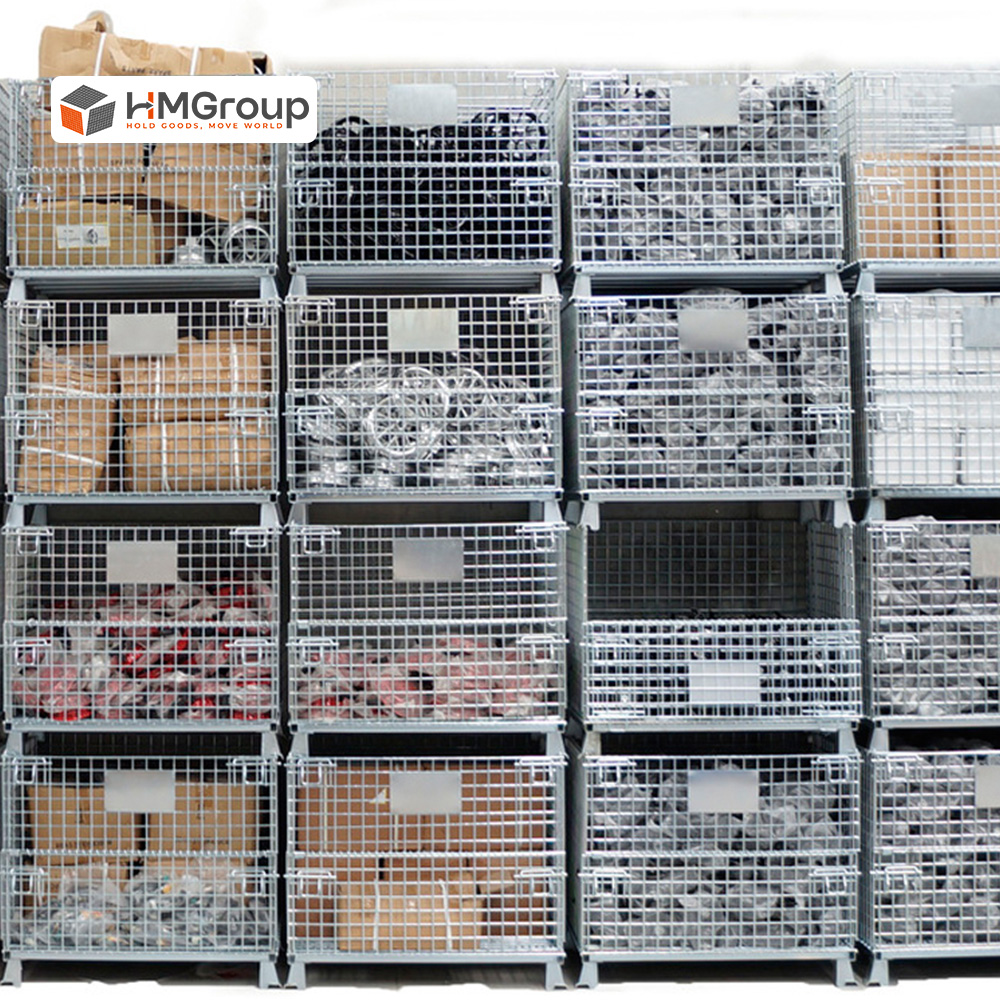
The two numbers buyers mix up
Wire gauge answers a simple question: how much steel is in this wire? Grid size answers a different one: what will the opening hold back? Specification tables place them side by side, which is why they are so often read as a single combined quality score. They are not.
Wire gauge is a diameter, not a grade
In HM Group's specification tables, gauge appears as a metric diameter — 6 mm on HM-HD001, 5 mm on HM-HD028, a 5–10 mm range on HM-CP001 — because the wire in a container panel is round stock. Buyers who work with imperial wire-gauge numbers should confirm the unit before comparing anything: a gauge number and a millimetre diameter are two different notations, and gauge systems are not interchangeable between regions. A millimetre figure is direct — it is the wire itself.
Gauge describes the wire, not the steel specification. HM Group's wire container range is built on mild steel Q235, with wire formed from low-carbon wire rod and welded into panels using resistance welding. Two containers can both state Q235 and still differ in gauge, which changes panel stiffness, weld contact area and the weight of the unit before any load is added. Because the cross-section of round wire scales with the square of its diameter, a 6 mm wire carries roughly 2.25 times the steel cross-section of a 4 mm wire (calculated as (6 ÷ 4)², assuming a round section). That is a geometry statement, not a capacity statement: capacity depends on the frame and base as much as on the wire.
Grid size is an opening with a measurement convention
Grid size is written as two dimensions, usually the width and height of the aperture — 50×50 mm on HM-HD001, 50×100 mm on HM-HD028, 60×103 mm on HM-CP001, 25×50 mm on HM-HD010. The two figures describe the hole through which product, air and light pass.
One ambiguity is worth clearing before an RFQ: whether a published grid is a clear opening (the actual gap between wire surfaces) or a pitch measured from wire centre to wire centre. The two conventions produce different numbers for the same panel, and the gap between them widens as the wire gets thicker. Where a part must not fall through, that difference matters. Confirm the convention before comparing suppliers.
Why mesh containers are specified this way
A returnable steel container has to do three jobs at once: contain the load, keep the load visible and ventilated, and fold or stack so that the empty container is not itself a storage problem. Mesh is the compromise that delivers all three, and gauge and grid are the two dials that tune it.
HM Group has manufactured logistics equipment since 2003, works from three manufacturing bases in Xiamen, Nanjing and Qingdao covering 62,000 m², and publishes an annual production capacity of 2,000,000 units across a portfolio that includes wire mesh containers, PET preform containers, cage pallets, stillages and steel pallets. That context matters here for one practical reason: the specification range is wide enough that gauge and grid genuinely vary by model rather than being fixed around one standard size. A buyer comparing a 25×50 mm grid with a 62×125 mm grid is comparing two design intentions, not two quality levels.
Across the range the material statement stays consistent — mild steel Q235 — while wire diameter, aperture, stacking figure and dimensions vary by model. Zinc plating, hot-dip galvanizing and powder coating are offered across the range, and finish is chosen separately from gauge and grid.
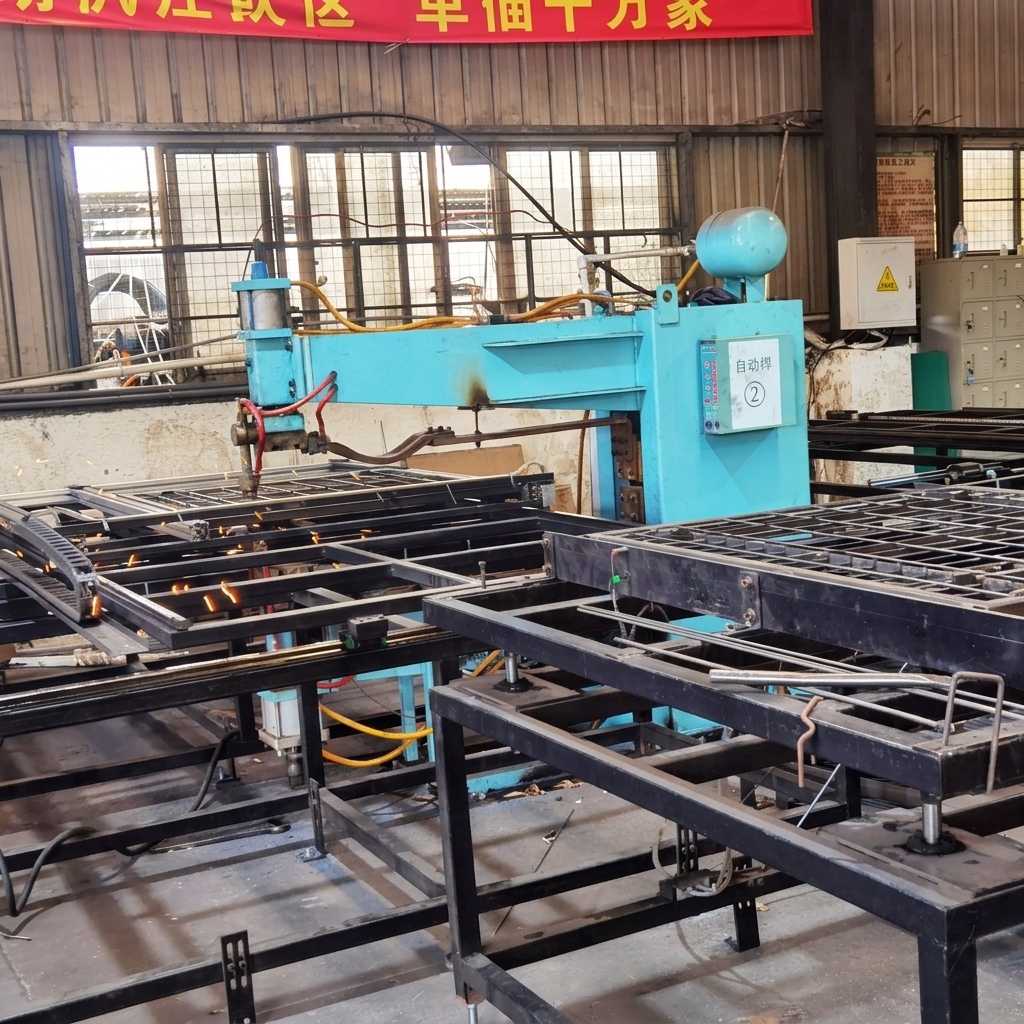
How gauge and grid work together
Read three benchmark models side by side and the relationship becomes visible: HM-HD001 uses 6 mm wire with a 50×50 mm grid at a stated 1300 kg load; HM-HD028 uses 5 mm wire with a 50×100 mm grid and PP sheet lining at a stated 500 kg; HM-CP001 uses a 5–10 mm gauge range with a 60×103 mm grid at a stated 1000 kg.
The tighter grid is not automatically the stronger container. HM-HD010 uses a 25×50 mm grid — the finest aperture in the current range — with 6 mm wire and a stated 800 kg load. HM-HD001 uses a coarser 50×50 mm grid with the same 6 mm wire and states 1300 kg. A smaller aperture buys containment of small parts; it does not buy capacity.
The same grid supports different ratings. HM-HD001 (6 mm, 50×50 mm, 1300 kg), HM-ST007 (4 mm, 50×50 mm, 1000 kg) and HM-ST-AU001 (4 mm, 50×50 mm, 500 kg) share an aperture but not a footprint: 1030×840×850 mm, 1230×835×970 mm and 1125×1125×1000/800 mm respectively. Their frames differ too. The grid tells you what passes through the mesh; it does not tell you what the container will bear.
Gauge ranges move with the job. Wine and PET preform models publish wide spans — 5–12 mm on HM-WEU001 and HM-WEU005, 6–12 mm on the foldable HM-PPC14, 4.8–12 mm on the PET preform container with a 62×125 mm grid. A model quoting a range is describing several wire diameters in one structure: heavier members in the base and posts, lighter wire in side panels. Reading a range as a single wire gauge is one of the most common specification mistakes.
What carries the load is the frame — the base, corner posts, stacking feet and gate hardware that turn a mesh basket into a stackable unit. The mesh contains; the frame supports. That is why the four models rated for 4-high stacking here (HM-HD001, HM-HD028, HM-CP001, HM-HD010) cannot be ranked by wire diameter alone.
Stacking notation deserves confirmation. HM Group publishes "4 high" on some models and "4+1 high" on others — HM-WEU001, HM-WEU005 and HM-WEU010 at 4+1, the PET preform container at 5+1. Confirm with the supplier what the notation means for the specific load, and whether it refers to static storage or to units being handled dynamically, before it is written into a warehouse layout.
Containment, ventilation and folding
Grid size decides what stays inside. A 25×50 mm aperture on HM-HD010 retains small components that would pass through the 62×125 mm aperture of the PET preform container; the trade-off is less open area for air movement and a slower visual count of contents. Wider apertures improve ventilation, drainage and visibility, which is why open-mesh designs support SKU identification without opening a stacked unit.
Gauge and grid also change how a panel behaves when it folds. The foldable PET preform model HM-PPC14 is specified with 6–12 mm wire and a 54×160 mm grid; the collapsible HM-HD005 uses 6.2 mm wire and a 50×100 mm grid. In both, the folding mechanism is a frame-and-hinge design question, while gauge sets panel stiffness and grid contributes to panel weight — and panel weight is what operators and hinges handle on every fold cycle. HM Group application notes for the collapsible range cite a 4:1 return ratio when empty, and up to a 75% volume reduction for the foldable PET preform container; both are company-stated figures for its own designs and should be confirmed for the exact model and packing method.
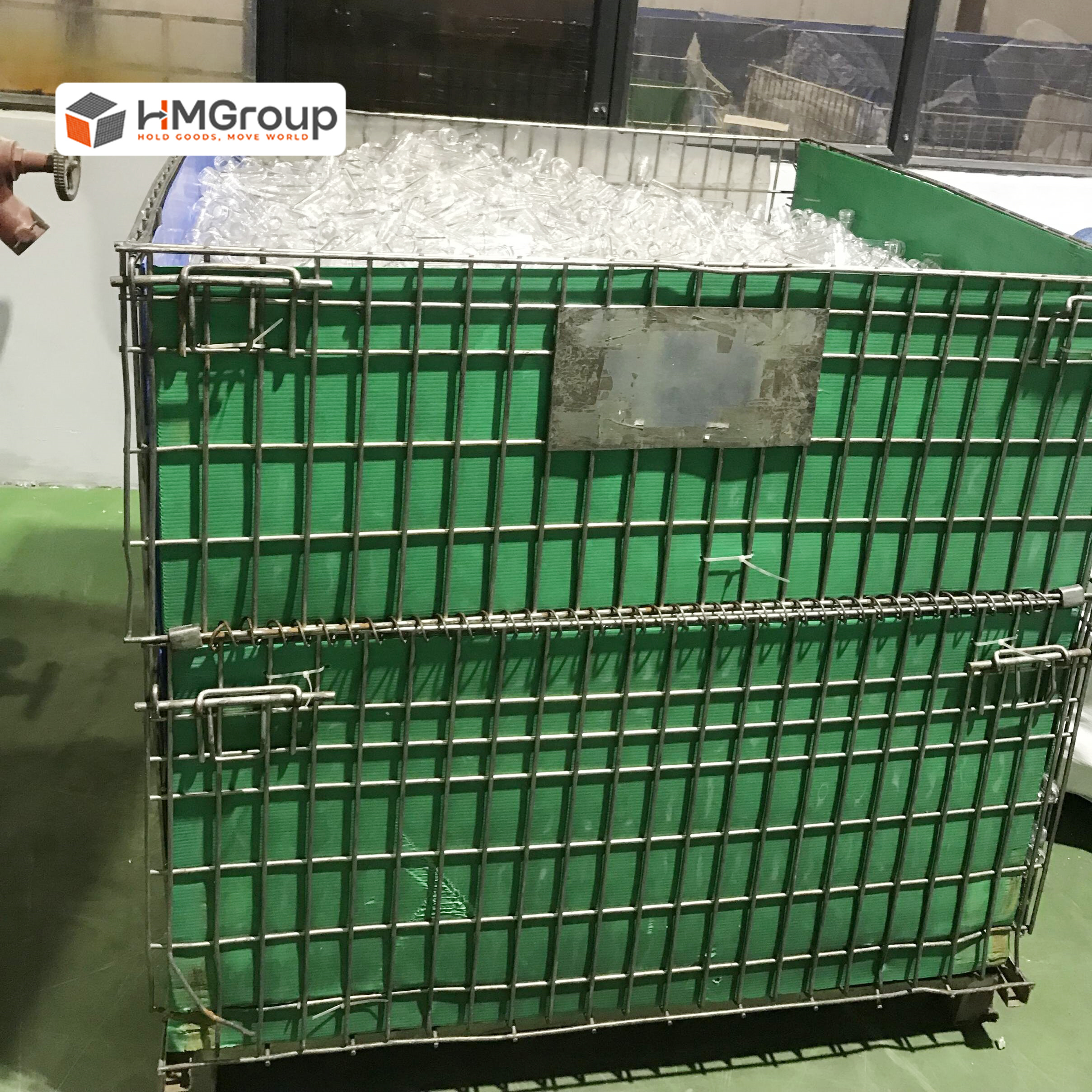
Step-by-step: how to read a wire container specification
Step 1 — Confirm the unit of gauge. Establish whether the figure is a millimetre diameter or a gauge number from an imperial system. Only then compare it with another model.
Step 2 — Establish what the grid measures. Ask whether the published aperture is a clear opening or a centre-to-centre pitch. For small parts, retention depends on the clear distance between wire surfaces.
Step 3 — Read the load figure with its basis attached. A stated capacity such as 1300 kg for HM-HD001 or 500 kg for HM-HD028 describes that model, not a formula. Ask whether the rating is static or dynamic, what safety factor applies, and how it was verified. Published model specifications are not controlled comparative test results.
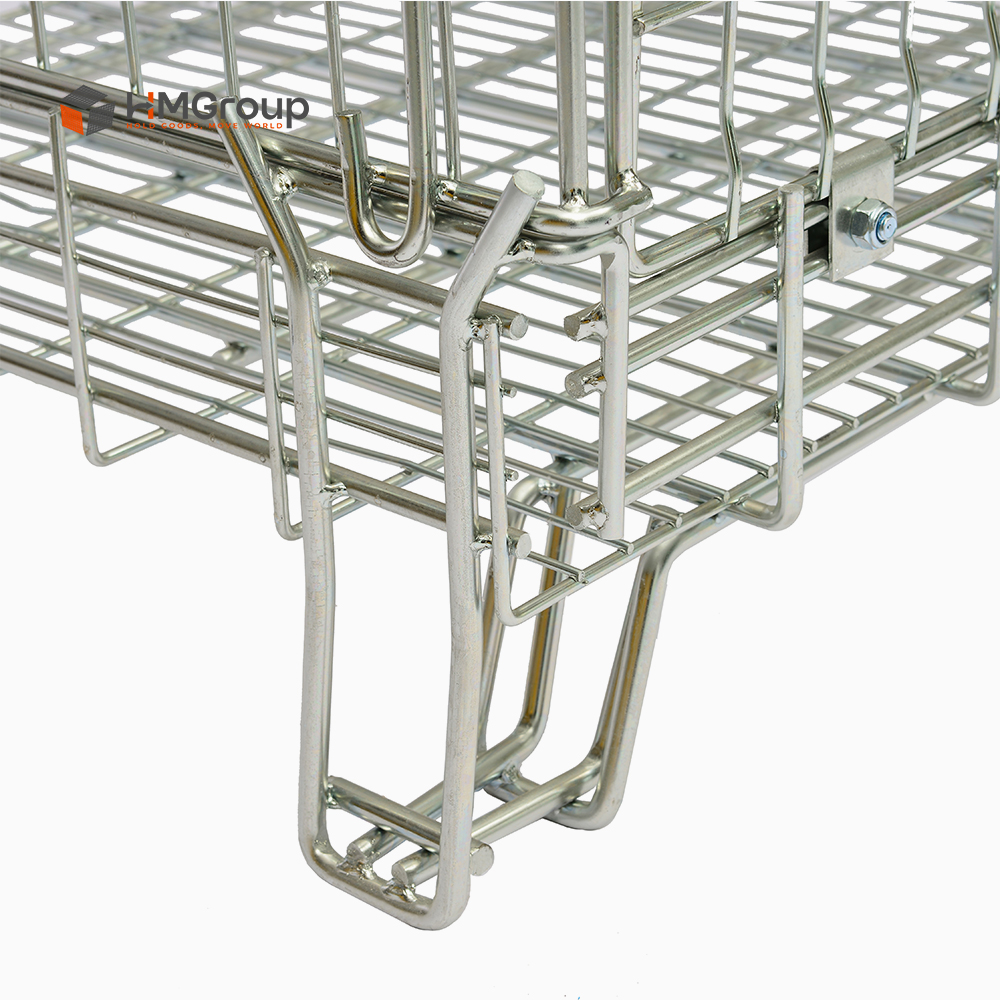
Step 4 — Check the frame and base, not just the mesh. Base structure, corner posts, stacking feet and gate hardware determine whether the mesh panel becomes a stackable container. A gauge figure alone says nothing about them.
Step 5 — Confirm the stacking statement. Distinguish "4 high" from "4+1 high" and confirm the load condition, floor condition and whether stacking is static or part of dynamic handling.
Step 6 — Specify the finish and any lining separately. Zinc plating, hot-dip galvanizing and powder coating are separate choices from gauge and grid, and a PP sheet lining such as HM-HD028's changes containment without changing the mesh.
Step 7 — Check the loading quantity for freight planning. Published figures differ widely by model: 500 sets per 40-foot high-cube container for HM-HD001, 350 for HM-HD005, 330 for HM-HD028, 332 for HM-WEU001, 240 for HM-PPC14 and 160 for HM-ST007. Freight planning should use the figure for the exact model and packing configuration.
Use cases: matching aperture to product
PET preforms
Preforms are light, stack badly and are easily marked, so the grid has to retain the part without pinching it. The PET preform container with a 62×125 mm grid and a 4.8–12 mm gauge range, stackable 5+1, is built for that job; the foldable HM-PPC14 offers a 54×160 mm grid with 6–12 mm wire and a stated 800 kg load. Where dust and surface scuffing are the risk rather than retention, HM-HD028 pairs a 50×100 mm grid with a PP sheet lining at a stated 500 kg. The decision rule is simple: choose the aperture by the smallest dimension that must not pass through, then add a lining if surface protection matters more than airflow.
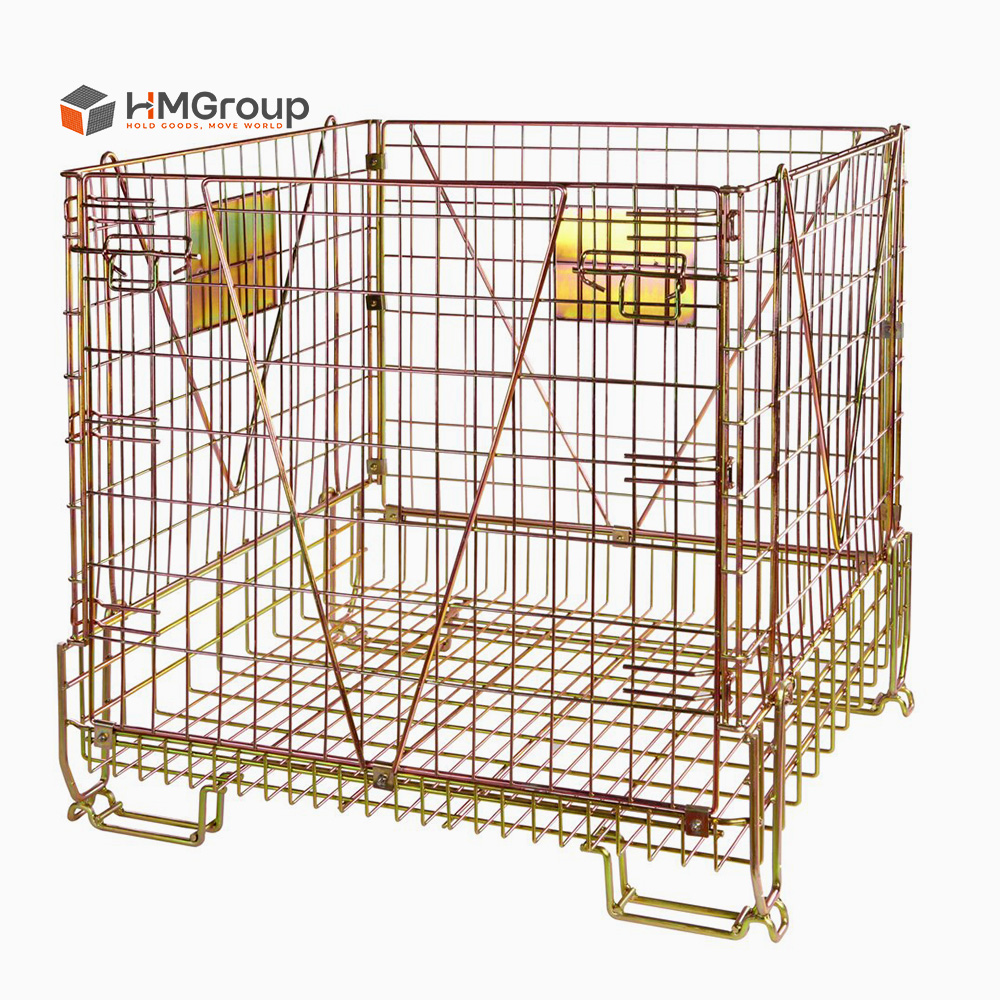
Wine bottles
Bottle containers need an aperture large enough for ventilation in humid cellars and small enough that bottle bodies cannot shift through the mesh. HM-WEU001 takes a 55×113 mm grid with 5–12 mm wire, stores 500 Bourgogne bottles at a stated 800 kg and stacks 4+1 high; HM-WEU005 uses a 51×118 mm grid for 400 Bordeaux bottles at the same stated load and stacking; HM-WEU010 uses a 60×120 mm grid and is listed for both wine and fulfillment warehouse use. HM Group application notes for cellar environments call for hot-dip galvanized or high-micron zinc finishes where humidity is high, which is a finish decision made on top of the gauge and grid choice.
General warehouse and component storage
For mixed industrial loads the aperture is chosen by the smallest part in the batch. HM-HD001 at 50×50 mm suits dense, heavy component loads at a stated 1300 kg; HM-HD010 at 25×50 mm suits small hardware that must not escape the mesh; HM-CP001 at 60×103 mm and HM-ST007 at 50×50 mm cover pallet-format handling. In every case the same rule applies: grid for containment, gauge for panel durability, frame for load.
Specification comparison
Figures are the manufacturer's published model specifications. Load ratings are company-stated and are not controlled test results; the test basis is not published, so the values describe each model's positioning and should be used to frame RFQ questions rather than to rank models against each other.
| Model | Exterior dimensions (mm) | Wire gauge | Grid size | Stated load | Stackability | Sets per 40'HQ | Published application |
|---|---|---|---|---|---|---|---|
| HM-HD001 | 1030×840×850 | 6 mm | 50×50 mm | 1300 kg | 4 high | 500 | Auto parts, agricultural, fulfillment, food & beverage |
| HM-CP001 | 1200×800×1000 | 5–10 mm | 60×103 mm | 1000 kg | 4 high | — | Food & beverage, hypermarket, e-commerce, warehouse, agricultural |
| HM-HD028 | 1200×1000×1140 | 5 mm | 50×100 mm + PP sheet | 500 kg | 4 high | 330 | PET preform, fulfillment & warehouse |
| HM-HD010 | 1200×1000×1250 | 6 mm | 25×50 mm | 800 kg | 4 high | 216 | PET preform, agricultural, fulfillment & warehouse |
| HM-HD005 | 1230×1040×900 | 6.2 mm | 50×100 mm | 1000 kg | 4 high | 350 | Auto parts, agricultural, fulfillment, food & beverage |
| HM-ST007 | 1230×835×970 | 4 mm | 50×50 mm | 1000 kg | 4 high | 160 | Auto parts, fulfillment & warehouse |
| HM-ST-AU001 | 1125×1125×1000/800 | 4 mm | 50×50 mm | 500 kg | 4 high | 160 | Auto parts, fulfillment & warehouse, mining |
| HM-PPC14 | 1120×971×1050 | 6–12 mm | 54×160 mm | 800 kg | 4 high | 240 | PET preform, warehouse storage |
| HM-WEU001 | 1140×830×980 | 5–12 mm | 55×113 mm | 800 kg | 4+1 high | 332 | Wine bottles (500 Bourgogne) |
| HM-WEU005 | 1200×920×1018 | 5–12 mm | 51×118 mm | 800 kg | 4+1 high | 228 | Wine storage (400 Bordeaux) |
FAQ
Which finish and documentation details sit alongside gauge and grid?
Finish is a separate specification from both wire gauge and grid size. HM Group offers zinc plating, hot-dip galvanizing and powder coating across its wire container range, and its application notes recommend hot-dip galvanized or high-micron zinc finishes for humid cellar environments. Alongside the finish, buyers typically request the quality-system documentation behind the product: HM Group's ISO 9001:2015 certificate, No. CN24/00004786, is listed as issued by SGS and valid through July 2027. Neither the finish nor the certificate changes the gauge or grid figure — they are additional columns on the same specification sheet.
Does a thicker wire always mean a higher load rating?
No. Compare HM-HD001 (6 mm wire, 50×50 mm grid, stated 1300 kg) with HM-ST-AU001 (4 mm wire, 50×50 mm grid, stated 500 kg) and the thicker wire is also the higher rating, but the two models also differ in footprint, height and frame design, and their test basis is not published. Compare HM-ST007 (4 mm, 50×50 mm, stated 1000 kg) with the same HM-HD001 and the gap narrows despite a 2 mm difference in wire. The safe reading is that gauge contributes to panel stiffness while the frame, base and dimensions determine capacity; the published ratings cannot be converted into a formula.
What grid size suits PET preforms?
The PET preform wire container uses a 62×125 mm grid with a 4.8–12 mm gauge range and 5+1 stacking, while the foldable HM-PPC14 uses a 54×160 mm grid with 6–12 mm wire and a stated 800 kg load. Where dust and surface scuffing are the concern, HM-HD028 combines a 50×100 mm grid with a PP sheet lining at a stated 500 kg. The aperture should be smaller than the smallest dimension that must not pass through; a PP sheet is added when surface protection matters more than airflow.
Which gauge and grid are used for wine bottles?
Wine-specific models in the range combine wide gauge spans with bottle-scale apertures: HM-WEU001 at 55×113 mm and HM-WEU005 at 51×118 mm, both with 5–12 mm wire, a stated 800 kg load and 4+1 stacking. HM-WEU001 is listed as storing 500 Bourgogne bottles and HM-WEU005 as storing 400 Bordeaux bottles; HM-WEU010 at 60×120 mm is listed for wine and fulfillment warehouse use. The differences reflect bottle shapes rather than a quality hierarchy.
Is a smaller grid always better?
No. A finer aperture such as the 25×50 mm grid on HM-HD010 retains small components that a 62×125 mm opening would not, but it reduces open area for ventilation, slows visual counting of contents and adds wire to the panel. Wider apertures such as 60×103 mm on HM-CP001 or 54×160 mm on HM-PPC14 improve airflow and inspection. The right choice depends on the smallest item in the load and whether the container must breathe.
How can I verify gauge and grid before ordering?
Ask four questions in writing: whether the gauge figure is a millimetre diameter or a gauge number, whether the grid is a clear opening or a centre-to-centre pitch, whether the published load rating is static or dynamic, and what the stacking notation covers. On a physical sample, measure wire diameter at several points with a caliper and measure the clear distance between wire surfaces rather than the pitch. Confirm the finish separately, and check that the model name on the specification sheet matches the model quoted.
Do gauge and grid change freight and cost per unit?
They change the loading quantity, which is one of the larger cost drivers in a container programme. Published figures per 40-foot high-cube container differ considerably: 500 sets for HM-HD001, 350 for HM-HD005, 332 for HM-WEU001, 330 for HM-HD028, 240 for HM-PPC14, 216 for HM-HD010 and 160 for HM-ST007. Heavier wire and denser mesh add container weight, and folding versus fixed designs change how many units load per container. Use the figure for the exact model and packing configuration rather than extrapolating from a similar size.
How do I get model-level specifications for a shortlist?
Work from the model specification tables rather than from general product descriptions, then request confirmation of gauge, grid, load basis and stacking for the exact models in scope. HM Group publishes its wire container range, model pages and contact channels through its official website; a downloadable catalogue covering the container range is also available as a starting point for a shortlist.
Conclusion
Wire gauge and grid size describe a mesh panel; load capacity and stackability describe a container. The two pairs meet in the frame. A 6 mm wire with a 50×50 mm grid underpins HM-HD001's stated 1300 kg, a 5 mm wire with a 50×100 mm grid and PP sheet lining underpins HM-HD028's stated 500 kg, and a 5–10 mm gauge range with a 60×103 mm grid sits behind HM-CP001. Read any one of those numbers alone and the specification is incomplete.
For buyers at the research stage, the practical sequence is short: fix the aperture by the smallest item that must stay inside, fix the gauge by the panel durability the handling cycle demands, then confirm the frame, the load basis and the stacking statement with the manufacturer. Finish, lining and freight quantity come after, because they change protection and logistics rather than containment.
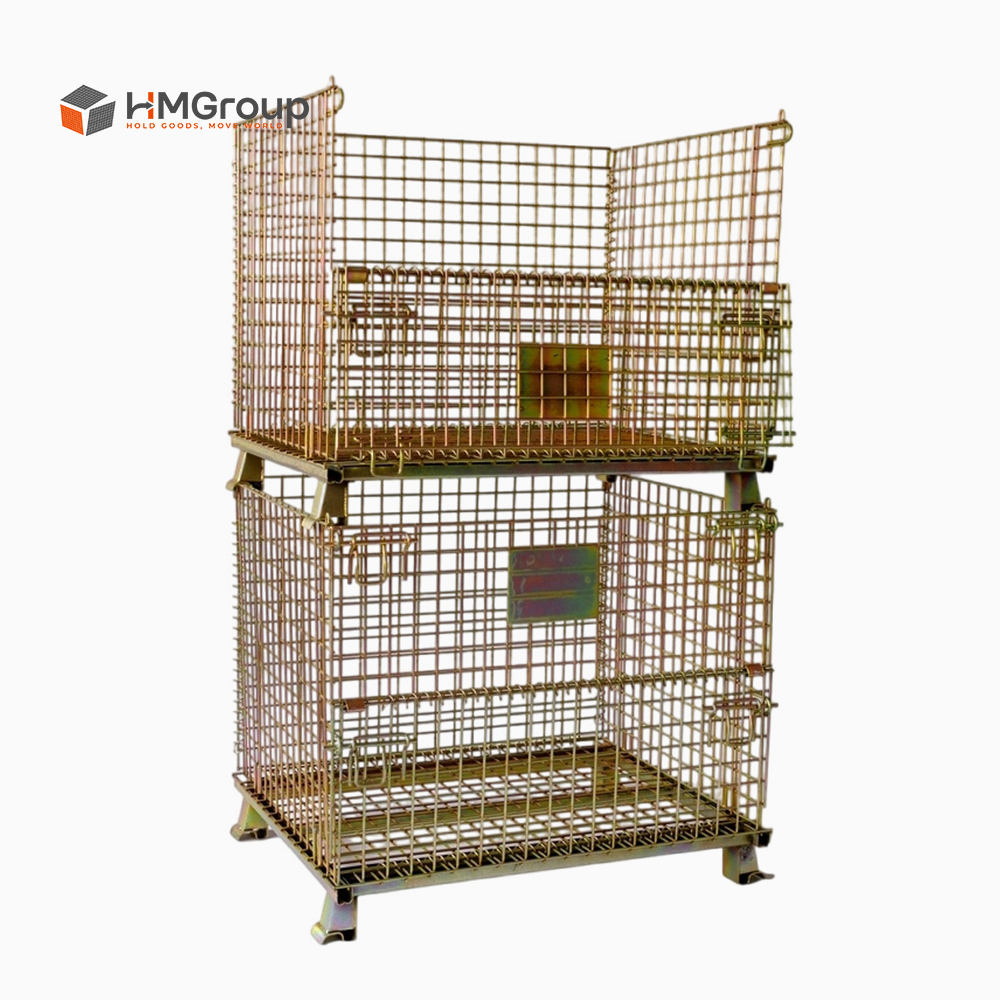
HM Group (hmlwires.com) publishes model-level specifications for its wire container range, including gauge, grid size, dimensions, stated load capacity, stackability and finish options. Buyers who need to compare models against a specific load can download the catalogue as a starting point and then request confirmation of the details that matter most — the gauge unit, the grid convention and the basis of the load rating — for the exact model in scope.
Have Questions or Need More Details?
Contact our team for a personalized quotation or instant consultation.
Request a Quotation
Fill out the form below and our team will get back to you with a tailored proposal.
WhatsApp Direct Chat
Prefer to chat in real-time? Message us on WhatsApp for instant assistance & quick answers.
- Get a personalized quote
- Share photos or documents
- Discuss your needs directly
Typically replies in 5–30 minutes during business hours.