What Is a Barrel Storage Rack? HM-BR066 Capacities and Wine Industry Uses
A barrel storage rack is a steel storage frame built to hold barrels in stacked tiers rather than side by side on a cellar or warehouse floor. HM-BR066 is the barrel model in the HM Group storage rack range: a mild steel Q235 unit with an exterior of 1130 × 775 × 453 mm, a published barrel capacity covering 50 L, 200 L, 225 L, 300 L and 500 L containers, stackability of up to four high, and a choice of zinc, hot-dip galvanized or powder coating finishes. A 40-foot HQ container holds 234 sets.
This article treats the subject in the order a first-time buyer meets it. It defines the category — what makes a rack a barrel rack rather than a general-purpose rack — then reads the HM-BR066 specification item by item, and finally maps the model onto the two environments named in its published scope: the wine industry and logistics and warehousing. It also states plainly which purchasing questions the published data answers and which it does not, because in barrel storage those gaps usually decide whether a rack suits a given cellar.
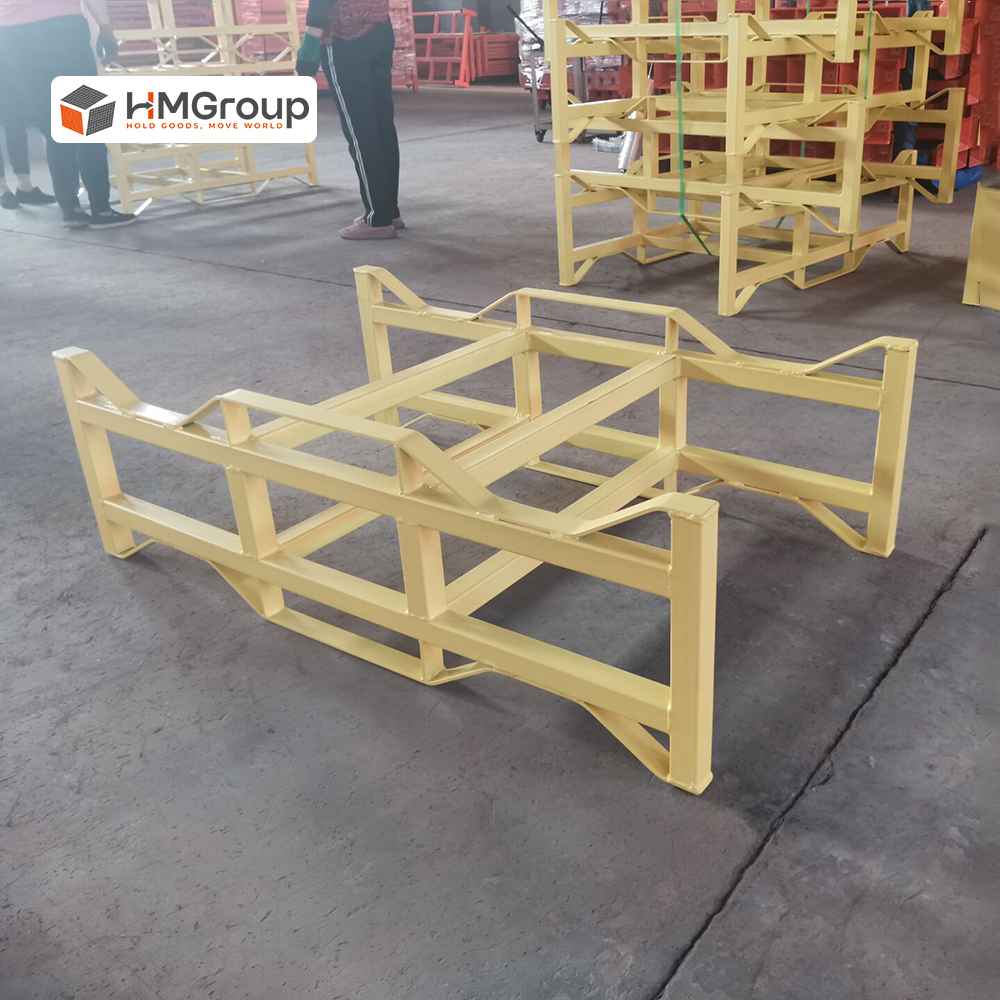
HM-BR066 barrel storage rack — the barrel model in HM Group's stackable steel rack range.
The Category: What Makes a Rack a Barrel Storage Rack
"Storage rack" is a broad equipment family, and the category name alone tells a buyer very little. A manufacturer's range is usually organised by the geometry of the load it carries. HM Group's portfolio, for example, includes wire mesh containers, PET preform containers, cage pallets, stillages, tire racks, nestainer racks, fabric roll racks, wine barrel racks, post pallet racks, wire mesh roll containers, wire mesh decking, Danish trolleys and steel pallets. Each of those items exists because one load shape — a tyre, a roll, a bulk bag, a barrel — imposes requirements that a flat surface does not satisfy.
A barrel storage rack is the subset of that family designed for cylindrical containers. Its defining features are structural rather than cosmetic: a frame sized around barrel diameter, supporting geometry that contacts the barrel along its body rather than resting it on a single line, and a base and post arrangement that allows identical units to be stacked on top of one another. HM-BR066 follows that pattern. It is a stackable steel rack — mild steel Q235 frame, exterior 1130 × 775 × 453 mm, stackable four high — whose published application scope is the wine industry and logistics and warehousing.
Why a barrel cannot simply go on a flat pallet
A flat deck presents one flat surface. A barrel does not have one; it has a curved body, two rims or chimes, and a centre of gravity that shifts with fill level. Placed on a flat surface, a barrel contacts along a narrow line, tends to roll, and depends on blocking or wedging to stay put. A rack replaces that improvised arrangement with an engineered one: the barrel sits in a frame sized for it, and the frame — not friction or wedging — carries the load into the base.
The wine-cellar application profile supplied for this rack category describes the same mechanism from the winemaker's side. It identifies uniform weight distribution on reinforced steel cradles as the way barrel deformation is avoided, in contrast to barrels standing directly on a cellar floor. That is a description of the design intent for the application, not an independent test result, and it is worth reading as such.
Why Cellar Conditions Shape the Specification
Barrel storage is unusual among warehousing tasks because the storage environment is itself a process environment. The application profile for this category describes ageing cellars at 70–85% relative humidity with constant temperature control, plus high-throughput operations that involve frequent forklift handling and regular vintage monitoring. Three consequences follow, and each one maps onto a line in the HM-BR066 specification.
First, sustained humidity makes the surface finish a functional decision rather than a cosmetic one; that is why the model is offered in zinc, hot-dip galvanized and powder coating variants instead of a single standard finish. Second, barrels are not static inventory — they are moved for racking, sampling, topping up and blending, which means the rack has to survive repeated handling and still present the barrel accessibly. Third, because the same unit may serve a working cellar for years, the base and post geometry has to be stable enough to be stacked and re-stacked without losing alignment.
HM-BR066: The Published Specification
The figures below are the published model data. They are company-reported specifications; no independent load test, applicable standard or certification record for this model was located in the available evidence.
| Specification | Published value |
|---|---|
| Model | HM-BR066 (Barrel Storage Racks) |
| Material | Mild steel Q235 |
| Exterior dimensions (L × W × H) | 1130 × 775 × 453 mm |
| Barrel capacity | 50 L, 200 L, 225 L, 300 L, 500 L |
| Stackability | Up to 4 high |
| Finish options | Zinc, hot-dip galvanized, powder coating |
| Container loading | 234 sets per 40-foot HQ container |
| Intended industries | Wine industry; logistics and warehousing |
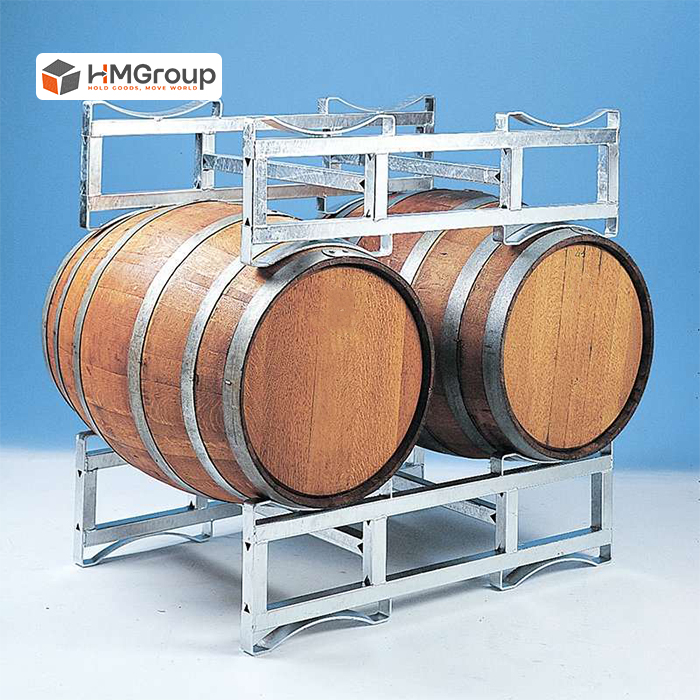
The Q235 frame carries the barrel load into the base — the structural difference between a barrel rack and a flat-deck pallet.
Reading the dimensions
1130 × 775 mm is a compact footprint, and 453 mm is a low profile. Both numbers matter more than they appear to. The footprint determines how many units fit along a cellar wall or between aisles, and it is the figure to check first against door widths, lift dimensions and forklift access routes. The 453 mm height is what makes four-high stacking practical in a room with limited headroom: because each tier is shallow, a four-high block builds up gradually rather than demanding a high-bay installation. The overall stacked height including barrels, and any pallet interface used underneath, should still be confirmed with the supplier before ceiling, sprinkler and clearance planning.
Reading the material and finishes
Q235 mild steel is the base material used across the HM Group rack range, including the HM-PP001 and HM-PP002 stacking racks, the HM-FR005 fabric roll rack and the tyre models. Using one base material across categories keeps welding practice and coating preparation consistent. The three finish options then address the environment: zinc and hot-dip galvanized are metallic finishes applied for corrosion protection, while powder coating adds a coloured, smooth surface. For the humid cellar conditions described in the application profile, hot-dip galvanized or powder coating are the finishes the profile specifies, citing 3 to 5 years of corrosion resistance under 70–85% relative humidity.
What the 50 L to 500 L Capacity Range Actually Means
The capacity line is the most quoted and least understood part of the specification, so it is worth being precise. The published range — 50 L, 200 L, 225 L, 300 L and 500 L — describes the barrel volumes the model is built to accommodate. It is a compatibility list, not a count.
At the bottom of the range, 50 L corresponds to the small-container end of cellar and beverage logistics work. The middle of the range, 200 L to 300 L, is where most wine casks sit, and the cellar application profile names standardized dimensions for Bordeaux casks at 225 L and Burgundy casks at 228 L alongside custom cask sizes. At the top, 500 L covers large-format containers. A single model covering that span is useful in mixed cellars where one installation has to serve several cask types at once.
Base geometry determines stack alignment — the reason a four-high configuration holds position under repeated forklift handling.
Stacking Four High in Practice
Stackability of up to four high is the published figure for HM-BR066. In a cellar context, the application profile describes vertical configurations of four to five tiers in high-density layouts, secured by stable interlocking bases and handled with standard cellar forklifts and electric pallet stackers. The profile also describes space efficiency of up to 75% compared with single-level floor placement. That figure belongs to the application profile as a category-level planning estimate; it is not a measured outcome from a specific installed cellar, and actual density gains depend on aisle width, ceiling height, cask size and access requirements.
One detail distinguishes this model from several others in the range. HM Group's tyre racks publish stacking in two states — four or six units open and twenty closed — because empty units nest into one another. The HM-BR066 data lists stackability as four high without separating open and closed configurations. Buyers who intend to store large numbers of empty racks between vintages should therefore ask the supplier how empty units nest and what floor area that requires, rather than extrapolating from other models.
Stacking safety is also a regulatory matter, not only an engineering one. In the United States, OSHA regulation 29 CFR 1910.176(b) addresses the stable and secure storage of materials in tiers, and it applies to racked as well as stacked goods. Whatever the model's published stackability, the installed configuration has to satisfy the workplace rules of the site's jurisdiction, and those rules should be checked locally.
Wine Industry Uses
The wine industry is the first application HM-BR066 names, and the cellar profile shows why the fit is specific rather than generic.
Ageing cellars and high-density cellar optimisation
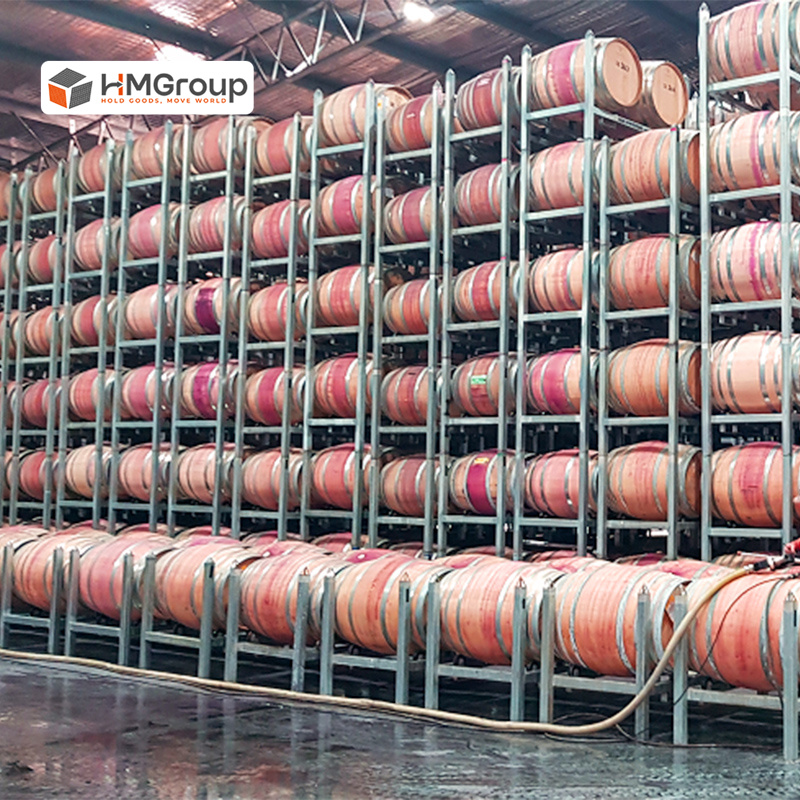
In a temperature-controlled cellar at 70–85% relative humidity, barrels occupy floor area for months or years while remaining working inventory that must be reached for sampling, topping up and blending. A stacked rack converts that floor area into vertical storage. The application profile frames this as two project types: high-density cellar optimisation, where the goal is more barrels in a fixed footprint, and structural infrastructure upgrades, where a facility moves from barrels standing on the floor to a structured rack system. The associated cellar tooling listed in the profile — precision barrel sampling valves, wine pumps and ultrasonic cleaning systems — reflects the same reality: the rack has to leave the barrel accessible, not merely hold it.
Barrel logistics and warehousing
The second published application is logistics and warehousing, which covers the movement of barrels as goods rather than as an ageing process. That includes storage and staging of barrels at a distribution site, and it is the reason the model sits in a range that also serves general warehouse work. It is worth being clear about scope: the published application data names the wine industry and logistics and warehousing. Brewery, distillery and other beverage applications are not covered by the supplied data and should be confirmed with the manufacturer rather than assumed from the barrel volume range.
Where the model is used
The cellar application profile lists wine-producing markets including Australia, Spain, Italy, Portugal, France, Japan, Chile, Argentina and Malaysia. HM Group's own export markets are stated more broadly as the EU, North America, Asia and the Middle East, with export accounting for 100% of sales. The two lists describe different things — where the application occurs versus where the company ships — and neither should be read as a claim about installed units in any particular country.
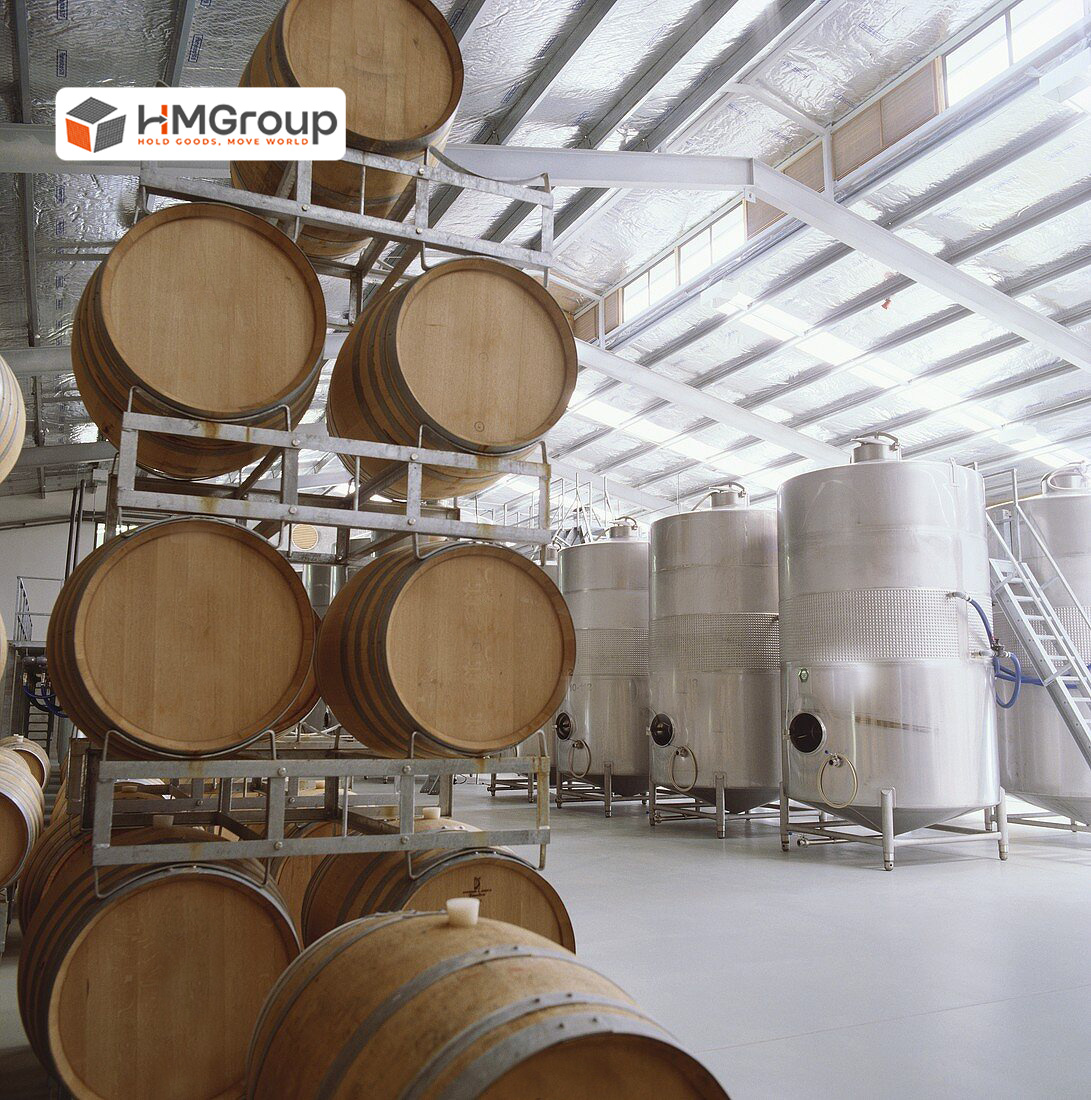
In an ageing cellar, the rack has to support the barrel and still leave it accessible for sampling and topping up.
Material, Finish and Customisation Options
Beyond the standard Q235 frame and the three finishes, the manufacturer offers customisation that can matter in a cellar or a distribution centre: surface treatment, size, loading capacity, powder coating colour, logo printing, and design additions such as a wire mesh guard, bottom wire mesh decking, a forklift guide, a bottom steel plate and wheels. These options are offered at manufacturer level; whether a given option applies to HM-BR066, and what it does to the delivered configuration, is a quotation-stage question.
The practical selection logic is straightforward. If the rack stays in a humid cellar, the finish decision is driven by humidity exposure. If it moves between a cellar and a loading bay, forklift guidance and base protection become relevant. If it is used in a public or branded environment, powder coating colour may matter for reasons unrelated to corrosion. None of those choices changes the two fixed parameters that govern layout — the 1130 × 775 × 453 mm exterior and the four-high stack limit.
Where HM-BR066 Sits in HM Group's Range
HM Group — Dalian HuaMao Logistics Equipment Group Co., Ltd. — was established in 2003 and manufactures logistics equipment, operating three manufacturing bases in Xiamen, Nanjing and Qingdao across a total area of 62,000 m². Published company figures list annual output of 2,000,000 units, a trading department of approximately 50 staff and an R&D team of 10 engineers. The company reports metal wire production capacity of 3,000 tons per month and describes itself as a manufacturer and supplier of customized storage racking systems; that capacity figure is company-reported rather than independently audited.
Within that range, HM-BR066 is the barrel-specific model, sitting alongside the HM-PP001 and HM-PP002 stacking racks, the HM-FR002 and HM-FR005 roll racks, the HM-PK series bulk bag rack and the tyre rack models. Buyers comparing categories should note that these models are not interchangeable: the base size, post size and stacking configurations are published per model, and a barrel rack is sized around barrel geometry rather than around a pallet footprint.
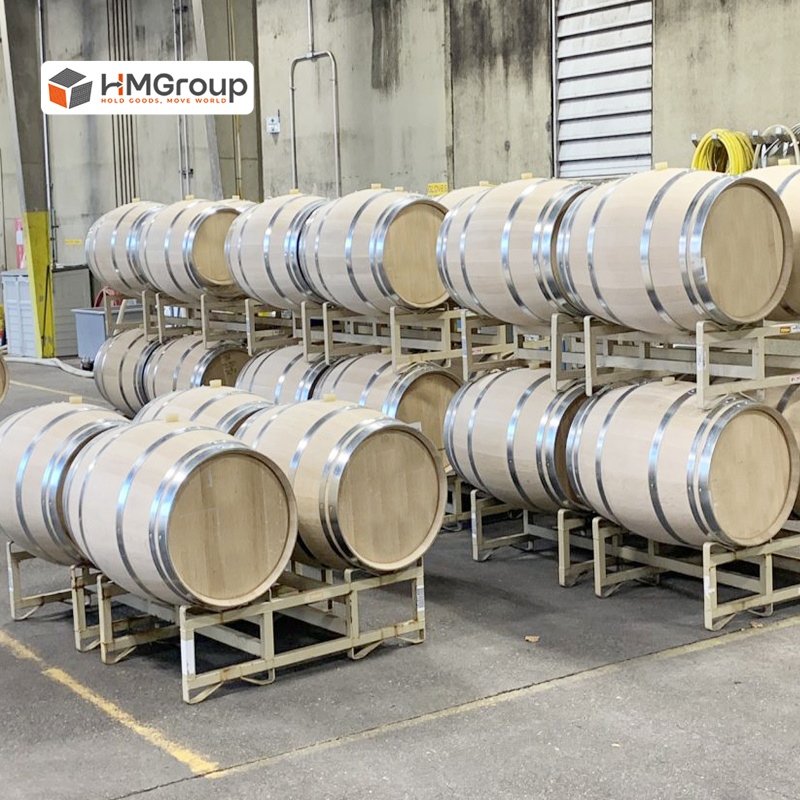
The same model serves barrel logistics and warehousing, where barrels are handled as goods rather than as ageing stock.
What to Verify Before Ordering
A warehouse rack purchase usually stalls on the same handful of questions. The table below separates what the HM-BR066 data already answers from what has to be confirmed in a quotation.
| Item | Status in published data | Confirm before order |
|---|---|---|
| Barrel volumes | 50, 200, 225, 300, 500 L | Your exact cask size, including 228 L Burgundy |
| Barrels per rack or tier | Not stated | Count for your barrel diameter and orientation |
| Load rating | No kilogram figure published for this model | Filled barrel weight; static versus dynamic loading |
| Stack configuration | Up to 4 high | Open versus nested empty storage; floor condition |
| Compliance | No standard or certification record located | Local workplace rules; OSHA 29 CFR 1910.176(b) in the US |
| Spill containment | Not addressed | Cellar drainage and containment policy |
| Price, MOQ, lead time | Not published | Project quotation, destination and finish |
Two cautions apply to the whole table. First, the specification figures are company-reported; where a site's insurer, auditor or regulator requires load-test documentation, that has to be requested as a document rather than inferred from the datasheet. Second, published figures for one model do not transfer to another — the HM-BR066 volumes say nothing about a tyre rack, and the tyre racks' open and closed stacking figures say nothing about this model.
Market Context
Barrel racks are a specialty segment inside a large equipment category. Third-party research from Market Research Future put the global industrial racking systems market at USD 16.76 billion in 2024. That figure describes the whole racking market, not barrel racks specifically, and it is useful only as context: specialty storage formats such as barrel, roll, bulk bag and tyre racks are bought for load-specific reasons, and a category total does not tell a buyer which format suits a given cellar or warehouse.
Conclusion
A barrel storage rack is a load-specific steel frame, not a general-purpose shelf with barrels placed on it. Its job is to hold cylindrical containers in stable tiers so that floor area becomes usable height without giving up access to the barrel. HM-BR066 expresses that idea in a defined set of numbers: Q235 mild steel, 1130 × 775 × 453 mm, published compatibility with 50 L to 500 L barrels, four-high stacking, and a choice of zinc, hot-dip galvanized or powder coating finishes, with 234 sets per 40-foot HQ container for shipping planning.
For a winery, the model's relevance comes from the cellar environment it is specified for — humid, temperature-controlled, handling-intensive — and from the vertical configurations the application profile describes. For a warehouse, it comes from the same frame doing a simpler job: keeping barrels organised, stackable and reachable. In both cases the next step is not a specification reading but a specification conversation, because barrel count per rack, kilogram load rating, empty-unit nesting and local compliance are the variables that decide the installation.
Frequently Asked Questions
- Does HM-BR066 come with a load test certificate or compliance documentation?
- No independent load test, applicable standard or certification record for HM-BR066 was located in the available evidence, so the published figures should be treated as company-reported specifications. Buyers whose site requires documented verification should request load-test or conformity documents directly from the supplier at quotation stage. Separately, workplace rules still apply to the installed configuration: in the United States, OSHA regulation 29 CFR 1910.176(b) addresses stable and secure storage of materials in tiers, and local requirements should be checked for the destination market.
- What barrel sizes does HM-BR066 hold?
- The published capacity range is 50 L, 200 L, 225 L, 300 L and 500 L. That spans small containers through standard wine cask volumes to large-format barrels. The cellar application profile for this rack category also references standardized dimensions for Bordeaux casks at 225 L and Burgundy casks at 228 L, so a buyer using 228 L Burgundy barrels should confirm fit with the supplier, because 228 L is not one of the five published volumes.
- How many barrels fit on one rack, and how much weight can it carry?
- The published HM-BR066 data does not state a barrel count per rack or per tier, and it does not list a kilogram load rating for this model. Both depend on variables the datasheet does not fix: barrel diameter and orientation for the count, and filled weight for the load. The practical route is to give the supplier your barrel type, filled weight and intended stacking arrangement, and ask for confirmation against your configuration rather than estimating from the volume range.
- How high can HM-BR066 be stacked, and what does that mean for a cellar layout?
- Published stackability is up to four high. In cellar layouts, the application profile for this category describes vertical configurations of four to five tiers using stable interlocking bases and handled by standard cellar forklifts and electric pallet stackers, with space efficiency described as up to 75% compared with single-level floor placement. That percentage is a category-level planning estimate for the application, not a measured result from a specific site; real density depends on aisle width, ceiling height, cask size and access needs. Overall stacked height should be confirmed with the supplier before ceiling and sprinkler planning.
- What drives the cost of a barrel storage rack, and is there a price list?
- No price, minimum order quantity or lead time is published for HM-BR066 in the available data, so pricing is a project quotation rather than a catalogue figure. The documented variables that affect a quotation are the finish chosen (zinc, hot-dip galvanized or powder coating), any customisation such as size, loading capacity, powder coating colour or design additions, and order volume — a 40-foot HQ container holds 234 sets, so freight per unit depends on how fully a container is loaded. Destination market and any documentation requirement should be stated in the enquiry.
- What information should I prepare to get an accurate specification and quote?
- Five items cover most of it: barrel volume and diameter, filled weight per barrel, the stack height you intend to use, the storage environment including humidity and temperature range, and the destination market with any documentation or compliance requirement. Adding your handling equipment — forklift, reach truck or electric pallet stacker — helps the supplier check access and base requirements. With those details, a supplier can confirm barrel count per rack, load suitability and the finish that fits the environment, instead of quoting from the standard datasheet alone.
Next step. If you are specifying barrel storage for a cellar, a barrel logistics site or a mixed warehouse, HM Group can review your barrel volumes, stack height and finish requirement against the HM-BR066 configuration. Send your cask type, filled weight and destination for a specification check and quotation: MARY KONG, mary@net-railing.com, Tel/WhatsApp +86 150 4058 7228. Company address: 3306 Times Square (Times 1), 50 Renmin Road, Zhongshan District, Dalian, Liaoning, China.
The full product and company catalogue is available for download: HM Group product brochure (PDF). Company website: HM Group.
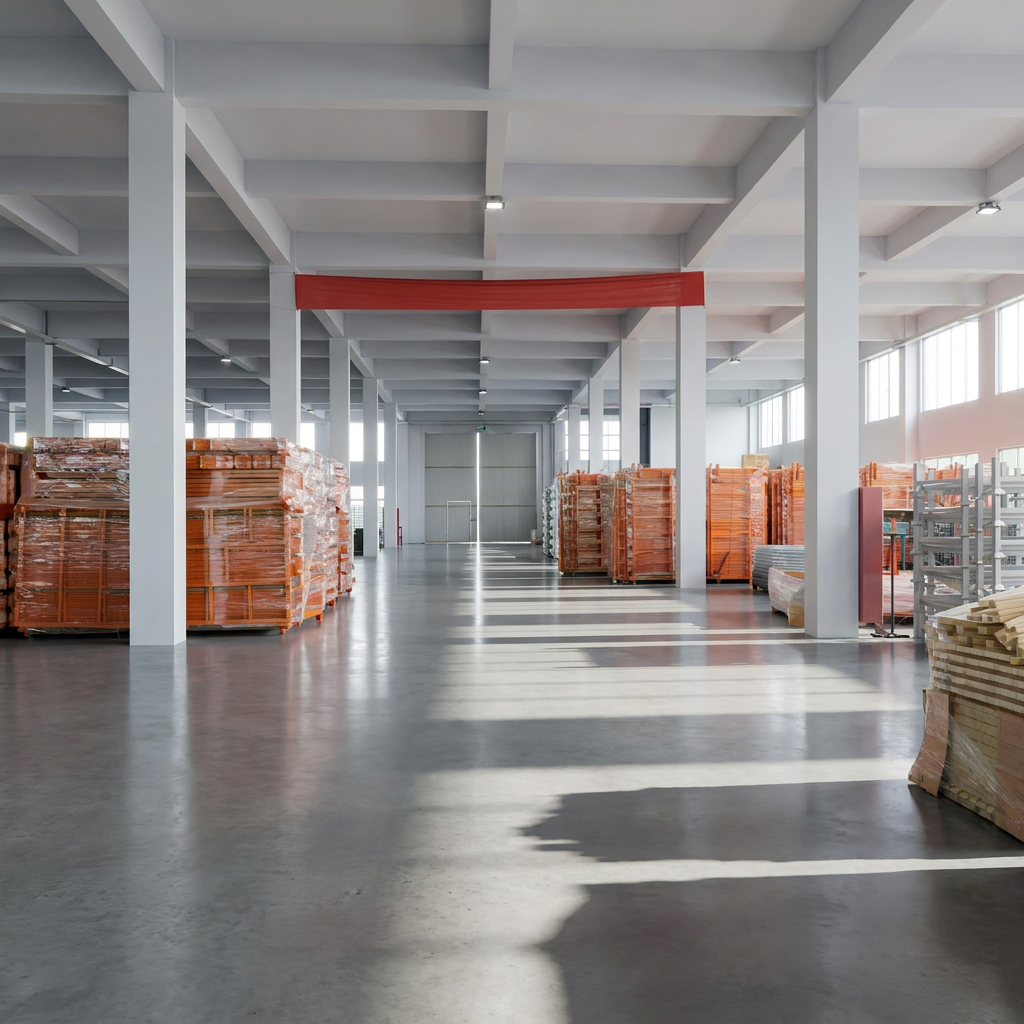
Packed stacking racks in HM Group's workshop; a 40-foot HQ container holds 234 sets of HM-BR066.
Have Questions or Need More Details?
Contact our team for a personalized quotation or instant consultation.
Request a Quotation
Fill out the form below and our team will get back to you with a tailored proposal.
WhatsApp Direct Chat
Prefer to chat in real-time? Message us on WhatsApp for instant assistance & quick answers.
- Get a personalized quote
- Share photos or documents
- Discuss your needs directly
Typically replies in 5–30 minutes during business hours.