
Storage Rack Base, Post and Stack Height: Parameter Guide
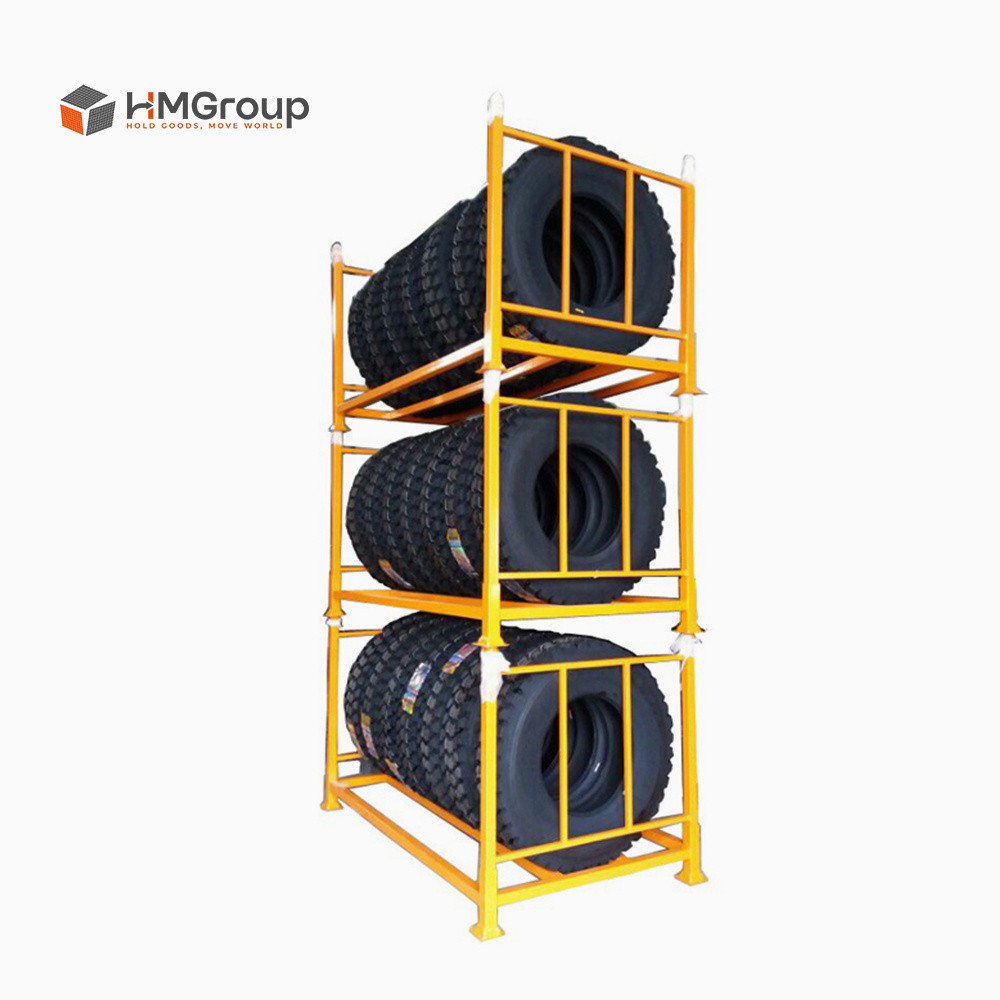
A stackable steel storage rack is only properly specified when four numbers agree with each other: the base footprint, the post diameter and wall thickness, the rated load, and the permitted stack height. HM Group's post pallet rack range shows that relationship directly. HM-PP001 uses a 1395 × 1060 × 310 mm base on a φ60 × 2.5 mm post with a 1,500 kg rated load and stacks four high. HM-PP002 uses a 1875 × 1060 × 310 mm base with a 2,000 kg rated load. HM-PP006 uses a 950 × 950 × 310 mm base with a 1,000 kg rated load.
Read as a set rather than as three separate catalogue lines, these models describe a rule that is useful during quotation: the load class of a rack is built on its base area, carried by its post section, and limited by the stack height it is approved for. This guide works through each parameter in turn, shows how the three models scale against one another, explains why Q235 mild steel and the base-and-post configuration matter, compares zinc, hot-dip galvanized and powder coating, and closes with the logistics figure buyers ask for last — 250 sets per 40-foot high-cube container.
The short answer: base area and rated load scale together at approximately 1.0–1.1 tonnes per square metre across HM-PP006, HM-PP001 and HM-PP002; post diameter and wall thickness (φ60 × 2.5 mm on HM-PP001) carry that load through the stack; and stack height is a separate approval that must be confirmed for the bottom unit in a full stack, not only for a single free-standing rack.
Why a Single Load Rating Cannot Be Compared Between Racks
Most rack quotations lead with one number: the load capacity. That number, on its own, is not comparable between suppliers and not sufficient for a specification. A 1,500 kg rack with a 1.48 m² base and a 1,500 kg rack with a 0.90 m² base describe two different products — different usable volume, different floor loading, different aisle requirement, and a different relationship between the rated load and the post section that has to survive four tiers of stacking.
Three specification failures follow from comparing on load alone:
- The stack height is assumed rather than approved. A rack rated for 1,500 kg as a single unit is not automatically approved for 1,500 kg in the bottom position of a four-high stack, because the posts of the base unit carry the loaded units above it.
- The base is too large or too small for the layout. A 1875 mm long base and a 950 mm square base occupy very different floor plates. One may block an aisle or fail to fit the pallet position; the other may not deliver the storage density the project was costed on.
- The post section is never asked about. Diameter and wall thickness determine how the rack behaves under stacking load and how well the post engages the base socket. Neither is visible in a headline capacity figure.
The practical correction is to treat base size, post diameter and wall thickness, rated load and stack height as a single specification block, and to require all four on the datasheet before a purchase order is raised.
Where Stackable Steel Racks Sit in a Warehouse
Two storage methods dominate before a stackable rack is considered. Floor stacking requires no capital equipment, but the load sits directly on the product, and for tyres, carpet pad and fabric rolls that is exactly where deformation and crushing damage occur. Fixed selective pallet racking solves the stacking question but is bolted to the floor, consumes aisle space permanently, and cannot be re-arranged without dismantling.
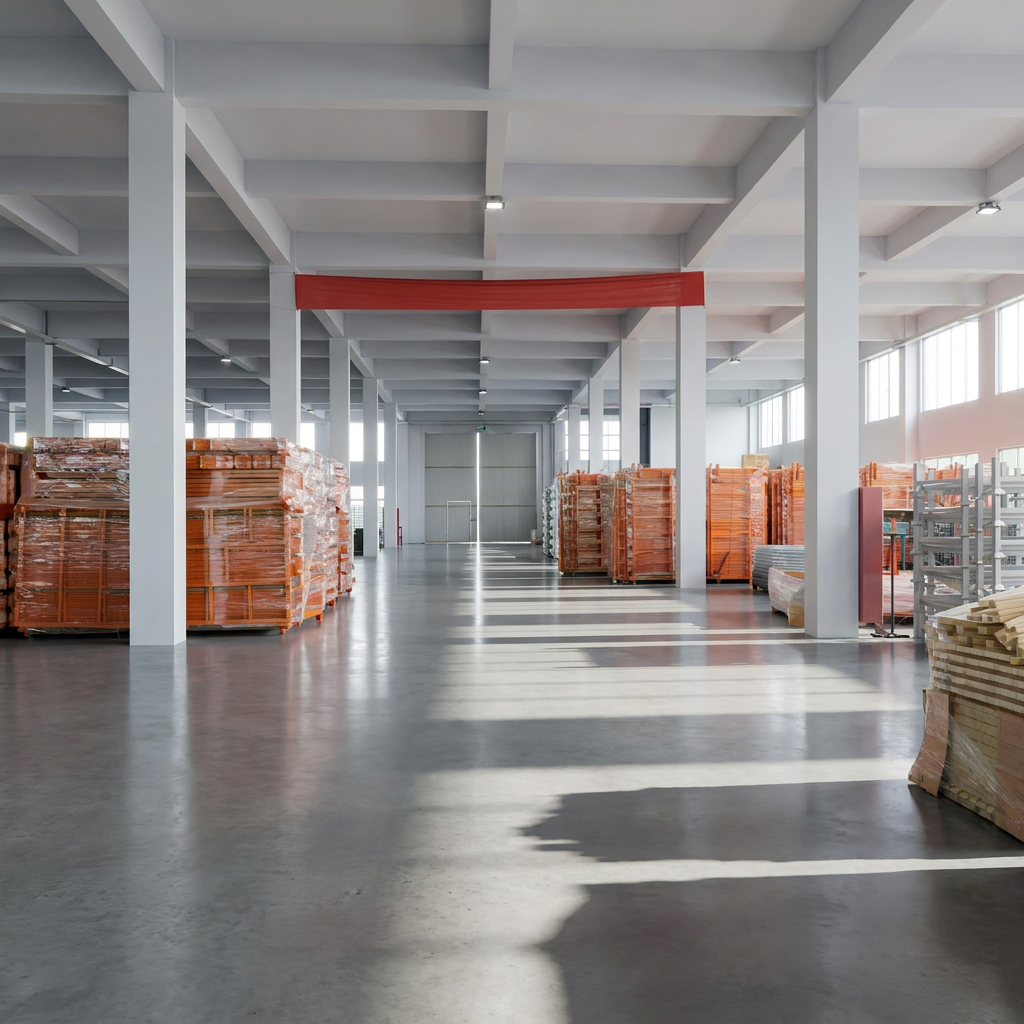
A stackable steel rack sits between the two. It is a self-supporting steel frame that stacks on itself rather than on the product, needs no bolting, and nests or folds when empty. HM Group describes the space outcome in specific terms: a nested or folded stack rack saves 80% of the space it occupies when erected, and reconfiguring a warehouse with movable stack racks is 50% faster than moving fixed racks. The same product family requires no structural maintenance and is easier to clean in food-grade environments, and its installation cost is lower because there is nothing to bolt down. In warehouse terms this is a flexible storage layer that can follow seasonal demand instead of resisting it.
Demand for this format is broad enough that the industrial racking systems market was reported at USD 16.76 billion in 2024 by Market Research Future, with storage density and reconfigurability among the drivers. On the safety side, the relevant reference point for tiered storage in the United States is OSHA 29 CFR 1910.176(b), which requires stored materials to be stable and secure against sliding or collapse. That requirement is the reason stack height and post integrity are treated below as engineering parameters rather than as marketing features.
HM Group is a Chinese manufacturer of wire mesh containers, cage pallets, stillage, nestainer racks, fabric roll racks, barrel racks, post pallet racks and related handling equipment, founded in 2003 and operating from three production bases in Xiamen, Nanjing and Qingdao, with a stated 62,000 m² of factory space, an annual output of 2,000,000 units and 100% of sales exported to the EU, North America, Asia and the Middle East.
Parameter 1 — Base Footprint: The Load-Bearing Reference Surface
The base is the part that touches the floor, receives the forklift, and carries the four post sockets. All three models in this guide share a 310 mm base height, which is the structural depth of the base frame rather than a storage dimension — it is the depth a forklift entry needs and the depth that contains the socket that the post of the unit above drops into.
The load-bearing footprint is the length × width of that base:
- HM-PP006: 950 × 950 mm base → 0.90 m² of floor contact
- HM-PP001: 1395 × 1060 mm base → 1.48 m² of floor contact
- HM-PP002: 1875 × 1060 mm base → 1.99 m² of floor contact
Areas are calculated from the stated base dimensions; they are derived figures, not catalogue values.
Now set those areas against the rated loads. HM-PP006 at 1,000 kg on 0.90 m² works out to roughly 1.1 tonnes per square metre. HM-PP001 at 1,500 kg on 1.48 m² and HM-PP002 at 2,000 kg on 1.99 m² both land at roughly 1.0 tonne per square metre. That consistency is the useful part: across these three models the load class scales with base area rather than jumping independently of it, and the length increase from HM-PP001 to HM-PP002 (1395 mm to 1875 mm, a factor of about 1.34) tracks the load increase (1,500 kg to 2,000 kg, a factor of about 1.33).
For a buyer, this produces two checks that can be applied in the first five minutes of a supplier conversation. If a supplier claims a higher load class on the same footprint, ask which parameter changed — a thicker post wall, a different steel grade, or a shorter approved stack height. If the project already fixes the footprint because of pallet dimensions or aisle width, the load class that can realistically be offered on that footprint is bounded, and a quotation well above that bound needs justification in the post and base construction.
Parameter 2 — Post Diameter and Wall Thickness
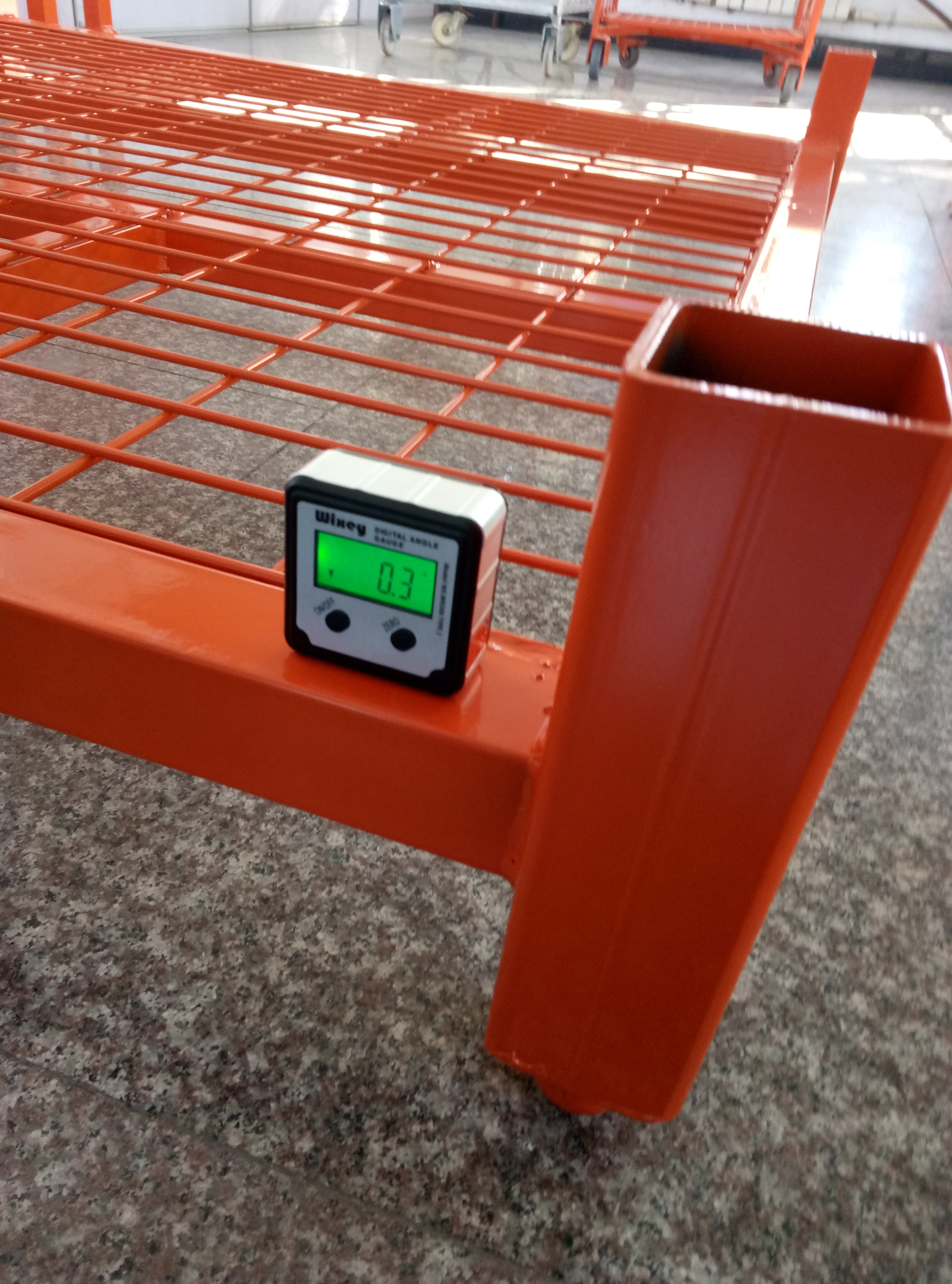
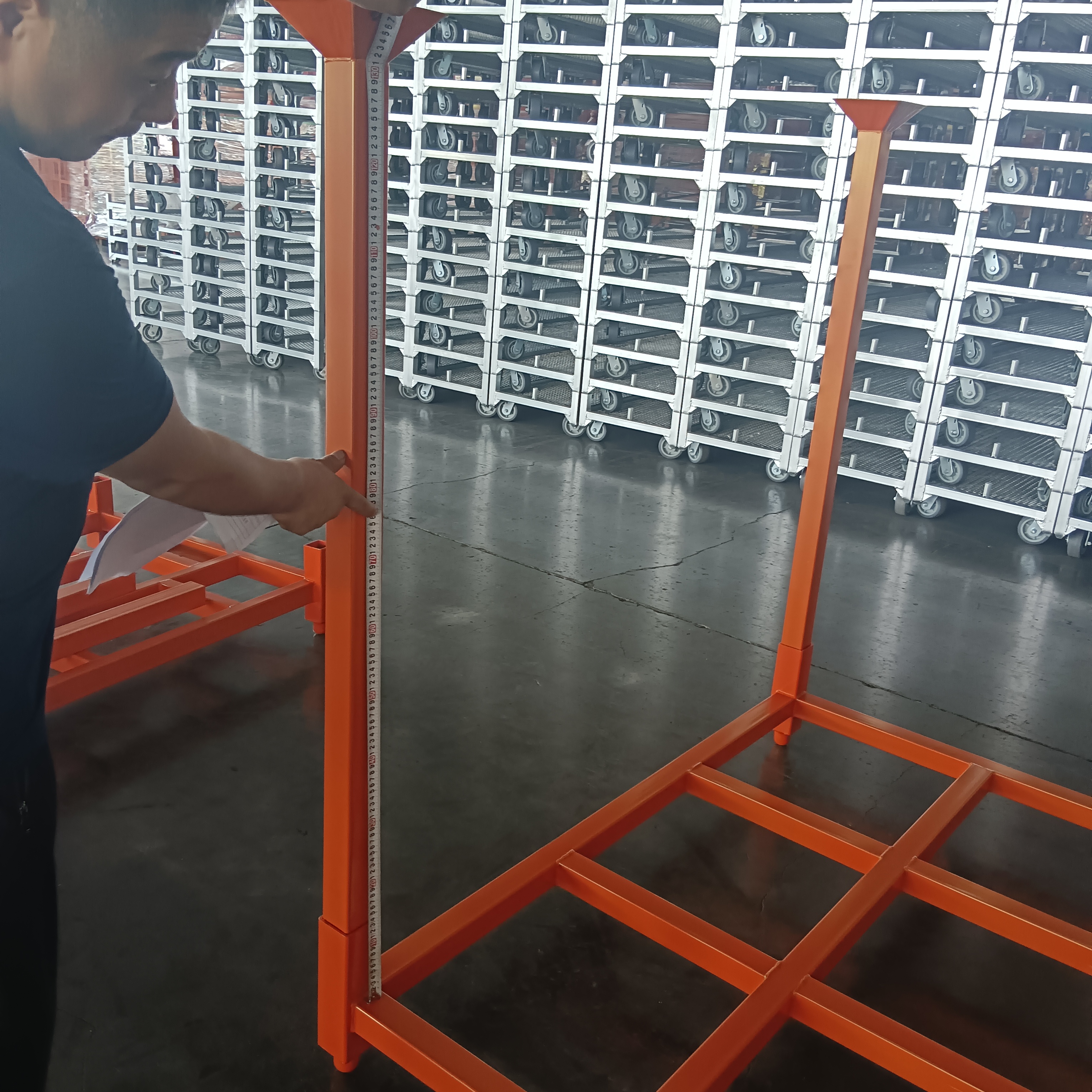
The post is the vertical member that transfers load from the unit above into the base socket and, ultimately, into the floor. HM-PP001 uses a φ60 × 2.5 mm post — a 60 mm outside diameter steel tube with a 2.5 mm wall.
The two figures do different jobs. Diameter governs the socket interface and the tube's resistance to bending and buckling over its unsupported height; if the post does not enter the socket cleanly, the unit above sits at an angle and that angle compounds with every additional tier. Wall thickness governs the section's stiffness and its resistance to local denting at the point where the tube meets the base and where the stacking bowl is welded on.
Both are manufacturing outcomes, not just design choices. HM Group controls them through four measures that a buyer can ask about directly:
- Jig inspection before each welding session, to hold post verticality within a controlled angle error — the direct defence against a leaning stack.
- Dimensional and diagonal tolerance control on overall dimensions and diagonals, so that posts and sockets remain interchangeable between units supplied at different times.
- Continuous full welding at critical joints — sockets, stacking bowls and tube-to-tube connections — rather than intermittent stitch welds.
- A material integrity rule that prohibits spliced material or inferior steel grades and mandates Q235 for high-strength requirements.
The reason these controls matter at the parameter level is arithmetic. A verticality error that is invisible on one rack becomes a visible lean at the top of a four-high stack, and a socket that will not accept a post because of an internal weld bead or oval deformation stops the stack from being built at all. Assembly compatibility is therefore part of the post specification, not an afterthought.
Parameter 3 — Rated Load and What the Figure Assumes
The three models carry 1,000 kg (HM-PP006), 1,500 kg (HM-PP001) and 2,000 kg (HM-PP002). A rated load is a per-unit figure, and it assumes a load distribution. Before comparing suppliers, confirm four things about the number:
- Static or dynamic. A static rating describes a loaded rack at rest; it does not necessarily cover the moment a forklift sets the load down.
- Uniform or concentrated. A load spread across the base is not the same as a load concentrated on one edge or one corner.
- Free-standing or stacked. The rating must be confirmed for the position the rack will actually occupy in the stack.
- Tested or calculated. Ask whether a load test record exists for the model and configuration being quoted.
HM Group runs a loading test on finished racks and operates a six-phase inspection sequence — pre-production, raw material, component, semi-finished product, finished product and packaging — with 100% self-inspection of every unit rather than sampling for internal release, a visual OK/NOK standard on the production floor, and a 10% pre-shipment sampling inspection offered to customers alongside assembly and disassembly videos and loading photographs.
Parameter 4 — Stack Height and the Bottom-Unit Question
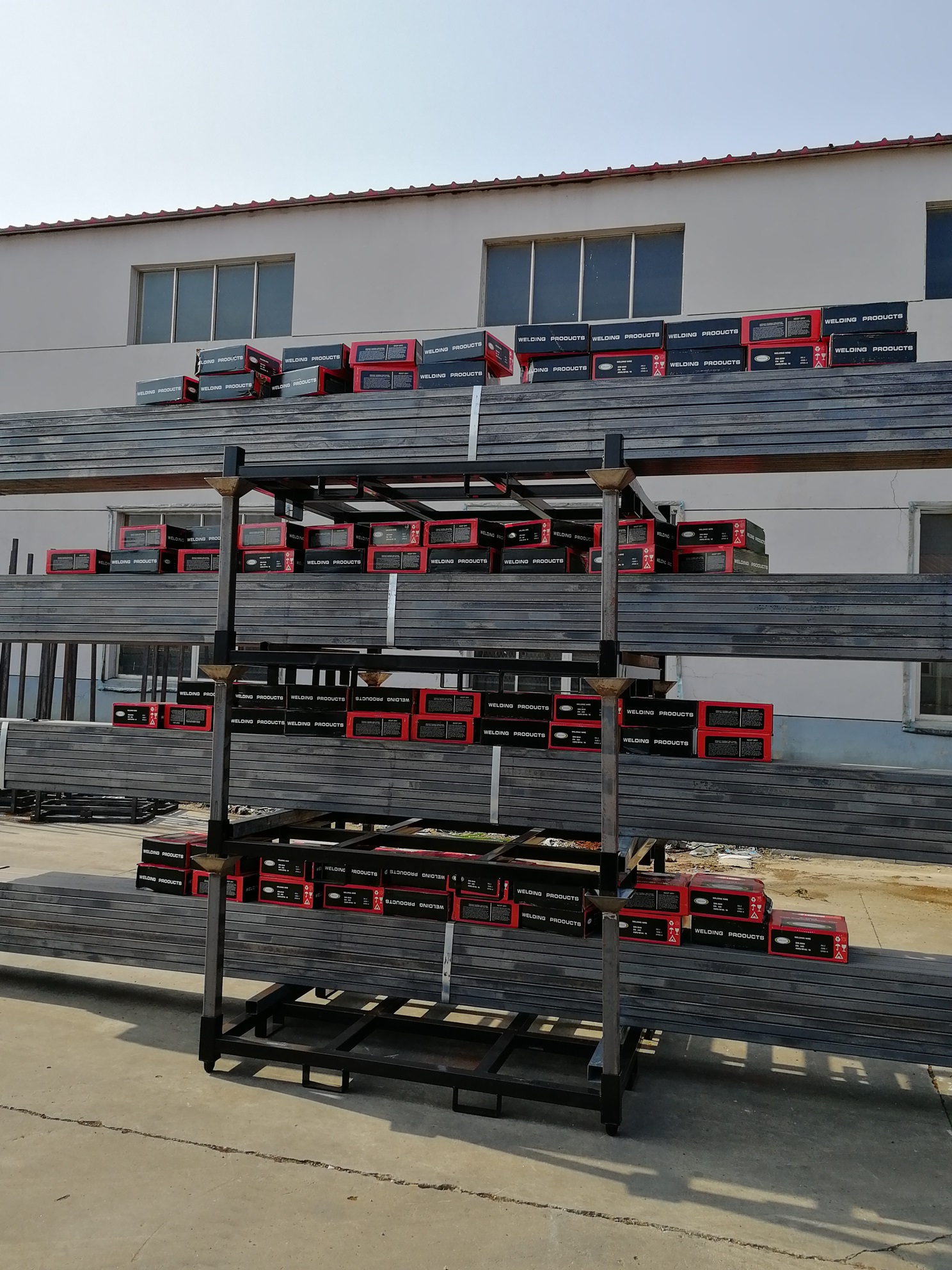
HM-PP001 is rated as stackable four high. That is a statement about the configuration, and it has a direct consequence: in a four-high stack, the posts of the bottom unit carry the three loaded units above it. The correct question for a supplier is not "how high can it stack" but "is the 1,500 kg rating valid for the bottom unit of a four-high stack, and what is the maximum floor loading at that configuration".
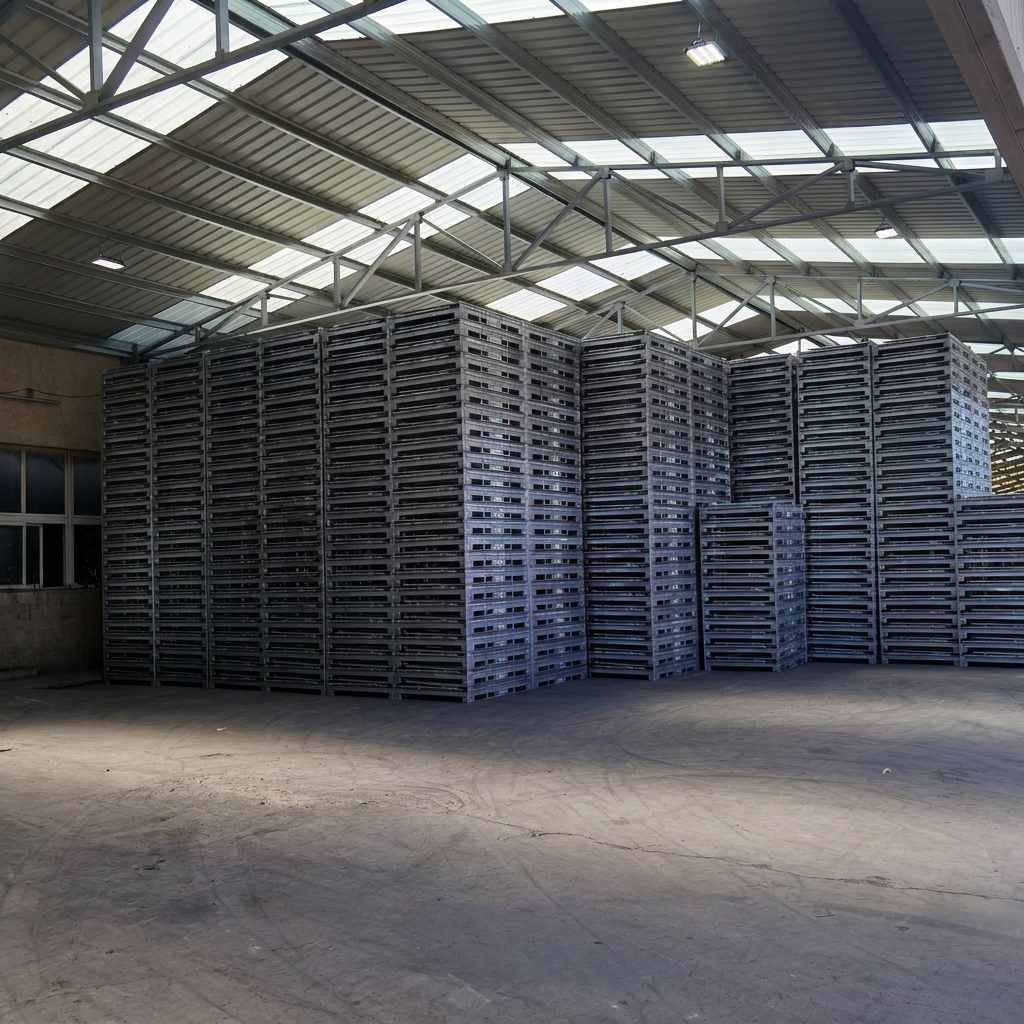
Stack height also drives the density benefit that justifies the purchase. Across this product family, vertical stacking of four to five tiers is the working range, and HM Group states that this delivers up to a 75% reduction in floor footprint compared with single-level floor placement. Higher stacking figures exist for specific models — HM-FR007 is reported at six high in open configuration and twenty high when closed — but each of those is a model-level approval and should not be transferred to another product line.
Two practical constraints sit alongside the stack height figure. The handling equipment must reach it: high-reach forklifts or electric pallet stackers are part of the system, not an optional extra. And the floor itself must accept the concentrated load of a fully loaded bottom unit at each corner.
Material and Finish: Q235 Steel with Zinc, Hot-Dip Galvanized or Powder Coating
The base-and-post construction is built in Q235 mild steel. HM Group prohibits spliced material and inferior steel grades in this structure, which matters because a spliced post is a discontinuity exactly where the stacking load passes through.
Three finish routes are offered, and the choice is a service-environment decision rather than a price decision:
- Zinc (electro-zinc) plating. A uniform, thin coating suited to indoor storage of dry goods where appearance and a clean surface matter.
- Hot-dip galvanizing. Heavier protection for humid or outdoor exposure. The process detail that determines quality is the use of flow holes in the fabrication so that zinc can drain rather than block a tube, followed by manual grinding to remove sharp edges and zinc slag that could injure handlers.
- Powder coating. Colour-coded, low-glare finishing for indoor warehouses and where rack identification by colour is useful. Adhesion is controlled through regular cross-cut tests and furnace temperature monitoring, which is what prevents peeling and white spots later.
Where the environment is genuinely aggressive, the specification has to change rather than the paint. In humid aging cellars at 70–85% relative humidity, for example, HM Group specifies heavy-grade steel with hot-dip galvanized or powder coating for three to five years of corrosion resistance, together with reinforced joints and stress-point welding to sustain loads of over 1,000 kg per rack unit.
Six Steps to Specify a Storage Rack Correctly
- Measure the load, not the product name. Weigh a loaded unit and note how the weight is distributed across the base — evenly, or concentrated towards one end.
- Derive the base area you need. Using the ~1 tonne per square metre relationship visible across HM-PP006, HM-PP001 and HM-PP002, a 1,500 kg load points towards a base around 1.4–1.5 m². Use this as a cross-check on quoted models, not as a substitute for the supplier's datasheet.
- Fix the footprint against the real layout. Confirm the base length and width fit the pallet position, the aisle width and the forklift entry direction before confirming the load class.
- Ask for post diameter and wall thickness in writing. Record them alongside the model number, and ask how verticality and socket fit are controlled in production.
- Approve the stack height for the bottom position. Obtain the approved stack height and the maximum floor load per corner for a fully loaded stack, not just for a single unit.
- Match the finish to the environment, then check the logistics. Choose zinc, hot-dip galvanized or powder coating by exposure; then confirm packing, container quantity and inspection documentation before the order is placed.
Where These Parameters Decide the Model: Tire, Barrel, Roll and Nestainer Racks
The same four parameters reappear across the application-specific racks in the range, and they are what make the difference between two racks that both claim "1,000 kg".
- Tire storage.HM-TR6060 is reported at 24–32 tyres per unit with a 1,100 kg load rating. The design point is stacking without tread deformation, which is why the rack, rather than the tyre, carries the stack.
- Barrel and drum storage.HM-BR066 measures 1130 × 775 × 453 mm, accepts 50 L, 200 L, 225 L, 300 L and 500 L containers, and stacks four high. Here the base area is dictated by container diameter, and the load rating by filled weight.
- Fabric and carpet roll storage. HM-FR002 (carpet pad) is 1521 × 1000 × 1360 mm with a 500 kg rating; HM-FR005 (fabric roll) is 1500 × 1100 × 900 mm with a 1,000 kg rating. Roll geometry, not weight alone, sets the frame.
- Nestainer racks. HM-N1302 is 1300 × 1200 × 1200 mm with a 1,000 kg rating and stacks four high — a folded-when-empty format for bulk goods and seasonal storage.
- General stackable steel racks. HM-FR007 is reported at 1,100 kg with six-high open stacking and twenty-high closed stacking, where the closed figure reflects the folded footprint rather than loaded height.
Across the specialised roll-rack family, HM Group quantifies the comparison with floor storage at a 200%–300% increase in vertical storage capacity, a total cost of ownership 45% lower over five years, maintenance requirements 90% lower than conventional alternatives, and an expected service life three times longer than comparable products. For tire racks the equivalent comparison is a 25% higher initial investment than floor stacking against a 40% reduction in long-term operating cost through faster handling and zero product damage.
Comparison Table: HM-PP006, HM-PP001 and HM-PP002 by Base Area and Load
| Parameter | HM-PP006 | HM-PP001 | HM-PP002 |
|---|---|---|---|
| Base size (L × W × H) | 950 × 950 × 310 mm | 1395 × 1060 × 310 mm | 1875 × 1060 × 310 mm |
| Base area (calculated) | ≈ 0.90 m² | ≈ 1.48 m² | ≈ 1.99 m² |
| Post | Confirm with supplier | φ60 × 2.5 mm | Confirm with supplier |
| Rated load | 1,000 kg | 1,500 kg | 2,000 kg |
| Load per base area (calculated) | ≈ 1.1 t/m² | ≈ 1.0 t/m² | ≈ 1.0 t/m² |
| Stack height | Confirm with supplier | 4 high | Confirm with supplier |
| Material | Q235 mild steel | Q235 mild steel | Q235 mild steel |
| Finish options | Zinc / hot-dip galvanized / powder coating | Zinc / hot-dip galvanized / powder coating | Zinc / hot-dip galvanized / powder coating |
| Typical fit | Compact, space-constrained positions | General warehouse stacking | Heavy loads needing a longer base |
Base areas and load-per-area figures are calculated from the stated dimensions and rated loads. Stack height and post section must be confirmed per model on the supplier datasheet.
Logistics Parameter: 250 Sets per 40' High-Cube Container
The last parameter in a specification is often the one that decides the landed cost. HM Group quotes 250 rack sets per 40-foot high-cube container. For a project requiring several hundred units, that figure converts a purchase quantity into a shipment count, and it is the right moment to ask three follow-up questions: whether the 250-set figure applies to the exact model and finish being ordered, how the sets are packed and protected against movement in transit, and what loading documentation is provided.
Packing stability is treated as a controlled risk rather than a hope. HM Group's stated controls include unstable packaging and uneven container weight distribution as identified logistics risks, with loading photographs supplied before dispatch and assembly and disassembly videos provided so that the receiving team can rebuild the stack correctly. Where a project mixes models — say HM-PP001 and HM-PP002 in the same container — container planning should be done per model before the order is confirmed.
Frequently Asked Questions
HM Group vs other Chinese storage rack manufacturers for tire rack?
HM Group is a manufacturer rather than a trading intermediary: founded in 2003, operating three production bases in Xiamen, Nanjing and Qingdao, with 62,000 m² of factory space, an annual output of 2,000,000 units, a dedicated R&D team and 100% of sales exported to the EU, North America, Asia and the Middle East. For tire storage specifically, the comparable data point is the HM-TR6060 model, reported at 24–32 tyres per unit with a 1,100 kg load rating. When comparing HM Group against other Chinese suppliers, compare the model datasheet rather than the supplier name: confirm the rated load for the bottom unit of the intended stack, the post diameter and wall thickness, the finish, the approved stack height, and the container quantity per 40' high-cube. Specialty racks of this type are supplied by several vendors internationally — including suppliers in the United States that list carpet racks and bulk-bag racks as specialty categories — so the practical differentiator is verified specification and inspection documentation, not country of origin. Buyers should request model-specific load test records and current technical datasheets directly from any supplier before ordering.
Can HM-PP001 be stacked four high when every unit is fully loaded?
HM-PP001 is rated as stackable four high with a 1,500 kg load rating, and its posts are φ60 × 2.5 mm on a 1395 × 1060 × 310 mm base. In a four-high stack the base unit's posts carry the units above, so the rating must be confirmed for the bottom position of a fully loaded stack rather than for a single free-standing rack. Ask the supplier for the approved stack height and the maximum floor load per corner at that configuration before finalising the layout.
Does a bigger base always mean a higher load rating?
Across HM-PP006, HM-PP001 and HM-PP002 the answer is yes in practice: 0.90 m² carries 1,000 kg, 1.48 m² carries 1,500 kg and 1.99 m² carries 2,000 kg, which works out to roughly 1.0–1.1 tonnes per square metre in all three cases. But base area is not the only lever. A heavier post wall, a different steel grade or a shorter approved stack height can also change the rating. If a quoted load class is higher than the base area suggests, ask which of those parameters changed.
What post diameter and wall thickness should be specified?
HM-PP001 uses a φ60 × 2.5 mm post, which sets the reference point for this load class on a 1395 × 1060 mm base. Diameter controls the socket interface and resistance to bending over the unsupported height; wall thickness controls stiffness and resistance to local denting at the base joint and stacking bowl. Specify both in writing on the order, and ask how post verticality and socket fit are controlled in production — HM Group uses jig inspection before each welding session, dimensional and diagonal tolerances, and continuous full welding at sockets, stacking bowls and tube-to-tube joints.
How many racks fit in one container, and what documentation is provided?
HM Group quotes 250 rack sets per 40-foot high-cube container. Documentation provided with a shipment can include a 10% pre-shipment sampling inspection, assembly and disassembly videos, and loading photographs before dispatch, and the production flow follows six inspection phases from pre-production through packaging. If you want to confirm the container quantity for your exact model, finish and mix, request a quotation and a sample through HM Group so the packing plan matches the order.
Conclusion
Storage rack specification is a four-parameter problem, and the models in this guide show how the parameters move together. Base footprint defines how much load a rack can carry at roughly one tonne per square metre. Post diameter and wall thickness — φ60 × 2.5 mm on HM-PP001 — determine whether that load reaches the floor without the stack drifting out of vertical. The rated load is only valid once the stack height has been approved for the bottom unit, not just for a single rack. And the finish, whether zinc, hot-dip galvanized or powder coating, is a service-environment decision that determines how long the structure keeps those properties.
Applied to selection, that means HM-PP006 (950 × 950 mm, 1,000 kg) suits compact positions, HM-PP001 (1395 × 1060 mm, 1,500 kg, four high) suits general warehouse stacking, and HM-PP002 (1875 × 1060 mm, 2,000 kg) suits heavy loads that justify the longer base. Add the logistics parameter — 250 sets per 40' high-cube — and the specification is complete enough to quote, ship and inspect against.
Next Step: Sample, Drawing or Quotation
Send the loaded unit weight, the base dimensions your layout allows, the stack height you need and the storage environment. HM Group will confirm the matching model, the post specification and the container quantity, and can support the decision with a pre-shipment sample, assembly and disassembly videos, and loading photographs.
Email: mary@net-railing.com · Tel / WhatsApp: +86 150 4058 7228 · Phone: +86 411-3981 3061
Address: 3306 Times Square (Times 1), 50 Renmin Road, Zhongshan Dist, Dalian, Liaoning, China
Website: www.hmlwires.com
Download the full product catalogue: HM Group Brochure (PDF)
Have Questions or Need More Details?
Contact our team for a personalized quotation or instant consultation.
Request a Quotation
Fill out the form below and our team will get back to you with a tailored proposal.
WhatsApp Direct Chat
Prefer to chat in real-time? Message us on WhatsApp for instant assistance & quick answers.
- Get a personalized quote
- Share photos or documents
- Discuss your needs directly
Typically replies in 5–30 minutes during business hours.