PET Preform Storage Solutions: How Wire Containers Optimize Warehouse Flow
Direct answer: PET preform storage works better when preforms are held in rigid, stackable steel mesh containers instead of bulk bags, sacks or floor-level pallets. A PET preform wire container such as HM Group's HM-PPC22 delivers a fixed 1196 x 1008 mm footprint, a 62 x 125 mm mesh grid shaped around preform geometry, a 600 kg load rating and 5+1 high stackability in mild steel Q235. The result is that one warehouse floor position carries preforms in multiple vertical levels, the load can be counted visually without opening anything, and the whole unit moves by forklift as a single package between the injection molding area and the blow-molding lines.
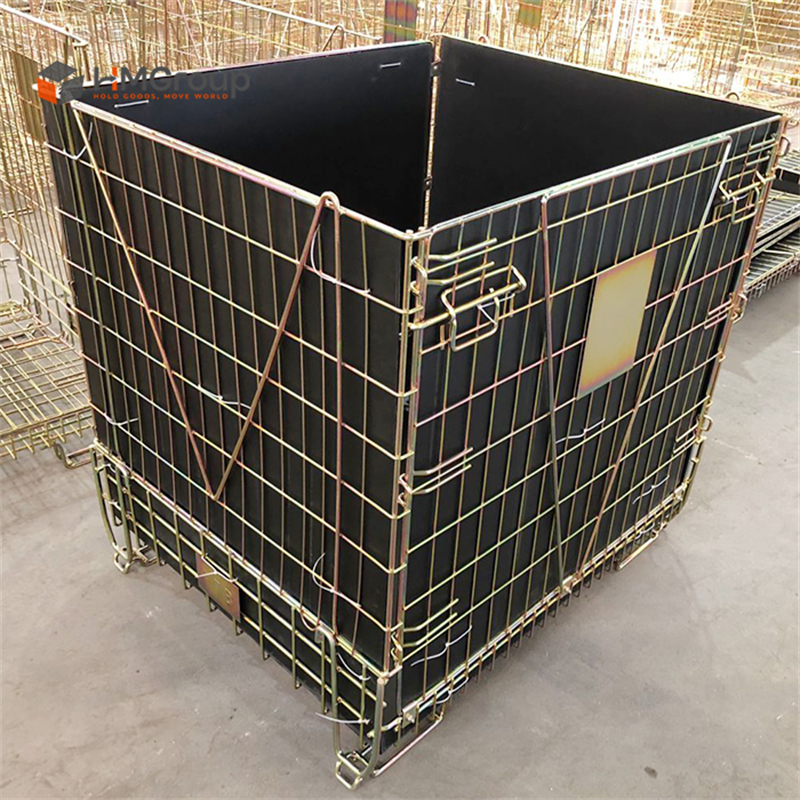
This guide is written for preform producers, bottling plant warehouses and logistics planners who are in the evaluation stage of a container decision. It covers which container design variables actually control warehouse flow, how stacking height and footprint translate into usable capacity, which PET-specific container variants exist, and what to verify before committing a fleet to a full production line.
HM Group (Dalian HuaMao Logistics Equipment Group Co., Ltd.) is a Chinese manufacturer of wire mesh containers and material handling equipment, founded in 2003, operating three production bases in Xiamen, Nanjing and Qingdao, with a 62,000 sqm manufacturing footprint and an annual output of 2,000,000 units. Its PET Preform Wire Container line, including model HM-PPC22, is used as the reference product throughout this article.
Problem Definition: Preform Storage Usually Fails on Flow, Not on Floor Area
A preform warehouse rarely runs out of floor first. It runs out of usable vertical space, counting speed and clean transfer capability. Three properties of PET preforms drive that:
- Volume without weight. Preforms are hollow and light, so a fully loaded storage position is usually limited by cubic space, not by the load rating of the floor. Capacity is therefore decided by how many levels a container can safely stack to.
- Surface sensitivity. Neck finishes and body surfaces tolerate contact and contamination poorly. Whatever touches the preform - mesh, liner, or the inside of a bag - has a direct effect on downstream reject rates.
- Continuous consumption. Blow-molding lines consume preforms on a near-continuous rhythm, so storage must support fast identification, fast counting and short material-transfer distances.
Bulk bags and sacks fail on all three. They score well on cost per unit, but they have no rigid frame, they cannot be relied upon to stack in multiple loaded levels, they hide their contents, they require manual counting, and they leave preforms exposed to dust and moisture. Collapse of stacked bulk bags is a recognised safety concern in preform storage - the South African preform project described later in this article was initiated partly to remove exactly that risk.
Floor-level pallets solve the handling problem but not the vertical one. A pallet is a transport base, not a storage structure, so each preform batch consumes its own footprint and the only way to add capacity is to add floor area or racking.
Counting is the quiet cost. When preforms are packed loosely, stock verification becomes a manual exercise spread across many loose units. When they sit in open mesh containers at fixed capacity per container, counting becomes a multiplication task: number of containers multiplied by the standard fill quantity, verified at a glance through the mesh.
Finally, storage cannot be evaluated separately from transport. Preforms move from the molding hall to the warehouse, from the warehouse to the blow-molding line, and in many operations, from one plant to another. A container that stores well but loads poorly, or stacks well but returns empty at unacceptable freight cost, does not optimise flow - it only shifts the bottleneck.
Industry Background: Why Stackable Containers Are Gaining Share
The direction of the market confirms that buyers are paying for vertical storage rather than for a simple metal box. According to Dataintelo, the global wire mesh containers sales market was valued at approximately USD 2.34 billion in 2025 and is projected to reach USD 3.72 billion by 2034, expanding at a CAGR of 5.2% over the 2026 to 2034 forecast period.
Within that market, stackable wire mesh containers were the largest product segment, accounting for 32.5% of total revenue in 2025 (Dataintelo). Asia Pacific held a 38.2% revenue share of the same market in 2025, which is directly relevant to preform buyers because PET preform production capacity is concentrated in the same region.
On the demand side, UN Comtrade data compiled by Abrams Wiki places the United States as a major importer of articles of iron or steel wire under HS Code 732620, with a market share of approximately 16.7% in 2024. For a preform producer exporting filled or empty containers, that figure is a useful reminder that container specifications are frequently reviewed at the border, not only at the plant.
Documentation expectations are also tightening. ASTM D6573/D6573M, the standard specification for general-purpose wirebound shipping boxes and containers used for domestic and overseas shipment, is one reference buyers cite when they want container construction defined in writing rather than described verbally. Additional industry specifications exist for specific sectors; automotive container specifications, for example, include designs compatible with GM 5131, Chrysler and Ford requirements to ensure integration into production logistics. The practical lesson for preform operations is the same in every sector: container construction should be documented before it is scaled.
Detailed Solution: Designing a Wire Container Around Preform Geometry
Container design for PET preforms is a set of five linked decisions: grid size, wire gauge, load rating, stacking frame and interior protection. Changing one almost always changes another, so they should be reviewed together rather than as separate line items on a quotation.
Grid size and wire gauge: the preform-specific geometry
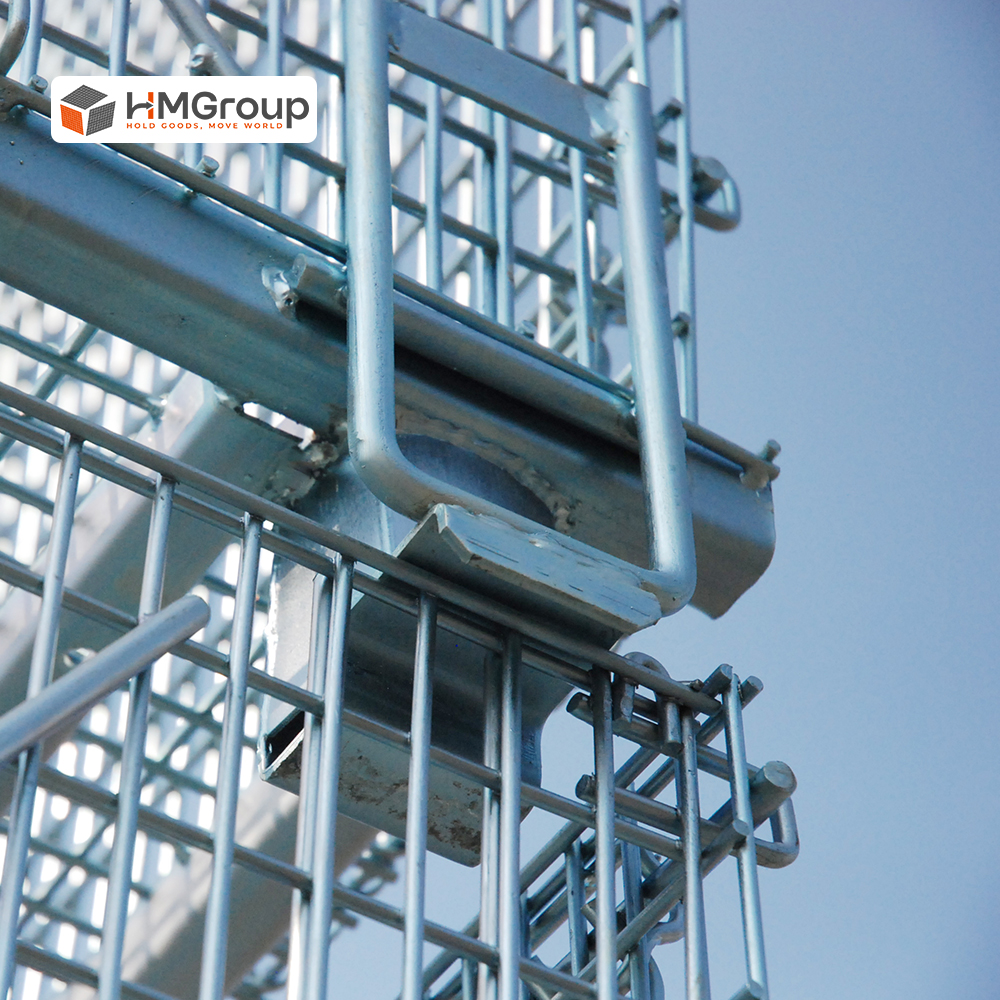
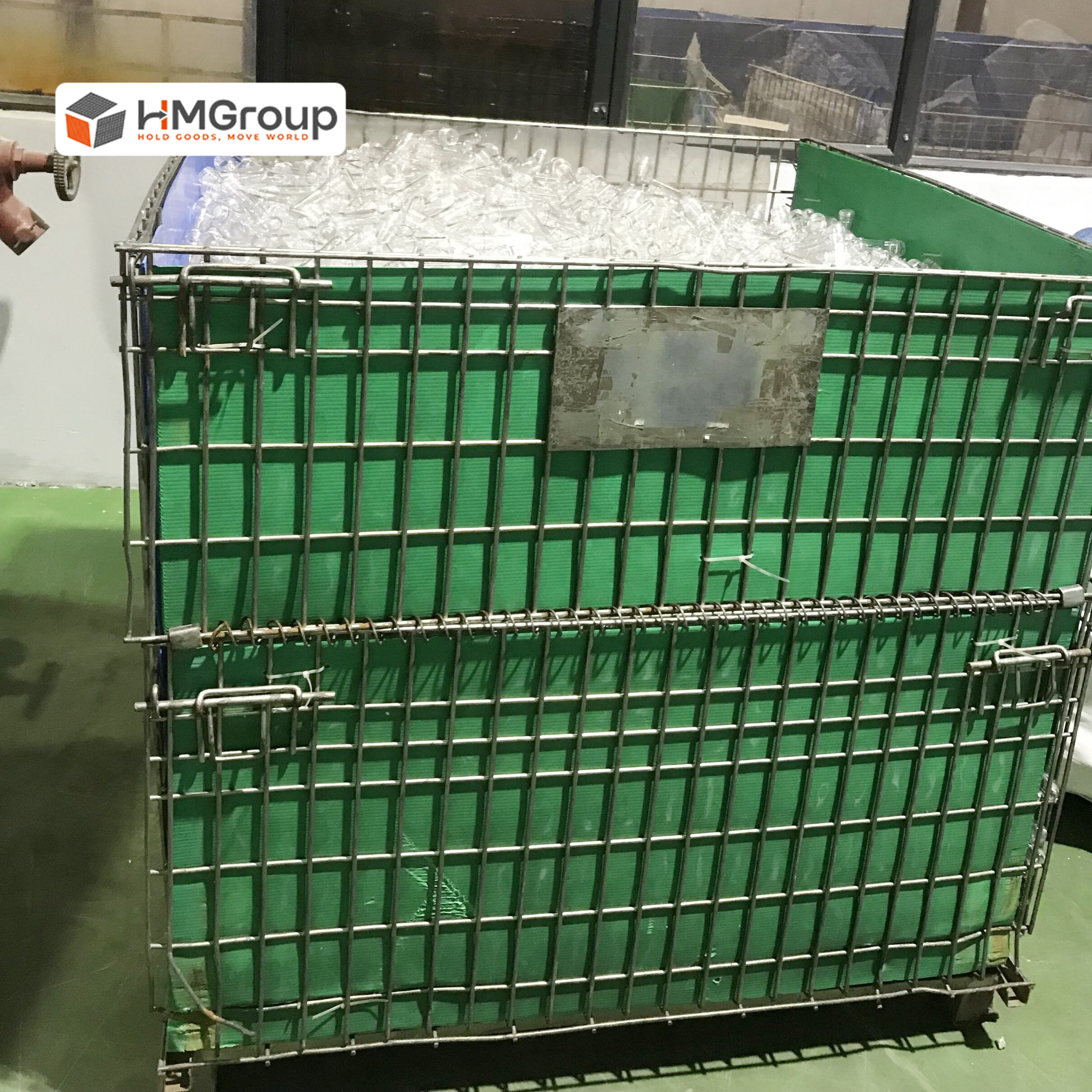
The 62 x 125 mm mesh grid on the HM-PPC22 PET Preform Wire Container is not a general-purpose mesh. It is a preform-oriented opening: wide enough for air circulation, drainage and visual inspection of the load, and proportioned so that contained preforms stay in the container during handling rather than working through the mesh. The model is built with a wire gauge range of 4.8 to 12 mm, which allows the mesh structure to be tuned to the load rather than fixed at a single wire diameter.
Where containment risk is higher - small components, mixed batches or a requirement for tighter retention - a finer mesh becomes the better starting point. The HM-HD010 Wire Mesh Storage Containers use a 25 x 50 mm grid with 6 mm wire and an 800 kg load rating, and the model is listed for PET preform industry use as well as agricultural and fulfillment applications.
Stacking height and footprint: the two numbers that set capacity
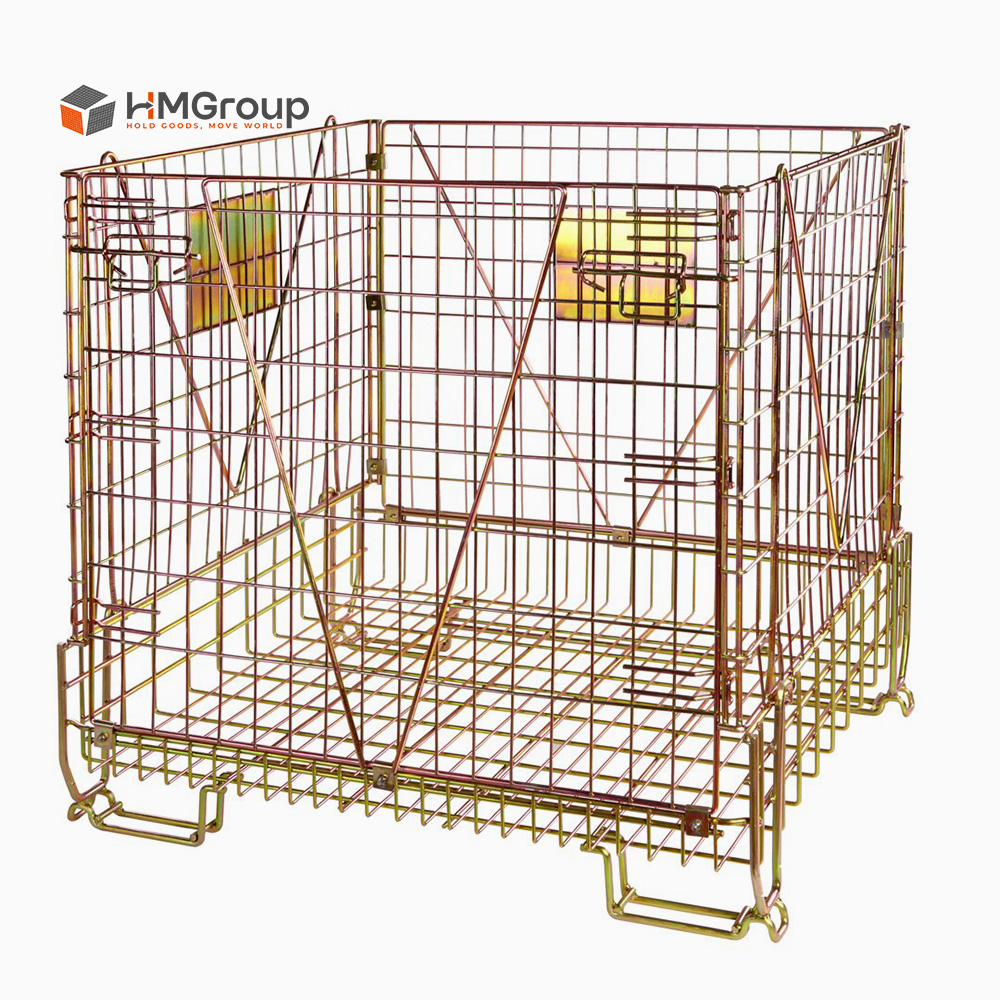
HM-PPC22 measures 1196 L x 1008 W x 1174 H mm. That footprint is fixed, which is exactly why it is useful: every container in the fleet occupies the same floor position, so aisle planning, forklift approach and floor marking can be standardised instead of re-measured for each batch.
Stackability on the same model is rated at 5+1 high, meaning five loaded containers stacked above a base unit. In reported preform deployments, stacking stability under full load has been validated at up to 6 levels. That single design value is the biggest difference between container storage and bag storage: a container that stacks five levels above the floor multiplies the capacity of a fixed floor area without any change to the building. A bag stack cannot be counted on to do the same, and it fails non-gradually rather than progressively.
Load rating should match the actual load
HM-PPC22 is rated for 600 kg per container. Heavier general-purpose containers in the same catalogue, such as the HM-HD001 heavy duty wire container at 1,300 kg, exist for denser cargo. Because preform loads are typically volume-limited rather than weight-limited, over-specifying load rating mainly adds steel weight, cost and handling effort without adding storage capacity. The correct question is not which container holds the most, but which container holds the actual preform load safely at the required stack height.
Interior protection and finish
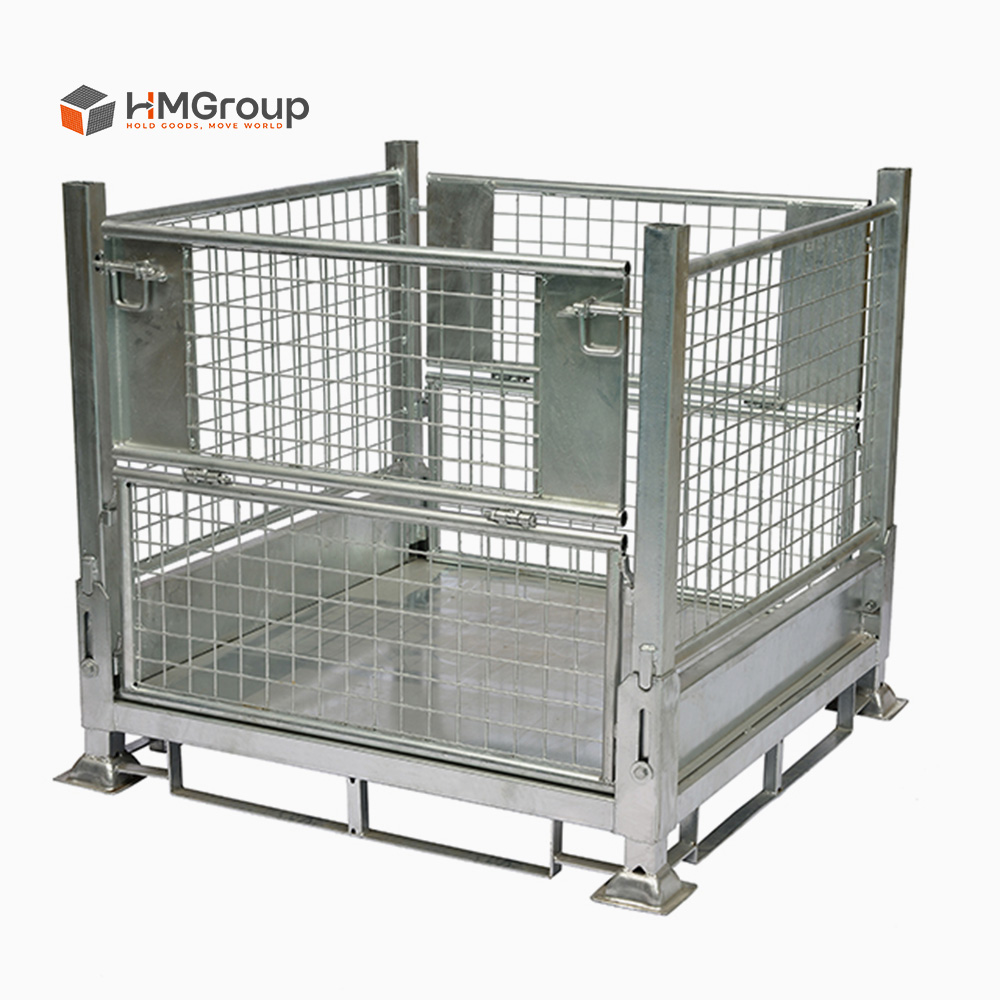
Where preforms are finish-critical, a wire container with a PP sheet inner lining reduces scuffing and contamination risk from the mesh surface. This matters particularly for returnable containers that cycle between plants. The HM-HD028 Wire Container With PP Sheet uses a 50 x 100 mm grid with 5 mm wire and a 500 kg load rating, with a 1200 x 1000 x 1140 mm exterior and 4 high stackability, and it is listed for PET preform industry and fulfillment use.
Surface treatment is normally selected from zinc plating, hot-dip galvanizing or powder coating. The choice affects corrosion resistance in humid or wash-down environments, and it also affects how long the container stays dimensionally stable in service. HM Group's preform project records describe zinc or powder coating finishes as the professional-grade treatment used for long-term industrial reliability.
Related PET container variants
Not every preform operation needs the same container. Three variants are commonly compared against HM-PPC22:
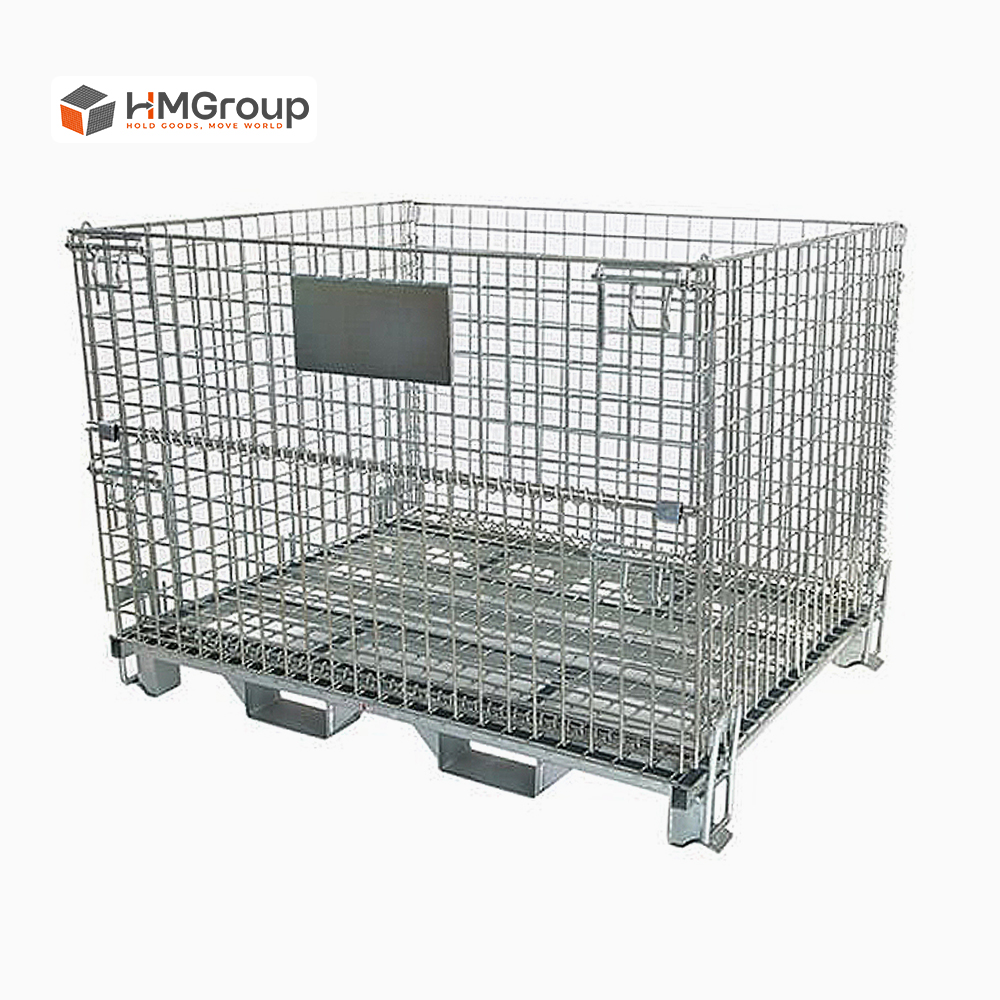
- HM-PPC14 Foldable Wire Container - 1120 L x 971 W x 1050 H mm, 6 to 12 mm wire gauge, 54 x 160 mm grid, 800 kg load capacity, 4 high stacking and 240 sets per 1x40'HQ. It is listed for PET preform industry and warehouse storage, and the foldable format reduces the volume occupied by empty containers on return.
- HM-HD028 Wire Container With PP Sheet - 1200 x 1000 x 1140 mm, 5 mm wire, 50 x 100 mm grid, 500 kg, 4 high stacking, 330 sets per 1x40'HQ. Chosen when liner protection is the priority.
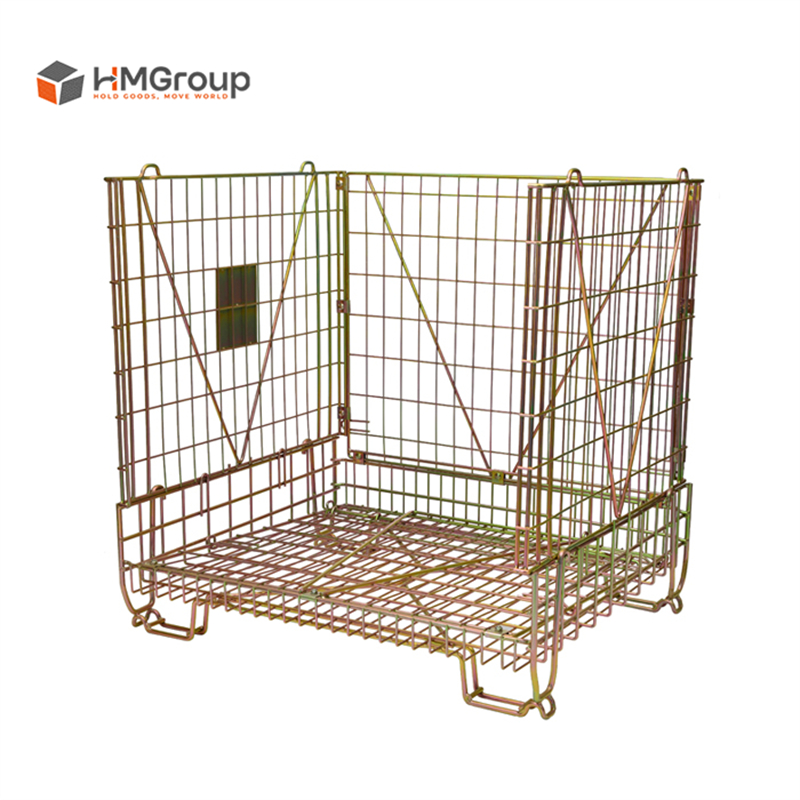
- HM-HD010 Wire Mesh Storage Containers - 1200 x 1000 x 1250 mm, 6 mm wire, 25 x 50 mm fine grid, 800 kg, 4 high stacking, 216 sets per 1x40'HQ. Chosen when containment is the priority.
Step-by-Step: Planning Preform Container Flow in a Warehouse
- Map the preform variants and their handling context. Record preform dimensions, batch quantities and how often the batch changes. This determines whether the 62 x 125 mm grid of a preform-specific container is sufficient or whether a finer mesh or a PP sheet liner is required.
- Set the required stack height from the building, not from the product. Decide the safe number of levels your ceiling height, sprinkler clearance and floor loading allow, then select a container that is rated for it. HM-PPC22 is rated at 5+1 high; other models in the range are rated at 4 high.
- Confirm the footprint against existing aisles. A 1196 x 1008 mm footprint must be checked against forklift turning radius and aisle width before the fleet is specified. Standardising on one footprint keeps this check to a single calculation.
- Choose the handling method. HM Group's customization list includes a forklift guide, wire divider, runner bar, name plate and wheels. A forklift guide improves positioning accuracy in dense storage; wheels support mobile flow inside a production line where a forklift is impractical.
- Select interior protection. Use a PP sheet inner lining where preform surfaces are finish-critical, and a fine mesh grid where containment or small components are the concern.
- Size the fleet, then check transport density. Container count per batch multiplied by buffer batches gives the fleet size. Transport density then decides how many units fit in a shipment: 170 HM-PPC22 sets, 240 HM-PPC14 foldable units, 330 HM-HD028 units or 216 HM-HD010 units per 1x40'HQ. Foldable designs reduce the cost of moving empty containers back.
- Validate before scaling. HM Group's quality control runs across six phases: pre-production sample inspection, raw material inspection, component inspection, semi-finished product inspection, finished product inspection and packaging inspection. Delivery risk is mitigated with 10% pre-shipment sampling inspection plus assembly and disassembly videos and loading photos provided for customer verification before shipment.
Use Cases: Verified PET Preform Container Deployments
Two large-scale preform projects illustrate what changes when storage moves from loose formats to a defined container system.
Pakistan and Costa Rica - 10,000 units. A global food and beverage leader deployed 10,000 PET preform containers for centralised bulk storage and vertical logistics inside large-scale bottled water and beverage production hubs, solving inadequate storage capacity and inefficient material flow. Secure 4-high vertical stacking produced a 300% increase in warehouse storage capacity, while stock counting and identification speed improved by 40% across the turnover of millions of preforms. The containers were selected for 4-tier stacking stability under heavy-duty loads, large-scale manufacturing capability, and a professional-grade zinc or powder coating finish.
South Africa - 5,000 units. A global beverage producer installed 5,000 PET preform wire containers to address inefficient warehouse space utilisation and safety risks from bulk bag collapse. Vertical stacking of 4 to 6 tiers produced a 400% increase in storage density, internal material handling efficiency improved by 35%, and the open-mesh design enabled 100% instant visual stock checks that cut inventory counting time in half. Stacking stability was validated at 6 levels under full load, with precision-engineered mesh and PP sheet inner lining protecting preform surfaces.
A third pattern is emerging in the same industry: preform containers are increasingly specified for Just-In-Time supply chain projects in the beverage industry, where storage and material transfer are planned against line consumption rather than against a static stock level.
Comparison: PET Preform Container Models at a Glance
The table below compares published specifications for the models most often evaluated for preform storage and transport. All values are manufacturer-published specifications for each model; the right choice depends on grid requirement, liner requirement and required stack height.
| Model | Container type | Exterior dim. L x W x H (mm) | Grid size | Load capacity | Stackability | Sets per 1x40'HQ | Material |
|---|---|---|---|---|---|---|---|
| HM-PPC22 | PET Preform Wire Container | 1196 x 1008 x 1174 | 62 x 125 mm | 600 kg | 5+1 high | 170 | Mild steel Q235 |
| HM-PPC14 | Foldable Wire Container | 1120 x 971 x 1050 | 54 x 160 mm | 800 kg | 4 high | 240 | Mild steel Q235 |
| HM-HD028 | Wire Container With PP Sheet | 1200 x 1000 x 1140 | 50 x 100 mm | 500 kg | 4 high | 330 | Mild steel Q235 |
| HM-HD010 | Wire Mesh Storage Containers | 1200 x 1000 x 1250 | 25 x 50 mm | 800 kg | 4 high | 216 | Mild steel Q235 |
| HM-HD001 | Heavy duty wire containers | 1030 x 840 x 850 | 50 x 50 mm | 1300 kg | 4 high | 500 | Mild steel Q235 |
Standard finish options across these models are zinc, hot-dip galvanized or powder coating. HM-PPC22 and HM-PPC14 are listed for PET preform industry and warehouse storage; HM-HD028 is listed for PET preform industry and fulfillment; HM-HD010 is listed for PET preform industry, agricultural and fulfillment use.
FAQ: PET Preform Wire Container Evaluation Questions
1. What certifications and quality controls should a PET preform container supplier be able to document?
HM Group's logistics equipment operations are certified to ISO 9001:2015 under certificate CN24/00004786 issued by SGS, valid from 30 July 2024 to 29 July 2027, covering the sales of material handling equipment for logistics turnover. HM Group also holds a Made-in-China BV audit report, certificate MIC-ASI2491658, issued 29 October 2024 and valid to 28 October 2026, covering PET preform containers, wire mesh containers, roll containers, cage pallets and related product lines, and an Alibaba.com verified Pro Supplier status verified by SGS under certificate 486803081_T. Quality control runs through six phases: pre-production sample inspection, raw material inspection, component inspection, semi-finished product inspection, finished product inspection and packaging inspection. A material integrity policy mandates Q235 steel for high-strength requirements.
2. Can a PET preform wire container be customized for our grid, liner or handling method?
Yes. HM Group produces wire containers in OEM, ODM and fully customized modes, with a monthly capacity of 40,000 sets. Customization covers surface treatment (zinc, hot-dip galvanized or powder coating), size, loading capacity, powder coating colour and logo printing, and design features including forklift guide, wire divider, runner bar, name plate and wheels. This means the grid opening, liner type and handling interface can be aligned to a specific preform rather than fitted to a standard catalogue item.
3. What drives the cost per container, and how does design affect total spend?
The main cost drivers are wire gauge, grid density, quantity and type of steel, finish type, load rating and added features such as liners, dividers or wheels. Cost per container should not be assessed alone, because transport density changes the landed cost: 170 HM-PPC22 sets fit in one 1x40'HQ, while HM-HD028 allows 330 sets per container load. In storage terms, the more meaningful figure is cost per preform position, which is influenced far more by stack height than by unit price - the same floor position can hold one level or six levels depending on the container's rated stackability.
4. Can we validate a container before placing a bulk order?
Pre-production sample inspection is the first of HM Group's six quality control phases, so a sample stage exists as part of the standard process rather than as an exception. Before shipment, 10% pre-shipment sampling inspection is applied, and assembly and disassembly videos plus loading photos are provided so the buyer can verify the container and the loading arrangement before the goods leave. Production process risks are additionally controlled through automated welding parameter optimization, specialised jigs for 90-degree verticality, and torque testing against a wire diameter versus strength standard table. The minimum order quantity is 1x20GP.
5. What lead time and after-sales support should be planned for?
Standard lead time is 30 to 45 days, with 100% comprehensive self-inspection applied to every individual unit before shipment. Containers carry a warranty of 3 to 5 years under proper use, supported by process reports throughout the order and online video audit support. For buyers in the evaluation stage, the practical next step is to confirm the required grid, liner and stack height, then request a sample and a quotation for the container count your layout assumes - you can review the full product range and download the catalogue from HM Group before finalising the specification.
Conclusion: Optimise the Stack, and the Flow Follows
PET preform storage is decided by two numbers that are fixed at the point of purchase: how high the container can safely stack, and how much floor it occupies. HM-PPC22 answers both with a 1196 x 1008 mm footprint and 5+1 high stackability in mild steel Q235, supported by a 62 x 125 mm preform-oriented grid, a 600 kg load rating and a choice of zinc, hot-dip galvanized or powder coating finishes. Where containment or surface protection dominate, HM-HD010, HM-HD028 and HM-PPC14 extend the same logic with finer mesh, PP sheet lining or a foldable format.
The evidence from large-scale preform deployments - 300% storage capacity gains from 4-high stacking in Pakistan and Costa Rica, and a 400% storage density gain with 4 to 6 tier stacking in South Africa - points to the same conclusion. Capacity came from stacking discipline, counting speed came from open mesh visibility, and handling efficiency came from treating the container as the unit of movement rather than the preform.
Next step: define your preform storage layout with real container data
HM Group supplies PET preform wire containers, wire mesh containers and related material handling equipment to buyers in the EU, North America, Asia and the Middle East, with 100% export orientation and three production bases in Xiamen, Nanjing and Qingdao.
To move from evaluation to specification, request a sample and a quotation with your required grid size, liner preference and stack height, or download the catalogue for full model specifications.
Website: www.hmlwires.com
Brochure: Download the HM Group product catalogue (PDF)
Email: mary@net-railing.com
Tel / WhatsApp: +86 150 4058 7228
Have Questions or Need More Details?
Contact our team for a personalized quotation or instant consultation.
Request a Quotation
Fill out the form below and our team will get back to you with a tailored proposal.
WhatsApp Direct Chat
Prefer to chat in real-time? Message us on WhatsApp for instant assistance & quick answers.
- Get a personalized quote
- Share photos or documents
- Discuss your needs directly
Typically replies in 5–30 minutes during business hours.