
Carpet Pads Piling Up? How HM-FR002 Rack Solves the Space Crunch
Carpet Pads Piling Up? How the HM-FR002 Carpet Pad Storage Rack Solves the Space Crunch
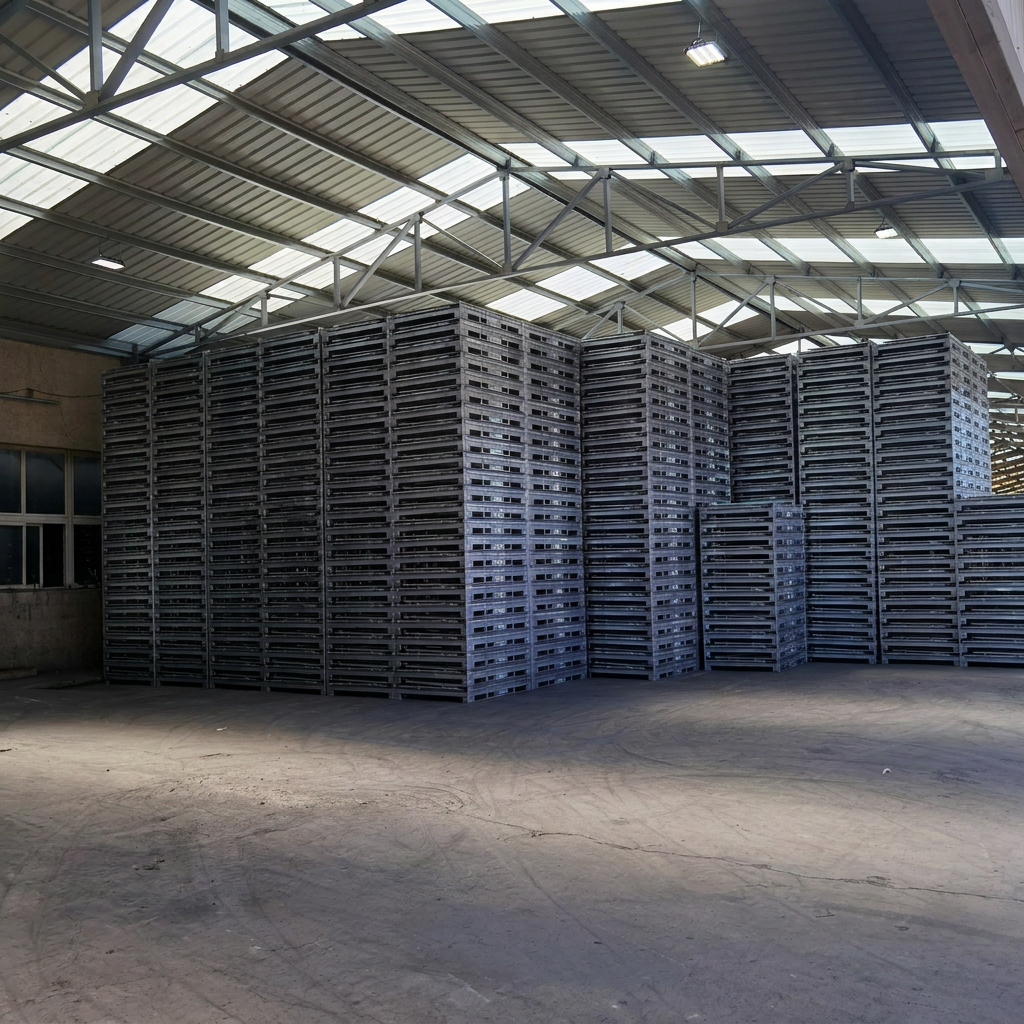
Walk through a carpet and underlay warehouse at the end of a busy week and the bottleneck is usually visible from the door: shrink-wrapped pad bundles and cut-roll offcuts pushed into whatever floor space is left, two or three bundles high at most, leaning on each other, and slowly spreading into the aisles.
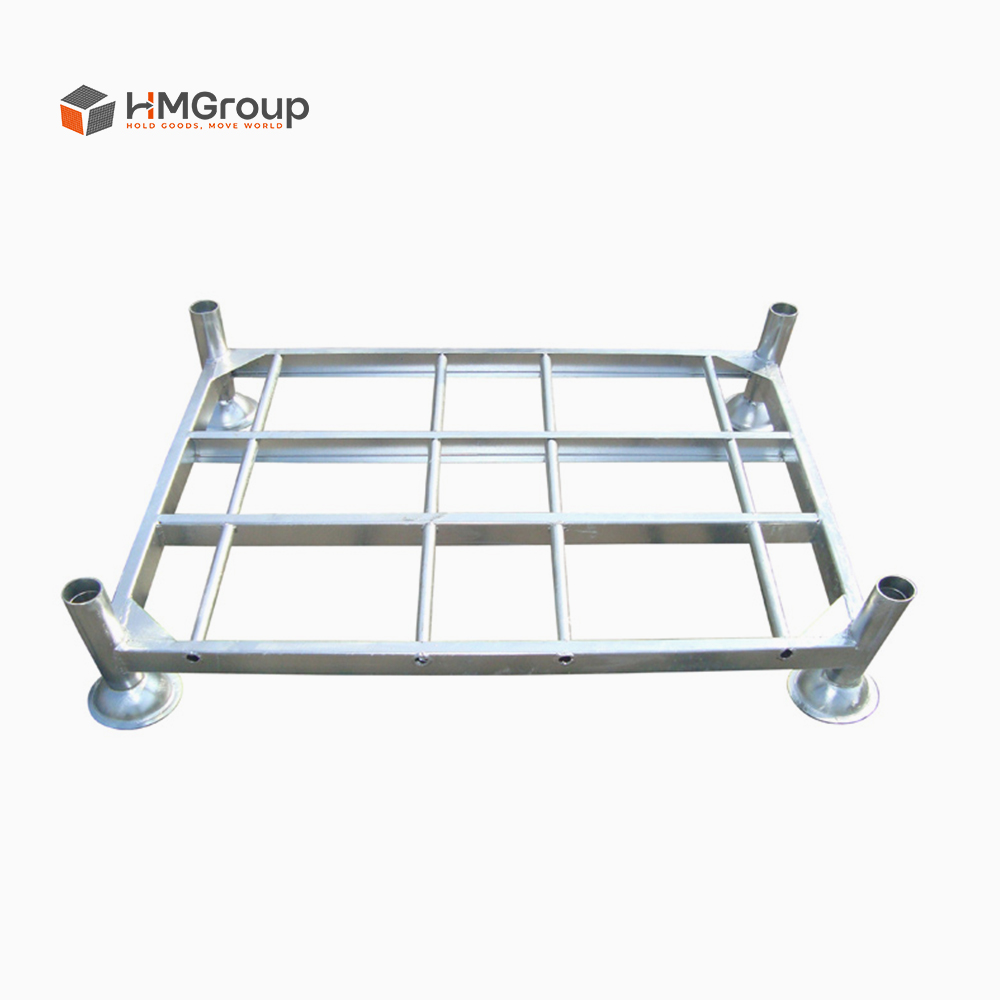
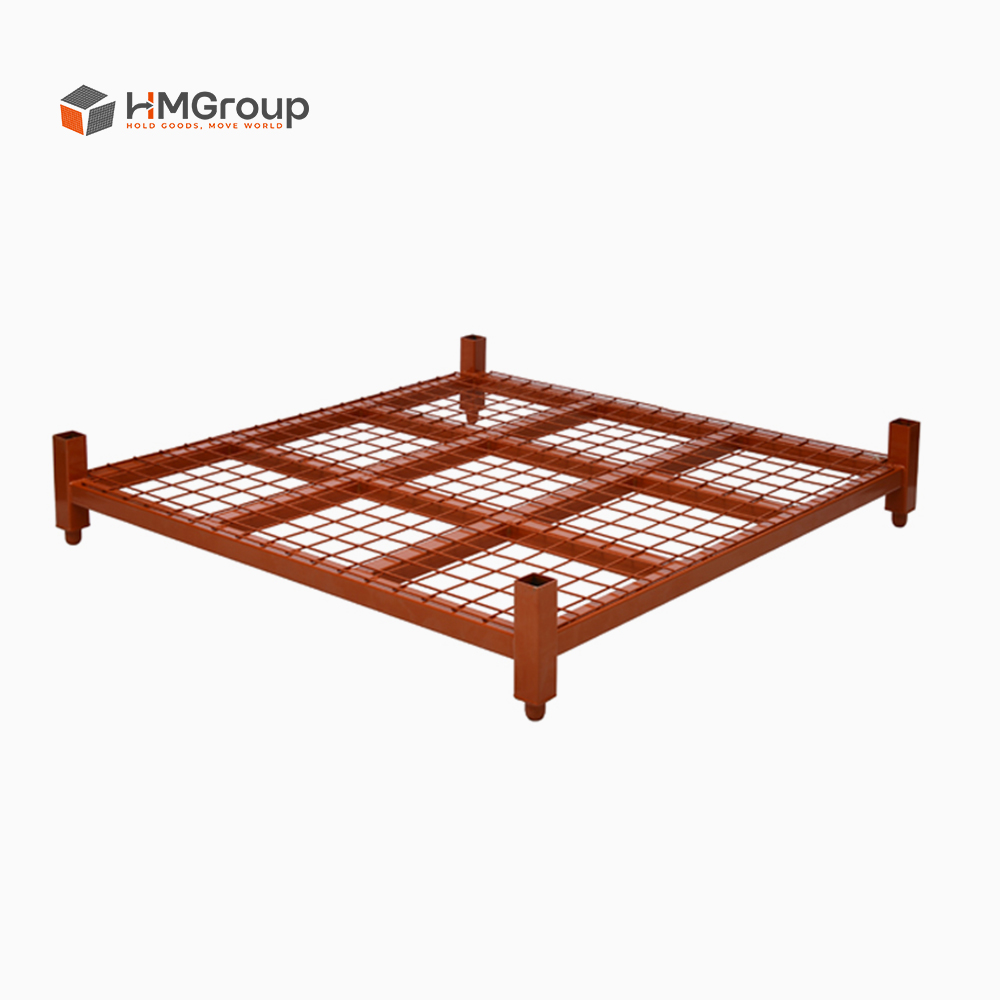
Volume is rarely the real problem. Carpet pads and underlay have almost no structural rigidity of their own, so every bundle needs something else to hold its shape. The HM-FR002 carpet pad storage rack is that something. HM Group catalogues the unit as Carpet Pad Storage Racks, model HM-FR002, built from mild steel Q235, with exterior dimensions of 1,521 x 1,000 x 1,360 mm, a loading capacity of 500 kg, a stacking configuration of 4 to 5 high, and a choice of zinc, hot-dip galvanized, or powder coating finishes.
This article explains what those numbers mean in a working warehouse, how to convert a disorganised pad area into a stable, stackable storage zone, and what to verify before placing an order.
Problem Definition: Why Loose Carpet Pads Break a Warehouse Layout
Floor-stacked carpet pads create a specific set of problems that a normal pallet position does not solve.
- No self-supporting shape. A pad bundle is compressible and has no rigid core, so a stack depends on friction and alignment rather than on structure. Once the bundle tilts, the whole pile has to be rebuilt.
- High volume, low mass. Pads occupy a large cubic volume for a relatively small weight, so the storage constraint is almost always space rather than floor loading.
- Unstable pile geometry. Pad bundles rarely match each other in width or compression, and mixed piles tend to lean into walkways where people and forklifts pass.
- Moisture, dust and light exposure. Floor-level storage puts the bottom of the pile in contact with a surface that is difficult to keep dry and clean, and the outer wrap takes the damage.
- No fixed location. Without a defined module there is no bin, no address and no reliable count, which makes cycle counting and picking slower than it should be.
- Handling damage. Loose bundles are usually dragged, squeezed or re-stacked by hand, which is where most edge damage and crush marks come from.
None of these are purchasing problems in the usual sense; they are layout problems caused by the absence of a module. A stackable rack supplies that module: a documented footprint, a stated load rating, and a repeatable stacking height. The planning question then changes from how much floor the pads need to how many modules fit inside the clear height and floor area actually available.
Industry Background: Where Carpet Pad Storage Sits in the Racking Market
The market data behind storage equipment gives useful context for why this category keeps expanding. Grand View Research estimates the global warehouse racking market at approximately USD 9.71 billion in 2024, projected to reach USD 12.41 billion by 2030, with North America accounting for 27.8 percent of global revenue in 2024, and selective pallet racking representing approximately 45.0 percent of market share. Global Market Insights sizes the broader storage rack market at USD 22.4 billion in 2024 with a 4.9 percent CAGR forecast through 2034. The two figures differ mainly because they measure different scopes, one focused on fixed racking and the other on storage equipment more broadly.
Those numbers describe fixed racking and storage systems generally. Soft, non-rigid textile loads such as carpet pads, underlay and fabric rolls are usually handled by portable stackable units rather than fixed pallet beams, which is why the specification route is different. For steel static storage systems, the relevant frameworks are national and regional: in the United States, ANSI MH16.1-2023 sets minimum requirements for structural design, testing and utilisation of industrial steel storage racks, and in Europe EN 15512:2020 governs structural design principles for steel static storage systems and adjustable pallet racking. Freestanding stackable racks sit outside that fixed-racking context, so documented inspection and quality control carry most of the compliance weight, and buyers should confirm which framework applies to their market before the order is placed.
Where stackable racks have replaced floor-level storage, the capacity effect is measurable and documented. In a rice seed storage project in Myanmar delivered for United Nations (UNOPS) through a strategic procurement partner, 5,000 stacking rack units were procured in a single major tender and 6-high vertical stacking increased warehouse storage capacity by 500 percent. In South Korea, a government agency storing agricultural produce in 1,000 stacking rack units in the initial phase recorded a 300 percent increase in vertical storage capacity, a 45 percent reduction in material handling time, a 20 percent decrease in produce spoilage, and full ROI within 14 months. Both projects used HM Group stacking rack models outside the HM-FR002 specification, so the results should be read as evidence for the vertical stacking principle rather than as HM-FR002 performance data.
Detailed Solution: What the HM-FR002 Specification Gives You
The HM-FR002 is the unit to specify when the load is a pad, an underlay bundle or a soft roll that cannot hold a stack on its own. Its specification is deliberately short, and each element answers a different question in the buying decision.
Material: mild steel Q235
The rack is built from mild steel Q235, a general structural carbon steel that is weldable, fabricable and repairable in a normal workshop environment. The same material is used across HM Group stackable rack models such as the HM-PP001, HM-PP002, HM-PP006, HM-FR005 and HM-FR007 units, which keeps inspection routines and spare-part expectations consistent if you operate a mixed rack fleet.
Module size: 1,521 x 1,000 x 1,360 mm
Because the exterior dimension is fixed, warehouse planning can be done on paper before anything arrives on site. The stated exterior dimensions read as a 1,521 mm by 1,000 mm base with a 1,360 mm exterior height, which gives planners a repeatable bay module for counting positions and reserving aisles, and gives operators a recognised outline for forklift approach and clearance checks. It also makes the storage area countable: a pad zone of a given size can be described as a specific number of HM-FR002 modules rather than as an approximate pile of stock.
Load rating: 500 kg per unit
HM Group specifies a loading capacity of 500 kg for HM-FR002. That figure should be matched against the actual weight of the loaded unit, not against the weight of a single pad or a single roll. Buyers planning a high-volume pad area should weigh a representative bundle or a wrapped pallet of pads, multiply by the number of loads intended per unit, and confirm the result against the 500 kg rating before locking the layout.
Stackability: 4 to 5 high
Stackability of 4 to 5 high is what actually converts floor space into vertical capacity. In a pad area where floor stacking realistically reaches two or three unstable bundles, a rack module that can be stacked up to 4 to 5 high changes the relationship between the storage footprint and the volume held in it. The practical ceiling is then set by clear height, sprinkler clearance, aisle width and the handling equipment on site, so the stack height should be confirmed against the building before the layout is finalised.
Finish: zinc, hot-dip galvanized, or powder coating
Corrosion protection is offered in three routes. Zinc plating suits general indoor warehouse conditions and gives a consistent metallic finish. Hot-dip galvanizing provides the heaviest corrosion protection of the three and is the usual choice for humid, cold-store or semi-exposed environments. Powder coating provides a sealed, colour-controlled surface and is normally selected where the rack is visible in a showroom, retail backroom or customer-facing area. Because powder coating colour is part of the customisation list, colour-coded storage zones are possible within the same order.
Freight and order planning: 126 sets per 1x40HQ
Container loading is a cost variable that is often overlooked until the quotation stage. HM Group states that 126 sets of HM-FR002 load into one 1x40HQ container, which allows an importer to calculate freight per set and compare the landed cost of a full container against a part load. The minimum order quantity is 1x20GP, the typical production lead time is 30 to 45 days, and monthly production capacity is 80,000 sets across the range, so a container-level carpet pad rack programme is a normal order size rather than a special project.
Customisation, quality control and documentation
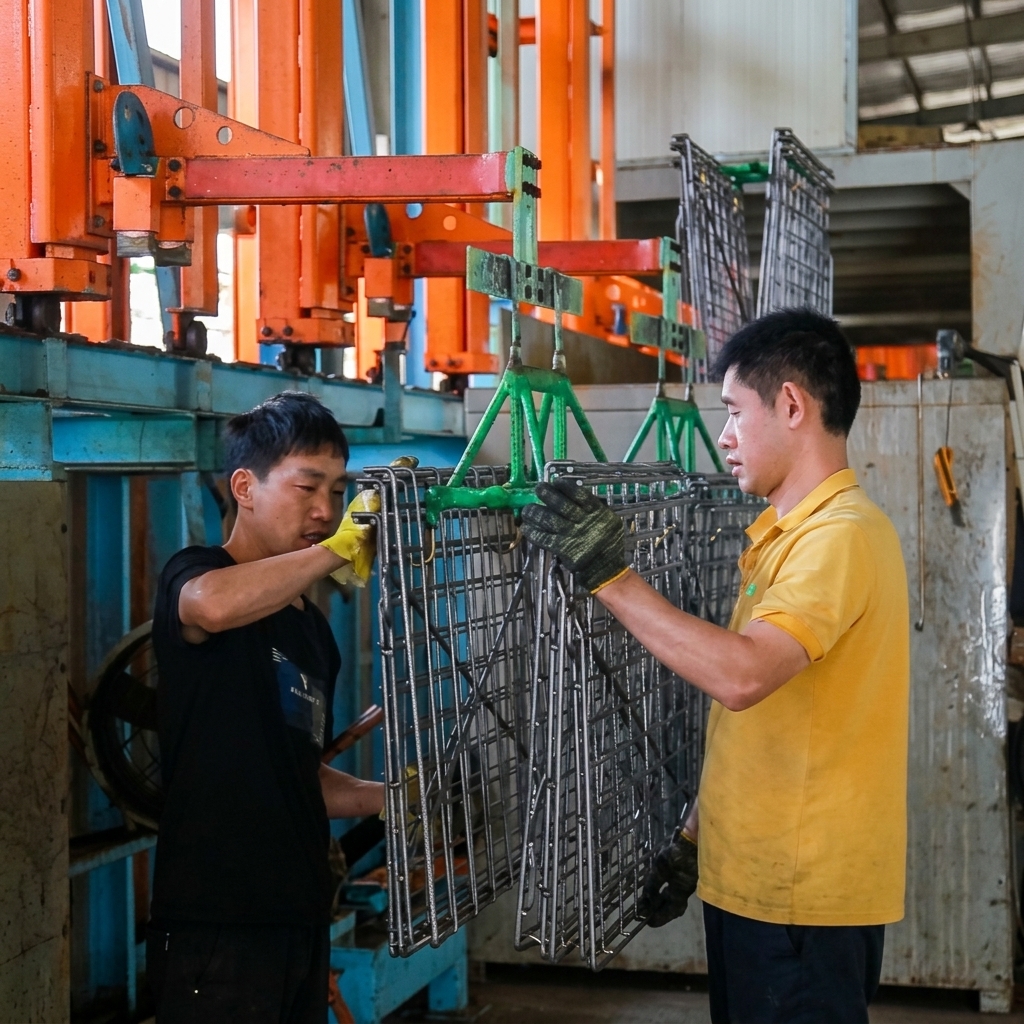
HM Group operates an OEM, ODM and fully customised production model. The documented customisation options for this rack family include surface treatment, size, loading capacity, powder coating colour, logo printing, and design additions such as a wire mesh guard, bottom wire mesh decking, a forklift guide, a bottom steel plate and wheels. Quality control runs across six phases: pre-production sample inspection, raw material inspection, component inspection, semi-finished product inspection, finished product inspection, and packaging inspection. After-sales support includes a process report throughout, support for online video audit, and 3 to 5 years warranty under proper use.
Documentation trail. HM Group holds an ISO 9001:2015 certificate numbered CN24/00004786 issued by SGS, valid from 30 July 2024 to 29 July 2027, covering the sales of material handling equipment for logistics turnover. A Made-in-China BV audit report, certificate number MIC-ASI2491658 issued 29 October 2024, covers post pallets, tire racks, roll containers, wire mesh containers, wire decking, cage pallets, stacking racks, PET preform containers, IBC containers and Danish trolleys. An Alibaba.com verified Pro Supplier record numbered 486803081_T, audited by SGS, covers all logistics equipment products, and the Carpet Pad Storage Racks HM-FR002 is listed among the products associated with these company-level records.
Step-by-Step Breakdown: Turning a Loose Pad Area into a Rack Zone
The conversion is a short sequence of decisions, and skipping any one of them usually shows up later as a rack that does not fit, a stack that cannot be reached, or a load that is heavier than expected.
- Measure and count the pad area. Record the current floor area occupied by pads, the number of active pad and underlay SKUs, typical bundle dimensions, and the aisle widths that must remain open for forklifts and pedestrians.
- Lay out the module. Use the 1,521 x 1,000 mm base of HM-FR002 to draw a bay grid on the floor plan, then check how many modules fit alongside the aisles and services you must keep clear.
- Check the load against the rating. Weigh a representative loaded unit and compare it with the 500 kg loading capacity. If the real loaded weight exceeds the rating, the layout has to change before the order does.
- Set the stacking height. Decide how many units will be stacked on site, working within the stated 4 to 5 high stackability and the clear height, sprinkler clearance and handling equipment actually available in the building.
- Select the finish by environment. Choose zinc for dry indoor storage, hot-dip galvanizing for humid or cold-store conditions, or powder coating where appearance and colour coding matter, and use the powder coating colour option if zones need to be visually separated.
- Add handling and protection features. Decide whether the operation needs a forklift guide, a bottom steel plate, bottom wire mesh decking, a wire mesh guard or wheels, and confirm size and loading capacity if the standard module needs to be adapted.
- Validate before the full run. Use the pre-production sample inspection phase and the online video audit support to confirm dimensions, finish and workmanship on a physical unit before the main production run starts.
- Plan the shipment and the rollout. With 126 sets per 1x40HQ, a minimum order quantity of 1x20GP and a typical production lead time of 30 to 45 days, phase the rollout so racks arrive in the sequence the warehouse can install them.
Use Cases: Where the HM-FR002 Fits
The applicable industries listed for HM-FR002 are textile and fabric roll, and logistics and warehousing. In practice, that covers several recognisable storage situations.
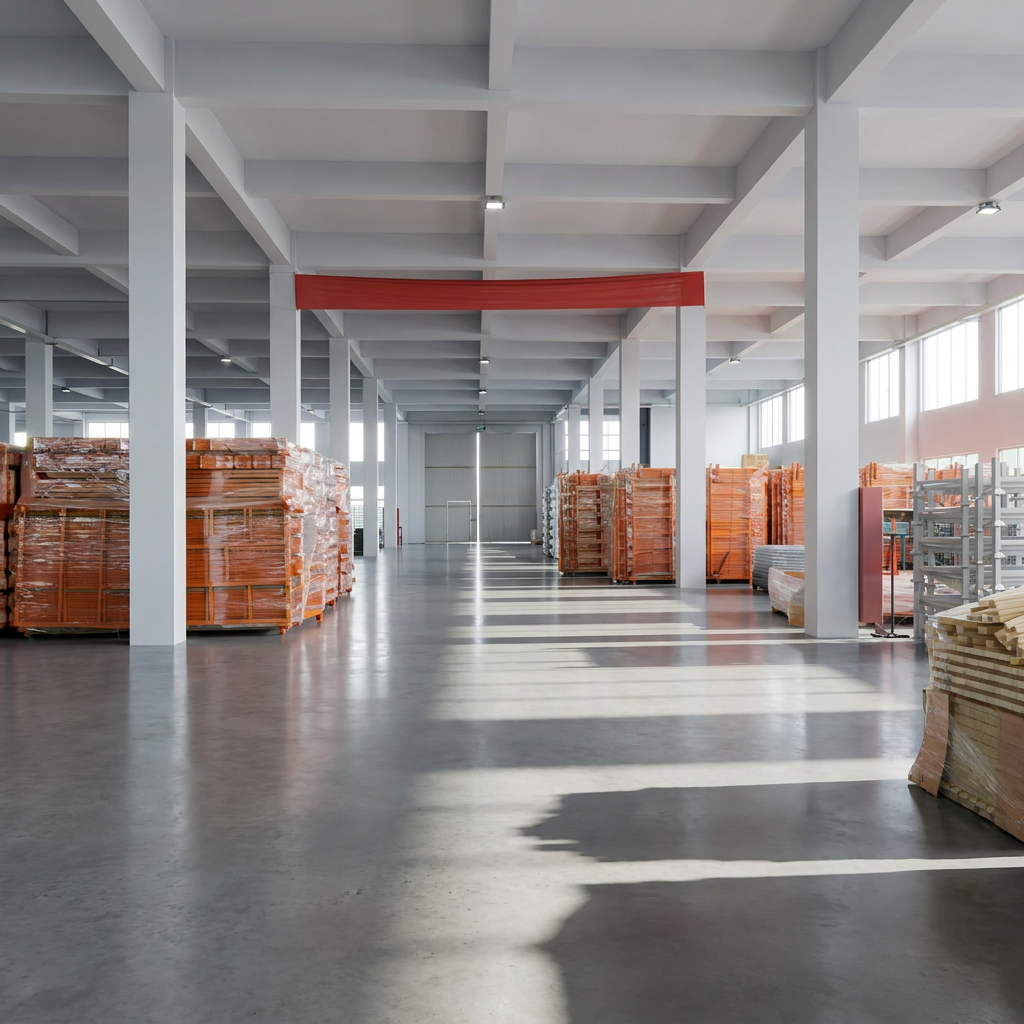
- Carpet and underlay distribution warehouses. Pad bundles and underlay rolls move into fixed modules instead of floor piles, so the pad area keeps a stable outline through the week rather than expanding into the aisles.
- Textile and fabric roll stores. Soft rolls and non-rigid textile loads that cannot be stacked on their own can be held in a defined unit and retrieved by forklift instead of by hand.
- Third-party and contract warehousing. Where multiple clients store flooring materials in the same building, a standard stackable module makes space allocation and billing easier to explain than an unmarked floor area.
- Humid, cold or semi-exposed storage. The hot-dip galvanized finish option is the appropriate choice where condensation or washdown is a routine condition.
- Retail and showroom backrooms. Powder coating keeps the rack visually acceptable in areas customers can see, and colour coding helps staff distinguish pad grades or client stock.
For operations that handle similar soft loads in other formats, HM Group lists related models with different dimensions and ratings, which is useful when one warehouse has to store several load types in the same building.
Comparison Table: HM-FR002 and Related HM Stackable Racks
The table below lists only the stated specifications for three rack models used with textile, roll and soft-load storage. All three are built from mild steel Q235 and share the same finish options.
| Model | Product name | Exterior dimensions | Loading capacity | Stackability | Finish options | Loaded in 1x40HQ |
|---|---|---|---|---|---|---|
| HM-FR002 | Carpet Pad Storage Racks | 1,521 x 1,000 x 1,360 mm | 500 kg | 4 to 5 high | Zinc / hot-dip galvanized / powder coating | 126 sets |
| HM-FR005 | Fabric Roll Storage Rack | 1,500 x 1,100 x 900 mm | 1,000 kg | 4 sets open / 20 sets closed | Zinc / hot-dip galvanized / powder coating | 160 sets |
| HM-FR007 | Stackable Steel Storage Racks | 48 x 48 x 36 inch | 1,100 kg | 6 open / 20 closed | Zinc / hot-dip galvanized / powder coating | 380 sets |
Selection between these models comes down to the load rather than to brand preference. HM-FR002 carries the lower stated load rating of the three and the tallest stated exterior height, which is consistent with use for bulky, low-density pad loads that need vertical volume rather than heavy point loading. HM-FR005 and HM-FR007 carry higher stated capacities and shorter stated exterior heights, which suits denser roll or unit loads. Buyers who are unsure which specification matches their stock should confirm the loaded unit weight and dimensions before choosing.
FAQ
What certification and inspection documentation should a buyer check for the HM-FR002?
Start with company-level quality certification, then confirm the product scope. HM Group holds ISO 9001:2015 certification, certificate number CN24/00004786, issued by SGS and valid from 30 July 2024 to 29 July 2027, with the stated scope of sales of material handling equipment for logistics turnover. The company also holds a Made-in-China BV audit report numbered MIC-ASI2491658 covering post pallets, tire racks, roll containers, wire mesh containers, wire decking, cage pallets, stacking racks, PET preform containers, IBC containers and Danish trolleys, and an Alibaba.com verified Pro Supplier record numbered 486803081_T audited by SGS and covering all logistics equipment products. HM-FR002 Carpet Pad Storage Racks appears among the products associated with these records. Other reports in the portfolio are scoped differently and should not be assumed to cover this model: the TUV inspection report ITD2025N0087 is scoped to steel pallets, and the SGS survey report CANWT00478167 is scoped to stacking shelves, style M2. For markets with their own structural framework, such as ANSI MH16.1-2023 in the United States or EN 15512:2020 in Europe, confirm with the supplier which documentation applies to a freestanding stackable rack.
How much can one HM-FR002 carry, and how high can it be stacked?
HM Group specifies a loading capacity of 500 kg per unit and a stackability of 4 to 5 high, with mild steel Q235 construction and exterior dimensions of 1,521 x 1,000 x 1,360 mm. The load rating applies to the loaded unit, so it should be compared against the combined weight of the pads or rolls placed on it, not against a single item. The stack height is a site decision as well as a product specification: the stated 4 to 5 high capability has to fit within the building clear height and respect sprinkler clearances, aisle widths and the handling equipment used to place and retrieve the upper units.
What determines the cost of a carpet pad storage rack order?
Cost is driven mainly by specification and logistics rather than by a single headline figure. The variables listed in HM Group documentation are surface treatment, size, loading capacity, powder coating colour, logo printing and design additions such as a wire mesh guard, bottom wire mesh decking, a forklift guide, a bottom steel plate and wheels. Order structure matters too: the minimum order quantity is 1x20GP, and 126 sets of HM-FR002 load into one 1x40HQ container, so container fill directly affects freight cost per unit. Because HM Group operates on an OEM, ODM and fully customised basis, each order is quoted against its own specification, and buyers should request a quotation that states the finish, dimensions and loading capacity being priced.
Can we validate a sample before committing to full production?
Yes. HM Group quality control runs in six phases, and the first phase is pre-production sample inspection, which allows a physical unit to be checked for dimensions, finish and workmanship before the main run begins. The remaining phases cover raw material inspection, component inspection, semi-finished product inspection, finished product inspection and packaging inspection. After-sales support includes a process report throughout the order, support for online video audit so a buyer can observe production without travelling, and 3 to 5 years warranty under proper use.
What is the typical lead time for an HM-FR002 order?
The typical production lead time is 30 to 45 days, with monthly production capacity of 80,000 sets across the range and a minimum order quantity of 1x20GP. Because HM-FR002 loads at 126 sets per 1x40HQ container, buyers planning a full container programme should allow for the quoted lead time plus sea freight when setting the installation date. To move from specification to a firm delivery plan, request a quotation or a sample unit through HM Group, and confirm the finish, dimensions and loading capacity that the quote should cover.
Conclusion
Carpet pads and underlay are difficult to store not because they are heavy, but because they refuse to hold a shape. The HM-FR002 Carpet Pad Storage Racks address that directly: mild steel Q235 construction, exterior dimensions of 1,521 x 1,000 x 1,360 mm, a 500 kg loading capacity, stacking of 4 to 5 high, and a choice of zinc, hot-dip galvanized or powder coating finishes, with 126 sets per 1x40HQ container and a typical production lead time of 30 to 45 days.
The practical outcome is that the pad area stops being an expanding floor pile and becomes a countable set of modules with a known footprint, a known rating and a known stack height. For buyers at the evaluation stage, the three decisions that matter most are the loaded weight per unit against the 500 kg rating, the finish against the storage environment, and the stack height against the building.
Next step
HM Group manufactures and exports wire mesh containers, cage pallets, stillages, tire racks, nestainer racks, fabric roll racks, barrel racks, post pallet racks and steel pallets from manufacturing bases in Xiamen, Nanjing and Qingdao, and is listed among the suppliers verified through SGS-audited ISO 9001:2015 certification and a BV audit report.
Download the full product catalogue and specification sheets: HM Group product brochure (PDF).
To discuss an HM-FR002 layout for your carpet pad area, contact Mary Kong, email mary@net-railing.com, Tel/WhatsApp +86 150 4058 7228, phone +86 411-3981 3061, or visit www.hmlwires.com. Address: 3306 Times Square (Times 1), 50 Renmin Road, Zhongshan Dist, Dalian, Liaoning, China.
Have Questions or Need More Details?
Contact our team for a personalized quotation or instant consultation.
Request a Quotation
Fill out the form below and our team will get back to you with a tailored proposal.
WhatsApp Direct Chat
Prefer to chat in real-time? Message us on WhatsApp for instant assistance & quick answers.
- Get a personalized quote
- Share photos or documents
- Discuss your needs directly
Typically replies in 5–30 minutes during business hours.