Wire Container After-Sales and Long-Term Partnership: Your Top Questions Answered
Wire Container After-Sales and Long-Term Partnership: Your Top Questions Answered
Wire container projects rarely fail at the quotation stage. They fail in month eight — when a container arrives with a bent leg, when a half-drop gate needs to be replaced, or when a repeat order shows up with a wire diameter that no longer matches the first shipment. These are after-sales problems, and they are the reason experienced procurement teams now assess a supplier's support system with the same attention they give to load ratings.
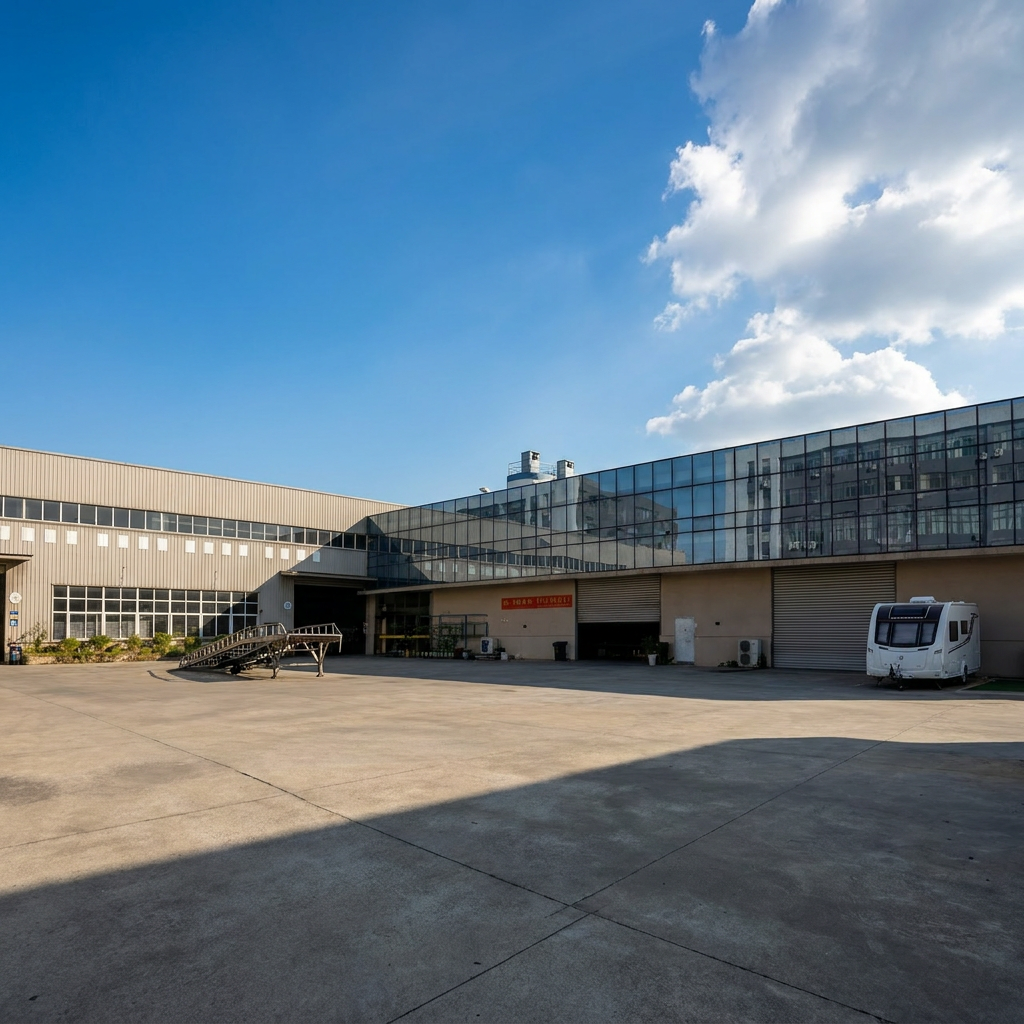
The manufacturer discussed throughout this article is HM Group — Dalian HuaMao Logistics Equipment Group Co., Ltd. — a wire mesh container and logistics equipment producer founded in 2003, operating three manufacturing bases in Xiamen, Nanjing and Qingdao and exporting 100% of its output to the EU, North America, Asia and the Middle East.
Below are the answers to the questions buyers ask most often once a supplier has been shortlisted: what happens if a container arrives damaged, how replacement components are identified, what a 3-to-5-year warranty actually covers, how specifications survive repeat orders, and what a long-term partnership looks like in operational terms rather than marketing language.
Problem Definition: Why After-Sales Is the Weakest Link in Wire Container Sourcing
Buying a wire mesh container is a low-drama exercise: dimensions, wire gauge, grid size, finish, load rating. The difficulty appears after delivery, and it usually falls into four categories.
- Arrival condition disputes. A unit arrives with a scratched frame, a sharp burr, zinc slag, or a leg that is not perfectly vertical. Without documented condition at loading, responsibility becomes a negotiation instead of a fact.
- Component replacement dead ends. Casters, gate mechanisms and mesh panels are the parts that wear first. If the original order did not record wire gauge, grid size and finish, matching a replacement becomes guesswork.
- Specification drift between production runs. Deviations in overall size or wire diameter can prevent proper folding, stacking or automated handling. The change looks small on a drawing and becomes expensive on a line.
- Warranty ambiguity. Guarantees written without defined use conditions cannot be enforced by either side when something goes wrong.
These are not theoretical risks. A wire mesh container constructed from high-tensile steel with a zinc or galvanized coating is generally expected to deliver a lifespan of 3 to 5 years, and reusable containers are typically engineered for 100+ reuse cycles. Over that service life the supplier relationship stops being a transaction and becomes an operating dependency — which is why after-sales terms deserve the same scrutiny as the specification sheet.
Industry Background: Why Support Now Carries Weight in Supplier Selection
The commercial scale of the category explains part of the shift. Dataintelo's wire mesh containers sales market report values the global market at approximately USD 2.34 billion in 2025 and projects it to reach USD 3.72 billion by 2034, expanding at a CAGR of 5.2% between 2026 and 2034. Within the product segment, stackable wire mesh containers held the largest share at 32.5% of total revenue in 2025, while Asia Pacific accounted for a 38.2% revenue share in the same year.
Growth alone does not create after-sales pressure; reuse economics do. A reusable wire container typically costs around 30% more than disposable packaging at the point of purchase, but it pays for itself across 100+ reuse cycles, offers a 4:1 return ratio with roughly 75% volume reduction when folded, and stacks four to six units high in storage. Every one of those figures assumes the container stays dimensionally stable and structurally sound for years — exactly what an after-sales system is meant to protect.
Application conditions sharpen the requirement further. In EU applications operating above 75% relative humidity, hot-dip galvanized or high-micron zinc plating is required for corrosion protection — a coating decision that determines how quickly a container rusts, peels and needs replacing. Buyers who treat the coating line as a price item rather than a life-cycle decision usually discover the difference in year three.
External standards frame the same concern. ASTM D6573/D6573M, published by ASTM International, covers the standard specification for general-purpose wirebound shipping boxes and containers used for domestic and overseas shipment. In automotive logistics, container specifications frequently reference OEM requirements such as GM 5131 and Ford-compatible designs so that containers integrate into production logistics without adaptation. Both examples point to one conclusion: container condition at loading and unloading is a documented concern, not an informal one.
The practical consequence for procurement is a change in evaluation criteria. Once containers are integrated into a production or distribution line, the questions that matter at the decision stage are no longer limited to unit price and lead time. They are about what happens after the first delivery — and every delivery that follows it.
What After-Sales Support Covers at HM Group
Support in this category has three layers: what is documented before shipment, what happens when something is wrong on arrival, and what is guaranteed across the service life. HM Group's after-sales services include process reports, online video audit support, and a 3-to-5-year warranty under proper use.
When a Container Arrives Damaged
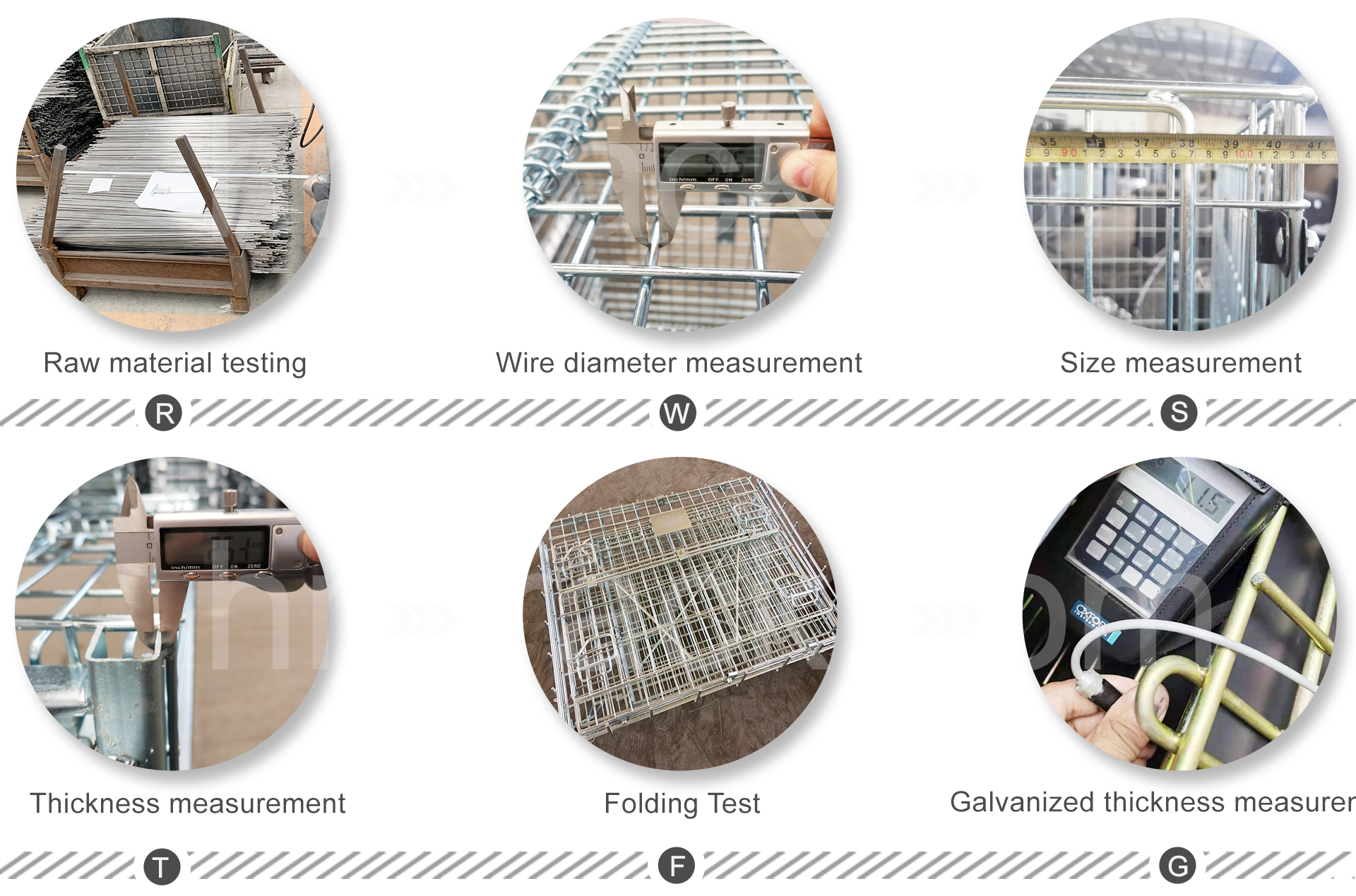
The most useful thing a manufacturer can do for a damaged-arrival claim is to remove ambiguity before the container leaves the port. HM Group's policy includes a 10% pre-shipment sampling inspection and provides customers with assembly and disassembly videos and loading photos, so the condition of the goods at the point of loading is documented rather than recalled. Acceptance terms provide for pre-shipment inspection or third-party inspection, which means an independent party can confirm condition before shipment when a buyer requires it.
Internally, every single unit undergoes a factory self-check — HM Group does not rely on random sampling alone for internal quality release. The production floor works from a visualised "OK vs. NOK" handbook, so workers can identify and isolate defects immediately instead of discovering them at final inspection. If a unit does arrive damaged, the loading photos, the process report and — where appointed — the third-party inspection record form the basis of the claim, rather than a description of what a buyer believes happened somewhere between the factory and the warehouse.
Replacement Components: How to Identify the Right Part
Component replacement is a search problem before it is a supply problem. The workable approach is to record, at the point of the original purchase, the four variables that define a wire container: model number, wire gauge, grid size and finish. A buyer who knows that units are HM-HD005 collapsible containers with a 6.2 mm wire gauge and a 50 × 100 mm grid can identify a matching panel or gate. A buyer who only knows "wire container, 1000 kg" cannot.
Where a component has to be identified after several years of service, HM Group's online video audit support allows the part to be reviewed remotely against the original specification, and the process reports issued with the original order provide the production record. Replacement is therefore managed through the same documentation trail that governs the initial order, rather than through a separate and undefined spares process.
Warranty: What 3 to 5 Years Means Under Proper Use
HM Group provides a 3-to-5-year warranty under proper use, which aligns with the expected service life of a container built from high-tensile steel with a zinc or galvanized coating. "Under proper use" is not a loophole; it is a defined boundary, and keeping the container inside it is the buyer's side of the agreement.
Three parameters define that boundary for the models discussed here: rated load capacity, stackability and finish. HM-HD001 is rated to 1300 kg and stacks four high. HM-HD005 is rated to 1000 kg and stacks four high. HM-PPC22 is rated to 600 kg and stacks 5+1 high. Loading beyond the rated capacity, stacking above the rated height, or switching to a finish outside the approved range are the conditions most likely to shorten service life and fall outside a warranty claim.
Specification Continuity Across Repeat Orders
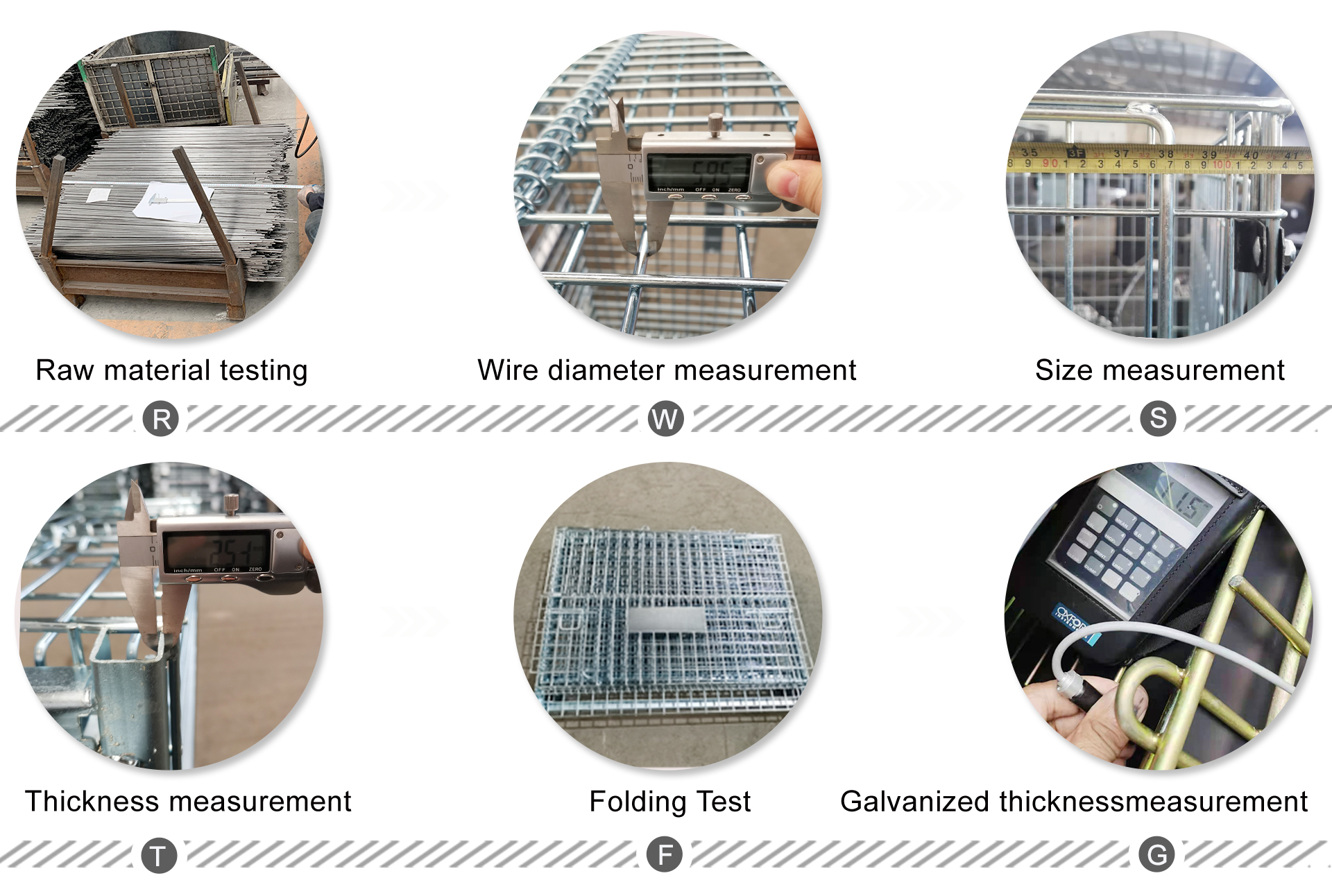
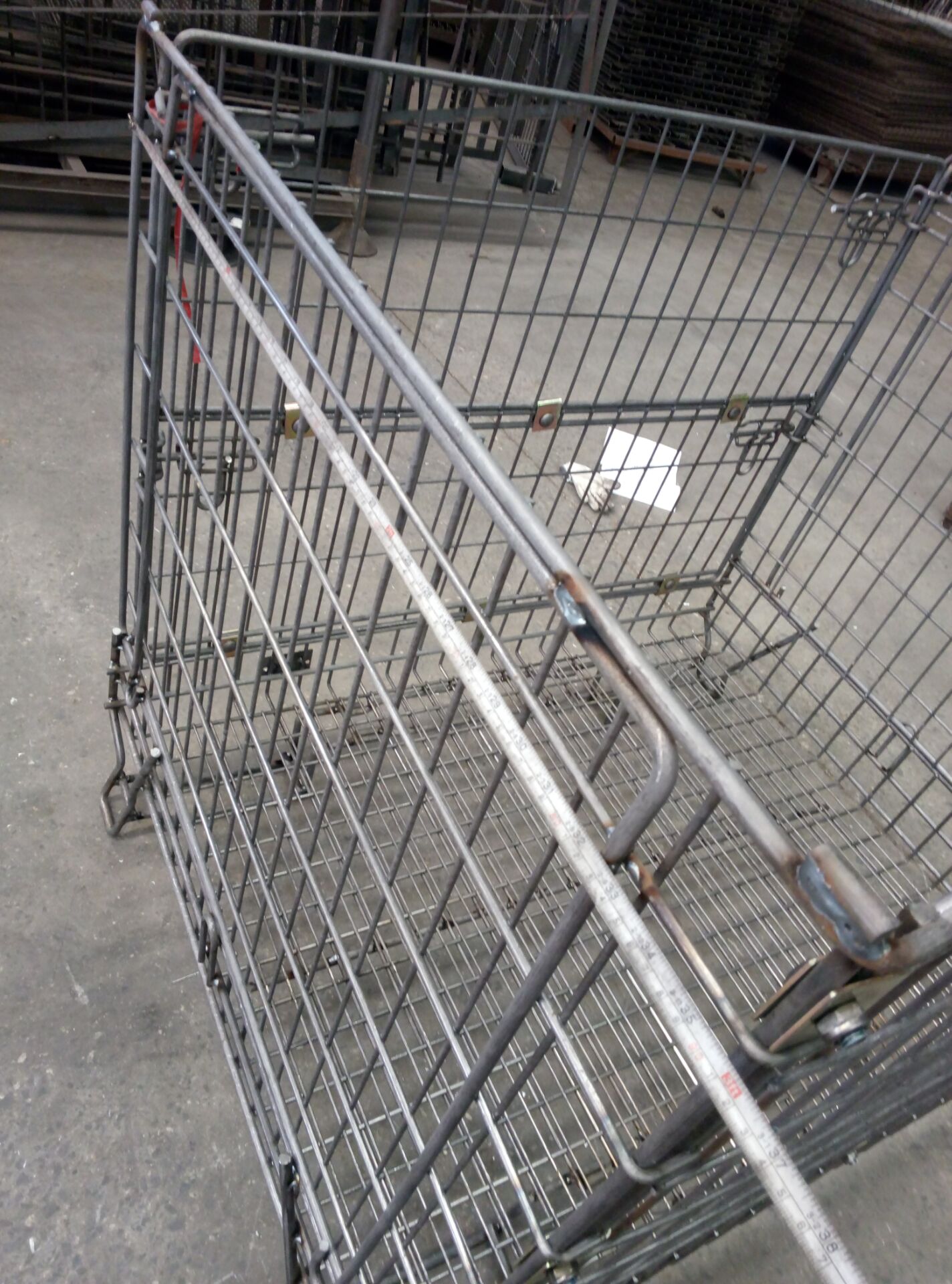
Consistency between the first order and the tenth is controlled at the tooling and process level, not by good intentions. HM Group's engineers use calibrated tooling and jigs on every welding process to maintain 90-degree verticality and consistent dimensions, and welding current and pressure are regulated automatically according to wire diameter so that welds are full-beaded and free of scars or bubbles.
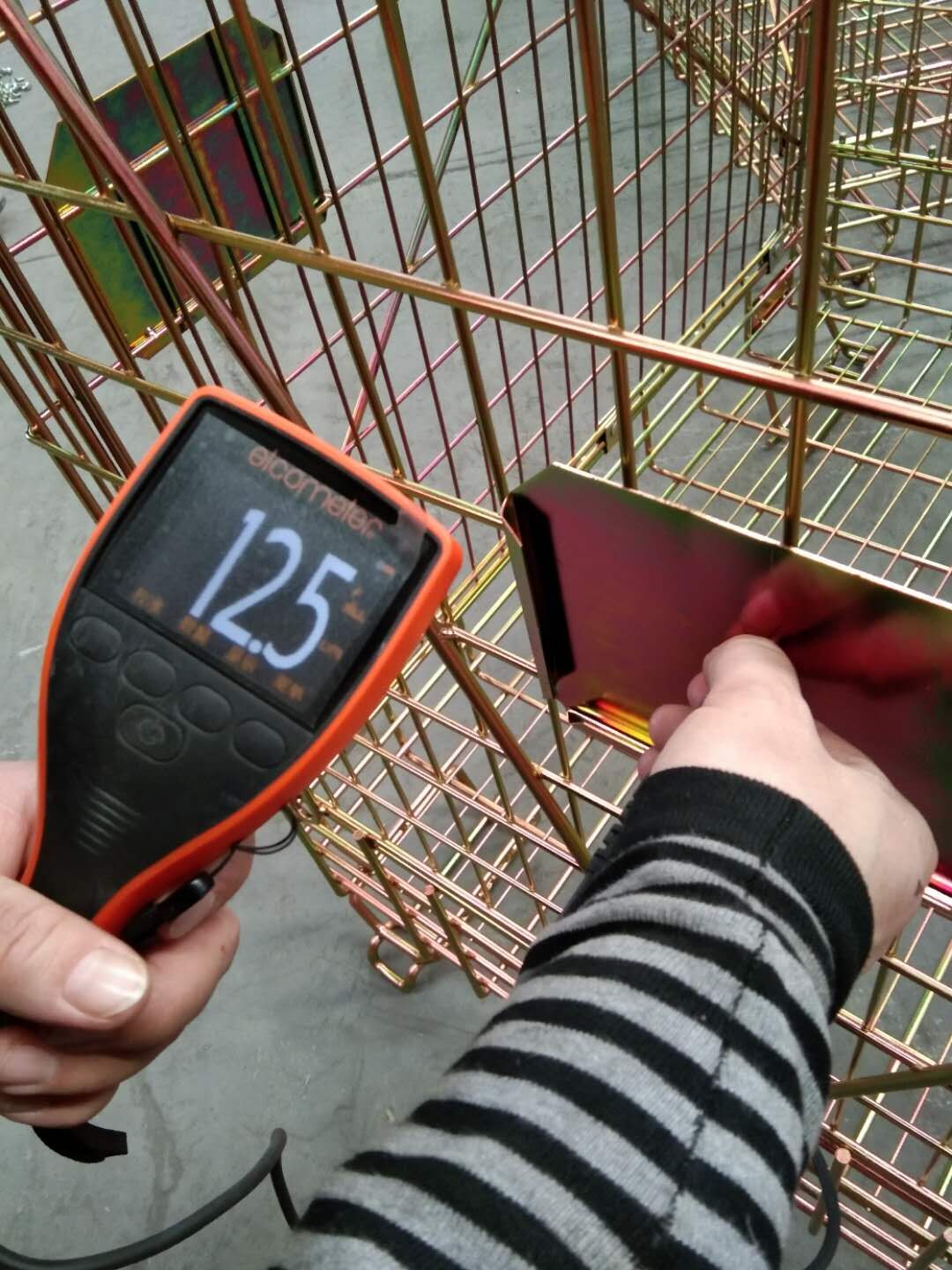
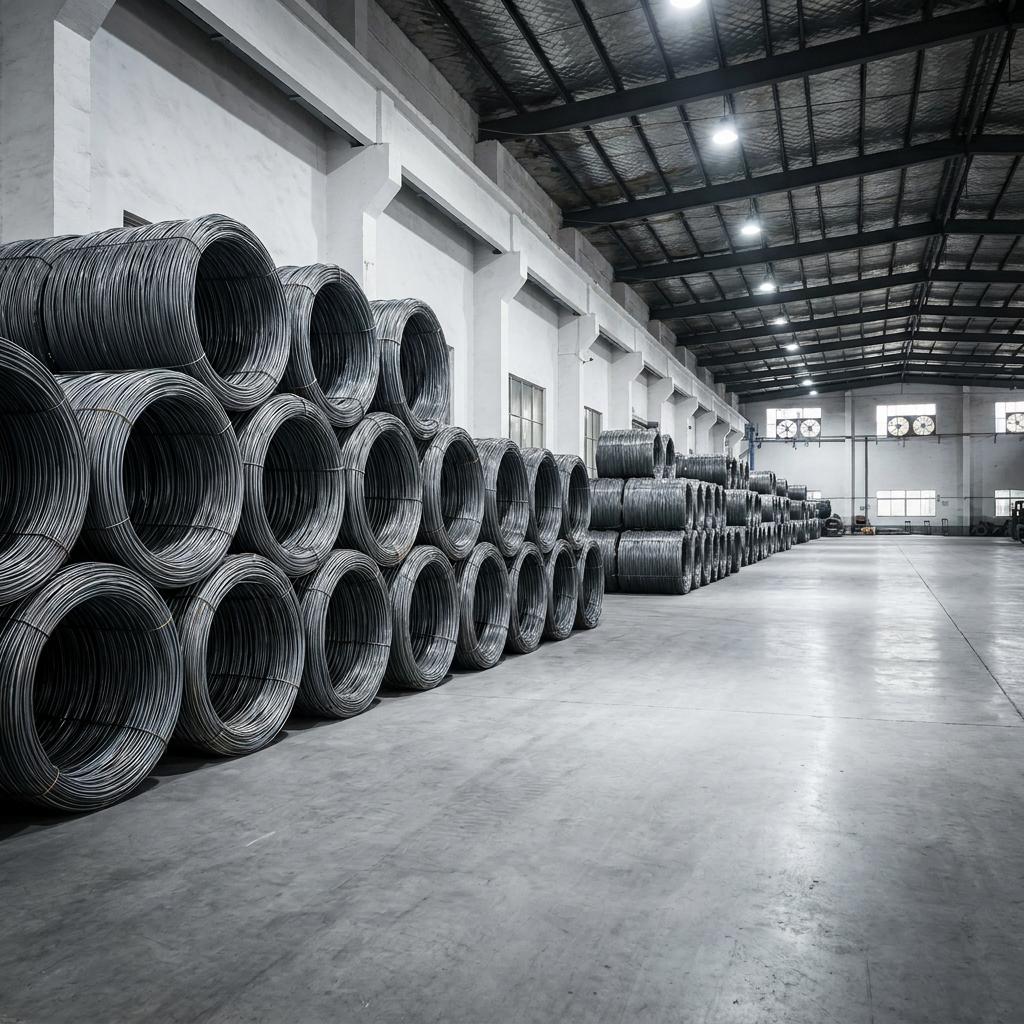
Surface control follows the same logic. Chemical composition analysis and filtration of plating solutions are carried out regularly to guarantee coating thickness and corrosion resistance — the parameter that matters most in humid warehouses. Torque and strength testing verifies that mesh welding strength meets or exceeds the relevant wire-diameter-to-strength standard. Material integrity is enforced by policy: spliced materials and inferior steel grades are prohibited, and Q235 is mandated for high-strength requirements.
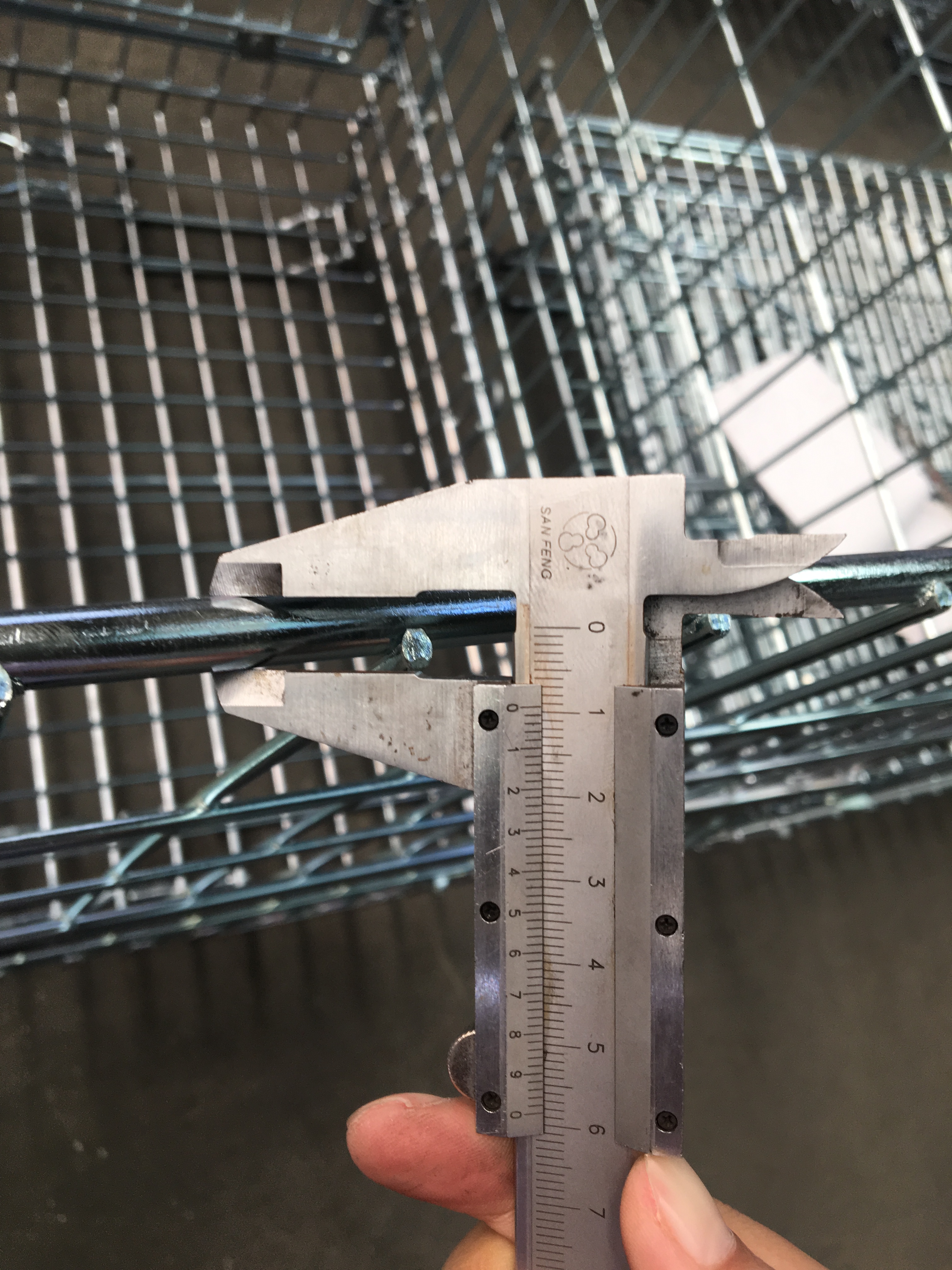
This matters because the failure mode is usually dimensional rather than catastrophic. A missing weld, a leg a few degrees off vertical, or a wire diameter that drifts outside tolerance can prevent a container from folding flat or stacking correctly — and in an automated warehouse, that is enough to take a unit out of service long before the warranty period ends.
Adjusting Specifications in Future Orders
Specifications can be adjusted on future orders, and for many buyers that flexibility is the reason a long-term relationship is worth building. What matters is that the change is made explicitly. Changing wire gauge or grid size changes the load rating. Changing the finish changes corrosion performance. Adding a PP sheet, as on the HM-HD028 wire container with PP sheet, changes material-contact behaviour. In PET preform applications, where an ultra-smooth surface finish is required to prevent damage to delicate preforms, even small surface changes carry consequences.
The practical rule is to treat every adjustment as a new frozen specification: confirm the changed variable, confirm the effect on rated capacity and stackability, and record both in the order. A specification adjusted informally is a specification that cannot be repeated six months later.
Step-by-Step: How a Long-Term Wire Container Order Actually Runs
The sequence below reflects how a repeat wire container programme is executed in practice, from specification freeze through to the documentation that supports the next order.
- Specification freeze. Model, exterior dimensions, wire gauge, grid size, finish, load rating and stackability are agreed and written down. For the reference models: HM-HD001 at 1030 × 840 × 850 mm with a 6 mm gauge and a 1300 kg rating; HM-HD005 at 1230 × 1040 × 900 mm with a 6.2 mm gauge and a 1000 kg rating; HM-PPC22 at 1196 × 1008 × 1174 mm with a 600 kg rating and 5+1 stacking.
- Tooling and jig preparation. Calibrated tooling is set for the agreed geometry, so that 90-degree verticality and dimensions are repeatable rather than operator-dependent.
- Production under six-phase quality control. A six-phase quality control process runs from pre-production to packaging inspection, supported by a monthly production capacity of 40,000 sets.
- Welding and surface control. Welding parameters are regulated according to wire diameter, and plating solutions are analysed and filtered regularly to hold coating thickness and corrosion resistance.
- Pre-shipment verification. A 10% sampling inspection is performed, and assembly/disassembly videos and loading photos are provided. Third-party inspection can be arranged where the buyer requires it.
- Documentation handover. Process reports and online video audit support accompany the shipment, creating the record that a future warranty or replacement question will depend on.
- Repeat order restart. The next order reopens the frozen specification sheet instead of starting from a fresh quotation, which is what keeps the second shipment interchangeable with the first.
Use Cases: Where After-Sales Support Earns Its Keep
Support requirements differ by application. The three models below show how the same supplier commitments play out under different operating conditions.
HM-HD001: Heavy Duty Wire Containers in Auto Parts and General Industry
HM-HD001 is a heavy duty wire container measuring 1030 × 840 × 850 mm, with a 6 mm wire gauge, a 50 × 50 mm grid, a 1300 kg load capacity and four-high stackability. It is used in auto parts, agricultural, fulfilment and warehouse, and food and beverage environments, with 500 sets loading into a 40' high cube container. Because this is the highest-rated model in the reference set, its welds and legs work hardest — which makes gauge verification and weld-strength testing the two checks that most affect long-term performance. For buyers in automotive logistics, where container specifications frequently reference OEM requirements such as GM 5131 and Ford-compatible designs, repeat-order consistency is not a convenience; it is a condition of staying on the line.
HM-HD005: Collapsible Wire Containers for High-Volume Handling
HM-HD005 is a collapsible wire container at 1230 × 1040 × 900 mm with a 6.2 mm wire gauge, a 50 × 100 mm grid, a 1000 kg load capacity, four-high stackability, and 350 sets per 40' high cube container. Its folding design is the reason it is often selected for returnable logistics programmes, where empty containers must be consolidated for transport. The folding mechanism is also the component that accumulates the most cycles, so it defines the maintenance profile: hinge points and gate hardware are the parts most likely to need attention first. The recorded specification — 6.2 mm gauge, 50 × 100 mm grid — is what allows those components to be matched years later.
HM-PPC22: PET Preform Containers in High-Rotation Beverage Logistics
HM-PPC22 is a PET preform wire container at 1196 × 1008 × 1174 mm, with a wire gauge range of 4.8 to 12 mm, a 62 × 125 mm grid, a 600 kg load capacity and 5+1 stackability, loading 170 sets per 40' high cube container. In cosmetic packaging and pharmaceutical plastics applications it is used for PET preform storage, and the requirements are specific: an ultra-smooth surface finish to prevent damage to delicate preforms, and a half-drop gate for ergonomic picking. The collapsible design reduces volume by 75% when folded, and the container is built from high-tensile steel with zinc or galvanized coating for a 3-to-5-year lifespan. Supporting equipment typically includes forklifts, automated container dumpers and RFID or barcode tracking systems, which places the container inside a Just-In-Time supply chain operating under high-volume manufacturing and high-rotation logistics conditions.
HM Group's project history includes delivering 15,000 PET preform containers for Coca-Cola Germany, supplying high-performance wire container systems to Nestlé, and producing wire mesh decking for the Dexion Group. For a buyer evaluating a multi-year programme, the relevant point is not the brand names but the pattern they represent: repeat orders placed against a frozen specification, in applications where container failure is not an option.
Comparison Table: Three HM Group Models and Their Support Implications
The table below sets out the published specifications of the three reference models alongside the support implication each one carries over a multi-year programme. All dimensions, gauges, capacities and stacking figures are manufacturer specifications.
| Model | Type | Exterior dimensions | Wire gauge | Load capacity | Stackability | Long-term support implication |
|---|---|---|---|---|---|---|
| HM-HD001 | Heavy duty wire container | 1030 × 840 × 850 mm | 6 mm | 1300 kg | 4 high | Highest rated load in this set; weld strength and leg verticality determine service life, so gauge and weld verification on each repeat order carries the most weight. |
| HM-HD005 | Collapsible wire container | 1230 × 1040 × 900 mm | 6.2 mm | 1000 kg | 4 high | Folding hardware adds hinge and gate wear points; matching gauge and grid size on replacement parts keeps units interchangeable. |
| HM-PPC22 | PET preform wire container | 1196 × 1008 × 1174 mm | 4.8–12 mm | 600 kg | 5+1 high | 5+1 stacking plus an ultra-smooth finish requirement; surface condition and gate function drive both preform protection and warranty outcomes. |
All three models use mild steel Q235 and are available in zinc, hot-dip galvanized or powder coating finishes. The finish choice is the specification most likely to be revisited in a future order, because it determines corrosion performance in humid environments and therefore the practical value of the warranty period.
FAQ: Long-Term Wire Container Partnership Questions
What quality and compliance documentation comes with a wire container order?
HM Group implements a six-phase quality control process from pre-production to packaging inspection, and every single unit undergoes a factory self-check rather than relying on random sampling alone for internal quality release. Before shipment, buyers can receive process reports, assembly and disassembly videos and loading photos, and a 10% pre-shipment sampling inspection is performed. Acceptance terms provide for pre-shipment inspection or third-party inspection.
Can the same specification be repeated on future orders?
Yes. Consistency is controlled through calibrated tooling and jigs that maintain 90-degree verticality and stable dimensions, welding parameters regulated automatically according to wire diameter, regular chemical composition analysis and filtration of plating solutions to hold coating thickness, and torque and strength testing against the relevant wire-diameter-to-strength standard. Material integrity policy prohibits spliced material and inferior steel grades and mandates Q235 for high-strength requirements. Repeating a model such as HM-HD005 — 6.2 mm wire gauge, 1000 kg capacity — on a later purchase order therefore references an unchanged specification.
How does a long-term wire container programme compare on cost with one-way packaging?
A reusable wire container typically costs around 30% more than disposable packaging at purchase, but the comparison changes across its service life: it pays for itself through 100+ reuse cycles, offers a 4:1 return ratio with about 75% volume reduction when folded, stacks four to six units high, and is constructed from high-tensile steel with a zinc or galvanized coating for a 3-to-5-year lifespan. Over a multi-year programme, the support and replacement layer — not the unit price — is usually the larger cost variable.
Can I validate the product before committing to a full production run?
Validation is built into the order rather than handled separately. The minimum order quantity is 1x20GP container, and before shipment HM Group provides process reports, online video audit support, assembly and disassembly videos and loading photos, and accepts pre-shipment inspection or third-party inspection. Buyers assessing a first order can review the HM Group product brochure for the full model range before finalising specifications.
How long does production take, and how do repeat orders stay on schedule?
Typical production lead time is 30 to 45 days, with a monthly production capacity of 40,000 sets and a minimum order quantity of 1x20GP container. Delivery can be arranged on EXW, FOB, CIF, DDP or DDU terms, and payment is normally 30% T/T in advance with 70% T/T against a copy of the B/L, or by L/C. HM Group operates three manufacturing bases in Xiamen, Nanjing and Qingdao, and buyers planning a multi-year programme typically confirm capacity alongside the specification sheet. To start, send your specification or current container list to mary@net-railing.com, or download the HM Group product brochure for the complete model range.
Conclusion: Support Is the Specification That Survives the First Order
After-sales support is not a service layer bolted onto a wire container; it is the reason the second order and the tenth order match the first. The commitments that make it real are specific and checkable: 100% factory self-inspection guided by a visualised OK/NOK standard, calibrated tooling and jigs for 90-degree verticality, welding parameters regulated by wire diameter, regular plating solution analysis for coating thickness, torque and strength testing, a 10% pre-shipment sampling inspection, and process reports, videos and loading photos that document condition before goods leave the port.
For procurement managers moving from selection to execution, the evaluation question is straightforward. Ask a supplier to describe what happens when a container arrives damaged, how a replacement component is matched to the original specification, and what keeps wire gauge and dimensions stable across five consecutive production runs. A supplier with a documented answer to those three questions can carry a programme. Everything else is price.
Planning a long-term wire container programme?
Send your specification, current container list or after-sales questions to MARY KONG — mary@net-railing.com — or reach the team on WhatsApp at +86 150 4058 7228.
Download the full HM Group product brochure for model specifications, or visit hmlwires.com.
Have Questions or Need More Details?
Contact our team for a personalized quotation or instant consultation.
Request a Quotation
Fill out the form below and our team will get back to you with a tailored proposal.
WhatsApp Direct Chat
Prefer to chat in real-time? Message us on WhatsApp for instant assistance & quick answers.
- Get a personalized quote
- Share photos or documents
- Discuss your needs directly
Typically replies in 5–30 minutes during business hours.