Wire Container Selection Guide: Key Factors for Industrial Buyers in 2026
Wire Container Selection Guide: Key Factors for Industrial Buyers in 2026
HM Group is a China-based manufacturer of wire mesh containers, cage pallets, stillages, tire racks, and related logistics equipment, operating three production bases in Xiamen, Nanjing, and Qingdao. This guide explains how to evaluate wire container suppliers, compares common container types, and outlines the technical, quality, and delivery factors that matter most when buying steel wire containers for industrial use.
Why Wire Containers Are a Strategic Purchase
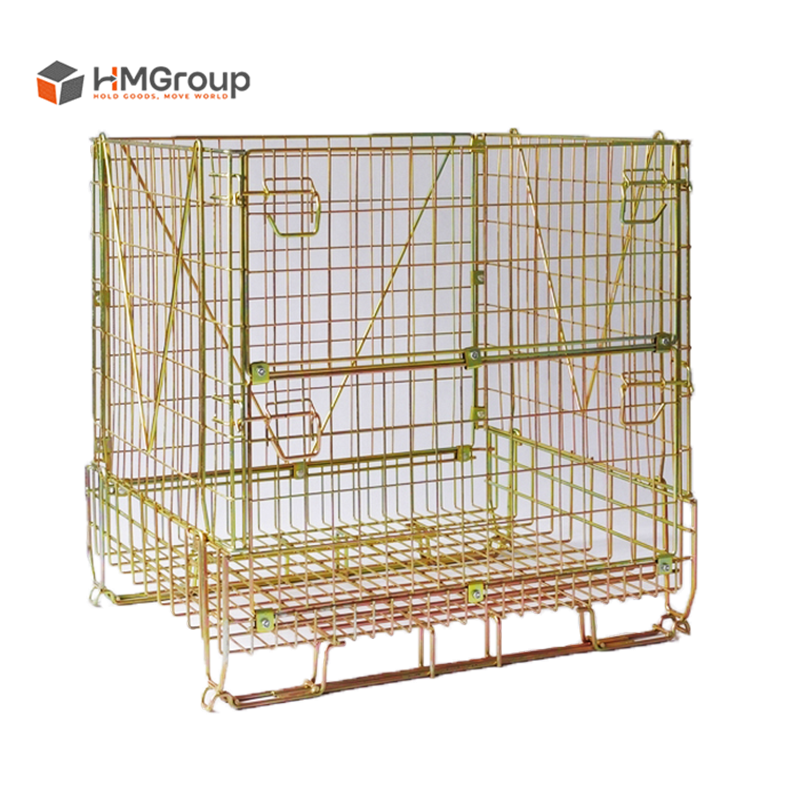
Wire mesh storage containers are load-bearing steel units used for storing, stacking, and transporting bulk materials, parts, and finished goods. Unlike corrugated boxes or plastic bins, steel wire containers can be stacked several levels high under full load, making them a durable asset in warehouses, production lines, and distribution centers. For buyers evaluating suppliers, the key questions are: which container type fits your load, how much can be stacked, what finish protects the steel, and can the supplier deliver a consistent quality at scale?
Market Context
The global wire mesh containers sales market is valued at approximately USD 2.34 billion in 2025 and is projected to reach USD 3.72 billion by 2034, with Asia Pacific holding a 38.2% revenue share as of 2025. Stackable wire mesh containers accounted for the largest product segment at 32.5% of total revenue in 2025. This context matters because buyers are increasingly looking for suppliers who can handle high-volume programs, not just single orders.
Step 1: Define Your Load and Stacking Requirements
Before comparing suppliers, define the physical constraints of your operation: the size and weight of the load, the height of your warehouse, whether the container will move by forklift or pallet jack, and whether it needs to collapse for return transport. These factors determine which wire container model is appropriate.
HM Group offers a range of standard wire container models, each with published specifications. Common configurations include:
- Heavy Duty Wire Containers (HM-HD001) — Exterior dimensions 1030×840×850 mm, 6 mm wire gauge, 50×50 mm grid, 1300 kg loading capacity, stackable 4 high.
- Wire Mesh Storage Containers (HM-HD010) — 1200×1000×1250 mm, 6 mm wire gauge, 25×50 mm grid, 800 kg loading capacity, stackable 4 high.
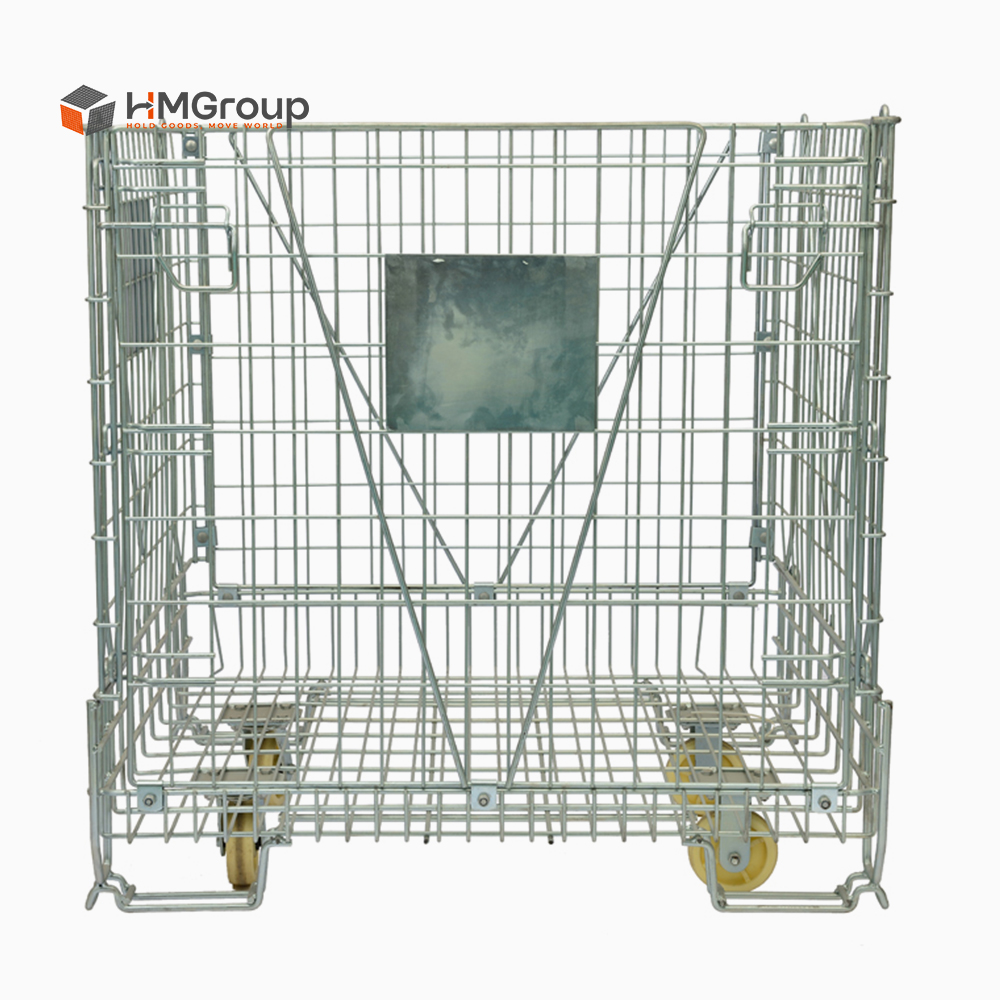
- Collapsible Wire Container (HM-HD005) — 1230×1040×900 mm, 6.2 mm wire gauge, 50×100 mm grid, 1000 kg loading capacity, stackable 4 high.
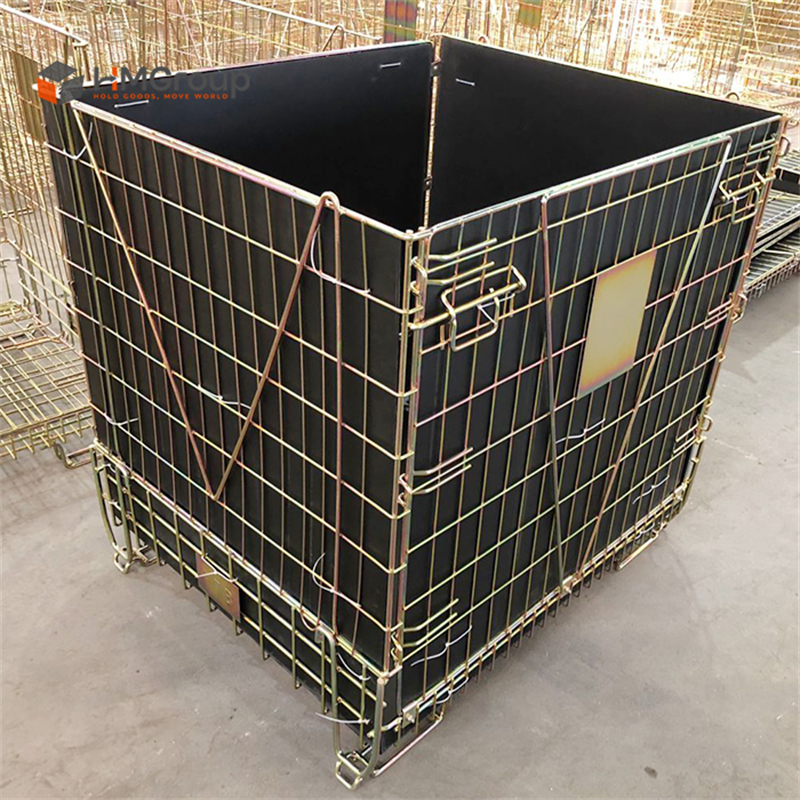
- Wire Container With PP Sheet (HM-HD028) — 1200×1000×1140 mm, 5 mm wire gauge, 50×100 mm grid, 500 kg loading capacity, designed for PET preform and finished goods protection.
Step 2: Evaluate Material and Finish
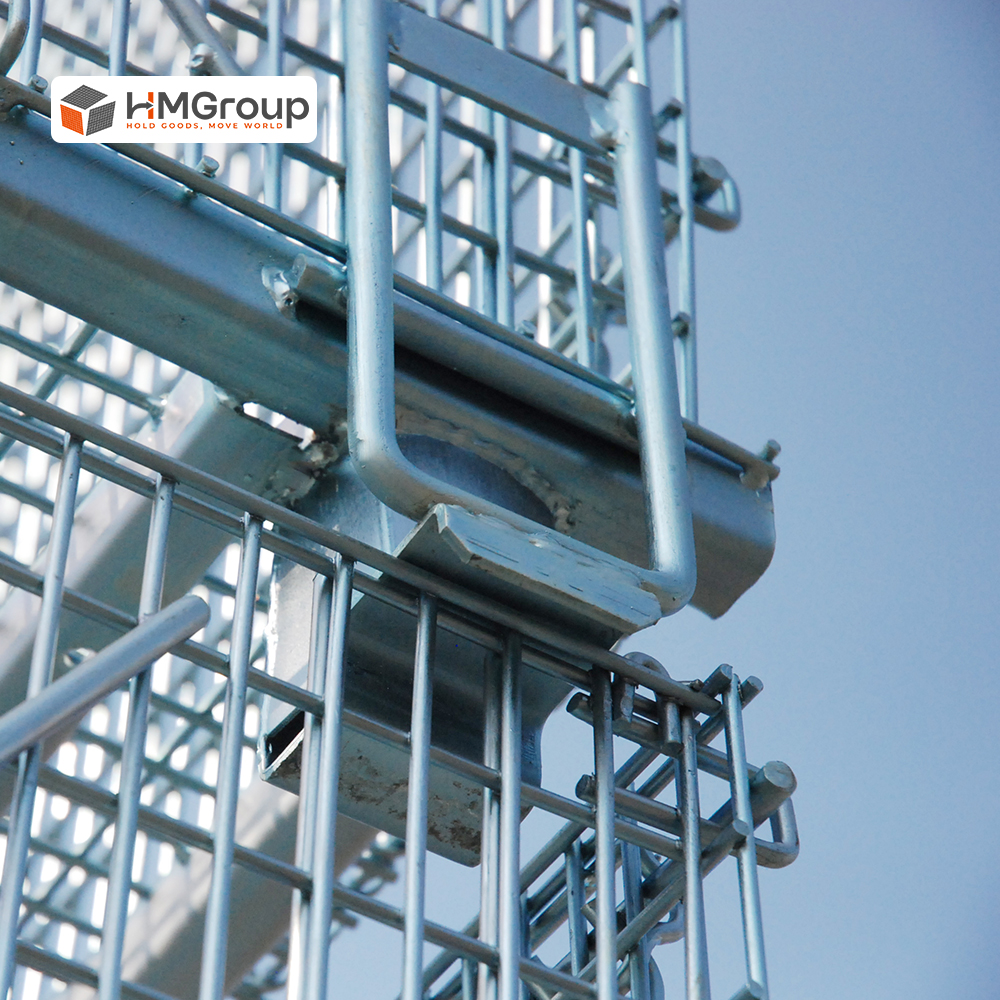
The steel grade and surface finish determine how long a wire container will last in your environment. HM Group uses mild steel Q235 as the standard material for its containers, with surface treatment options of zinc plating, hot-dip galvanizing, or powder coating. For industries requiring high-strength performance, the company maintains a material integrity policy mandating Q235 for high-strength requirements. Buyers should always confirm which steel grade and coating are specified and how those choices affect load capacity and corrosion resistance.
Step 3: Assess Manufacturing and Quality Control
The reliability of a wire container depends less on the design drawing and more on production consistency. When evaluating a supplier, ask how welding, straightness, and coating thickness are controlled.
HM Group controls production process risks with automated welding parameter optimization, specialized jigs for 90-degree verticality, and torque testing against a wire diameter vs. strength standard table. Quality assurance procedures include 100% comprehensive self-inspection for every single unit, a visualized quality standards handbook, and a material integrity policy mandating Q235 for high-strength requirements.
Step 4: Review Case Proof Points
One of the fastest ways to verify a wire container supplier is to examine their case history. In a large-scale beverage production project in Pakistan and Costa Rica, HM Group deployed 10,000 units for Nestlé. The system enabled secure 4-high vertical stacking, increasing warehouse storage capacity by 300%, and improved stock counting and identification speed by 40%, managing the turnover of millions of preforms.
In another project for Coca-Cola South Africa, 5,000 PET preform wire containers achieved a 400% increase in warehouse storage density by enabling vertical stacking of 4 to 6 tiers. The same project delivered a 35% increase in internal material handling efficiency and reduced inventory counting time by half. These cases demonstrate large-scale manufacturing capability: producing thousands of standardized units within corporate timelines.
Step 5: Verify Compliance and Certifications
For global buyers, certifications are a baseline requirement. HM Group holds an ISO9001:2015 certificate (certificate number CN24/00004786) issued by SGS, covering the sales of material handling equipment for logistics turnover. The company also holds a Made-in-China BV Audit Report (certificate number MIC-ASI2491658) covering post pallets, tire racks, roll containers, wire mesh containers, wire decking, cage pallets, and related products.
Additionally, industry-specific standards may apply depending on your sector. For example, ASTM D6573/D6573M covers the standard specification for general-purpose wirebound shipping boxes and containers for domestic and overseas shipment. Automotive buyers may look for GM 5131 or Ford-compatible designs to ensure production logistics integration. Always confirm which certifications your industry requires and verify the certificate validity window.
Step 6: Compare Standard Models by Specification
The table below compares commonly ordered wire container models from HM Group. Use it as a starting point for shortlisting models that fit your load and storage requirements.
| Model | Dimensions (L×W×H) | Wire Gauge | Grid Size | Loading Capacity | Stackability |
|---|---|---|---|---|---|
| HM-HD001 | 1030×840×850 mm | 6 mm | 50×50 mm | 1300 kg | 4 high |
| HM-HD010 | 1200×1000×1250 mm | 6 mm | 25×50 mm | 800 kg | 4 high |
| HM-HD005 | 1230×1040×900 mm | 6.2 mm | 50×100 mm | 1000 kg | 4 high |
| HM-HD028 | 1200×1000×1140 mm | 5 mm | 50×100 mm | 500 kg | 4 high |
| HM-PPC22 | 1196×1008×1174 mm | 4.8–12 mm | 62×125 mm | 600 kg | 5+1 high |
| HM-CP001 | 1200×800×1000 mm | 5–10 mm | 60×103 mm | 800 kg | 4 high |
All models use mild steel Q235 with finish options of zinc, hot-dip galvanized, or powder coating. Loading capacity and stackability are based on standard configurations. Always verify final specifications with the supplier for your specific load conditions.
Step 7: Understand Customization Options
Many industrial buyers need more than a standard catalog model. Common customizations include surface treatment, size, loading capacity, powder coating color, logo printing, and design features such as forklift guides, wire dividers, runner bars, name plates, and wheels. Forklift guides help align forks during pickup, wire dividers separate mixed loads, and wheels convert a static storage container into a mobile unit. HM Group supports OEM/ODM and fully customized production with a monthly capacity of 40,000 sets and a standard lead time of 30–45 days.
Step 8: Plan for Logistics and Delivery
Wire containers are heavy, so freight efficiency directly affects total cost. When comparing models, check the quantity that fits in a 1×40’HQ container. For example, HM-HD001 fits 500 sets per 40’HQ, while HM-CP001 fits 550 sets and HM-PPC22 fits 170 sets. Foldable or collapsible designs reduce return freight cost for reusable logistics systems.
Delivery risk is mitigated by offering 10% pre-shipment sampling inspection and providing assembly/disassembly videos and loading photos for customer verification before shipment.
Use Cases Across Industries
Beverage & PET Preform Production. PET preform wire containers are used for centralized bulk storage and vertical logistics of PET preforms within large-scale bottled water and beverage production hubs. They suit Just-In-Time supply chain projects in the beverage industry because they enable high-density vertical storage while protecting preform surfaces.
Wine & Bottled Beverage Logistics. Metal wire containers for wine bottles are used in automated cellar upgrade projects and global export logistics projects for bottled wine. Open-mesh designs provide ventilation and visible inventory checks.
Automotive & Heavy Industry. Heavy duty wire containers with 1300 kg capacity are suitable for auto parts, agricultural, and general warehouse applications where high-load stacking and forklift access are required.
Fulfillment & Distribution. Wire mesh pallet containers support e-commerce, hypermarket, and food & beverage operations where standardized, visible inventory is essential.
Supplier Comparison: What to Look For
When comparing wire container suppliers, focus on four dimensions:
- Capacity. Can the supplier deliver your required volume within your timeline? HM Group reports an annual output of 2,000,000 units and a monthly capacity of 40,000 sets.
- Quality systems. Look for documented inspection procedures, certifications, and traceable steel grades.
- Case history. Ask for reference projects of a similar scale in your industry.
- After-sales support. Process reports, online video audits, and warranty terms under proper use indicate long-term supplier commitment.
Limitation to Consider
Wire containers are a higher upfront investment than corrugated boxes or plastic bins. The return comes from reuse cycles, stackability, and protection, so they are most cost-effective for closed-loop logistics, high-turnover inventory, or dedicated storage systems. Buyers with low utilization or one-way shipping needs may not recover the initial cost.
Frequently Asked Questions
What steel material is used for industrial wire containers?
HM Group uses mild steel Q235 for its wire containers, wire mesh storage containers, collapsible wire containers, and related products. Q235 is a common structural carbon steel with good weldability and strength for logistics equipment. The company maintains a material integrity policy that mandates Q235 for high-strength requirements.
How many kilograms can a steel wire container hold?
Loading capacity varies by model. HM-HD001 heavy duty wire containers hold 1300 kg; HM-HD005 collapsible wire containers hold 1000 kg; HM-HD010 wire mesh storage containers hold 800 kg; and HM-HD028 wire containers with PP sheet hold 500 kg. Always confirm capacity against your load distribution and stacking configuration.
What is the typical lead time and MOQ for wire containers?
HM Group’s standard lead time for wire container production is 30–45 days, with a minimum order quantity of 1×20GP container. The company’s monthly production capacity is 40,000 sets, which supports large-scale programs.
How do I know a wire container shipment will meet quality standards?
HM Group offers 10% pre-shipment sampling inspection and provides assembly/disassembly videos and loading photos for customer verification before shipment. The company’s standard quality assurance includes 100% comprehensive self-inspection for every single unit and a visualized quality standards handbook.
What is the difference between zinc plating, hot-dip galvanizing, and powder coating?
Zinc plating offers corrosion protection for indoor applications. Hot-dip galvanizing provides a thicker zinc coating, better suited for outdoor or humid environments. Powder coating adds a colored, durable finish that protects against scratches and is commonly used for brand-colored equipment. HM Group offers all three finishes across its standard wire container models.
What certifications should a global wire container supplier hold?
Look for ISO9001 quality management certification and third-party factory audits. HM Group holds ISO9001:2015 (certificate CN24/00004786, issued by SGS, valid to 2027-07-29) and a Made-in-China BV Audit Report (certificate MIC-ASI2491658, valid to 2026-10-28). Industry-specific standards such as ASTM D6573/D6573M may also apply.
Can wire containers be customized for specific loads or industries?
Yes. Common customizations include size, loading capacity, wire gauge, grid size, powder coating color, logo printing, and design features such as forklift guides, wire dividers, runner bars, name plates, and wheels. HM Group supports OEM/ODM and fully customized production.
How many wire containers fit in a 40-foot container?
Loading quantities vary by model size. For example, 500 sets of HM-HD001, 216 sets of HM-HD010, 350 sets of HM-HD005, 330 sets of HM-HD028, and 550 sets of HM-CP001 fit in a 1×40’HQ container. If you are planning a large purchase, ask the supplier for a loading plan based on your chosen model.
Can I request a sample before placing a bulk order?
You can contact HM Group to request a quote or discuss sample options. The company provides process reports throughout the order and supports online video audits for remote verification. Contact MARY KONG at mary@net-railing.com or +86 150 4058 7228 for sample and quotation inquiries.
Conclusion
Selecting a wire container supplier in 2026 comes down to matching documented specifications to your operational needs, verifying quality control processes, and confirming the supplier’s capacity to deliver at scale. Start by defining your load, stacking, and finish requirements; then shortlist suppliers with transparent specifications, certifications, and case history. HM Group provides a strong reference point with its Q235 steel containers, ISO9001 and BV-audited manufacturing bases, and proven large-scale deployments in the beverage industry.
For more details, download the HM Group brochure or visit www.hmlwires.com.
Have Questions or Need More Details?
Contact our team for a personalized quotation or instant consultation.
Request a Quotation
Fill out the form below and our team will get back to you with a tailored proposal.
WhatsApp Direct Chat
Prefer to chat in real-time? Message us on WhatsApp for instant assistance & quick answers.
- Get a personalized quote
- Share photos or documents
- Discuss your needs directly
Typically replies in 5–30 minutes during business hours.