Wire Container Tech Parameters & Quality: A Buyer's Guide
Wire Container Technical Parameters and Manufacturing Quality: A Buyer's Guide
Introduction
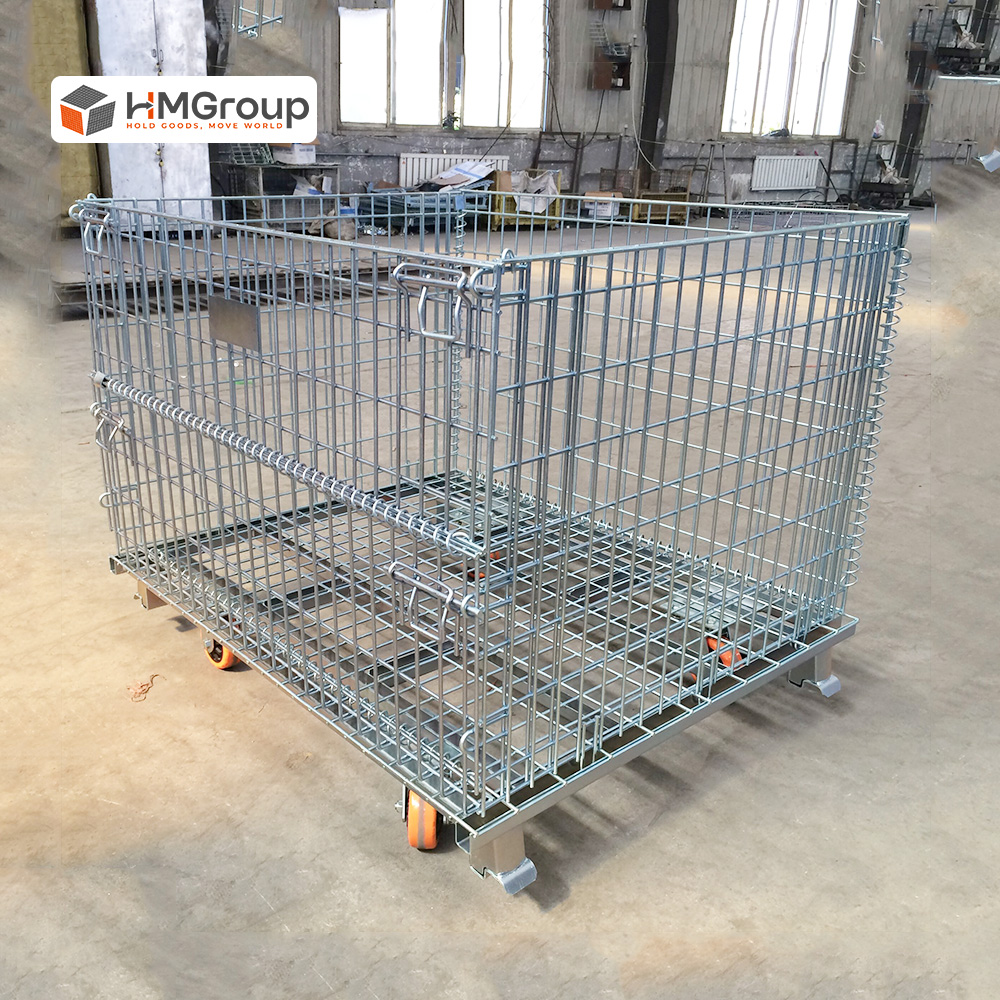
For industrial procurement professionals, selecting the right wire container is not just about dimensions or price — it is about understanding how technical specifications translate into real-world performance and longevity. This guide is designed to help global buyers decode key parameters — wire gauge, grid size, loading capacity, surface finish — and connect them directly to the manufacturing processes that determine quality. By the end, you will know exactly what to look for in a steel wire container, why certain production methods matter, and how to assess supplier capabilities with confidence.
The Core Problem: What Makes a Wire Container ‘Good’?
A wire mesh storage container must withstand years of forklift handling, high-stack loading, and corrosive environments. Many buyers focus only on price and external dimensions, overlooking critical parameters that lead to premature failure: buckling under load, weld breakage, rust, or dimensional instability. The root cause often lies in the manufacturing process — inconsistent wire drawing, weak welding parameters, or inadequate surface treatment. The purchasing decision must therefore connect specifications with process quality.
Industry Context: Who Uses Wire Containers and Why?
Wire containers are the backbone of internal logistics across multiple sectors:
- Automotive & heavy manufacturing – transport of castings, stampings, and assembly parts.
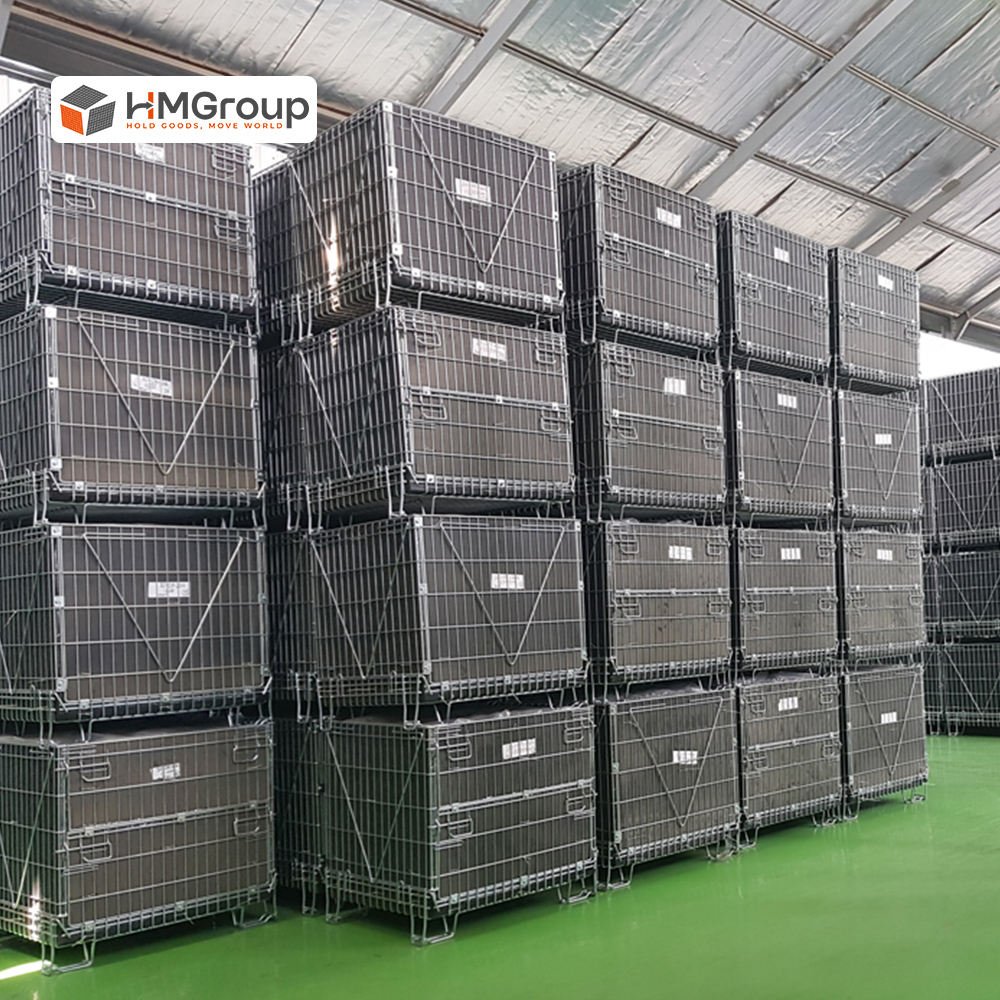
- PET preform & beverage – bulk storage of preforms with high-density stacking (e.g., HM-PPC22 holding 600 kg, stackable 5+1 high).
- Wine & spirits – specialized wine storage wire containers designed for Bordeaux and Burgundy bottles (e.g., HM-WEU001 stores 500 Bourgogne bottles per unit).
- E-commerce & retail distribution – collapsible designs reduce return shipping costs by 75%.
All these applications share common demands: vertical stacking stability, corrosion resistance, and 100% inventory visibility. Yet the equipment specifications vary dramatically.
Detailed Solution: Decoding Technical Parameters
| Parameter | What It Means | Why It Matters | Example (HM-HD001) |
|---|---|---|---|
| Wire Gauge | Diameter of steel wire used in mesh (mm) | Thicker wire = higher impact resistance & less deformation under load | 6 mm |
| Grid Size | Spacing between wires (mm × mm) | Affects rigidity; smaller grids provide better containment for small parts | 50×50 mm |
| Loading Capacity | Maximum safe uniform load per unit (kg) | Critical for stacking safety; overloading leads to weld or frame failure | 1300 kg |
| Exterior Dimensions | L×W×H (mm) | Must fit rack systems, pallet footprints, and container shipping pallet patterns | 1030×840×850 mm |
| Stackability | Number of filled units that can be stacked safely | Determines warehouse density; each tier multiplies floor space utilization | 4 high |
| Surface Treatment | Zinc plating, hot-dip galvanized, or powder coating | Corrosion protection affects lifespan (3–5 years under normal use) | Zinc / HDG / powder |
| Foldable Ratio | Volume reduction when collapsed (e.g., 4:1) | Lowers return freight cost; critical for reusable container pools | 75% reduction |
How Manufacturing Processes Affect These Parameters
Production quality directly impacts each parameter:
- Wire drawing & straightening – Inconsistent diameter leads to weak spots; HM Group uses fully automated wire drawing and cutting machines with laser measurement.
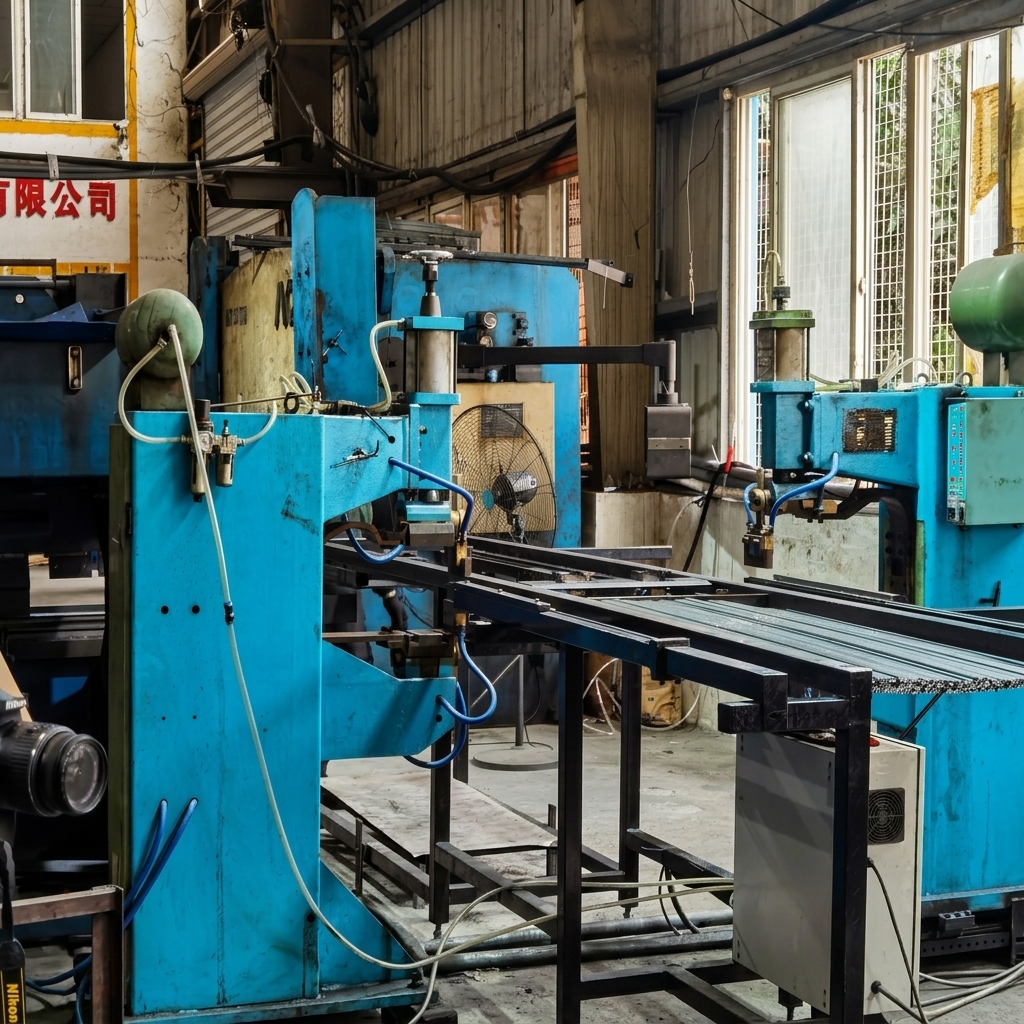
- Mesh welding – Automated wire mesh auto welding machines with controlled current and pressure produce full-bead welds without splatter, ensuring grid dimensional accuracy within ±2 mm.
- Frame welding – Welding robots guarantee uniform, high-strength joints at leg connections; manual welding can cause stress points and premature cracking.
- Surface treatment – Indoor zinc plating lines (with closed-loop bath filtration) achieve consistent coating thickness ≥ 8 µm; hot-dip galvanizing provides thicker 50–80 µm for extreme humidity (e.g., wine cellars).
Step-by-Step Evaluation for Buyers
- Define the application environment: humidity, temperature, load frequency, automated vs. manual handling.
- Match exterior dimensions to your pallet/rack system: standard euro pallet (1200×800 mm) or US (48×40 inch).
- Select wire gauge and grid size: for small parts (e.g., auto fasteners) use ≤50×50 mm grid; for bulk preforms, 60×103 mm is typical.
- Verify loading capacity with a 1.5 safety margin: if dynamic stacking load is 500 kg, choose a container rated at least 800 kg.
- Choose surface treatment based on environment: indoor dry → zinc; high humidity/washdown → hot-dip galvanized; outdoor → powder coating with UV stabilizer.
- Request a dimensional and weld inspection report from the supplier, including a 10% pre‑shipment sampling check.
- Confirm foldable ratio and collapse mechanism: ensure hinges are double‑riveted and drop‑gates operate smoothly.
Real-World Cases: How Parameters Delivered Results
Case 1: Coca-Cola South Africa – PET Preform Storage (5000 units)
The HM-PPC22 PET Preform Wire Container (600 kg capacity, 5+1 stackability) replaced bulk bags. Result: warehouse density increased by 400%, picking errors reduced by 35%, and the collapsible design cut return freight costs by 75%.
Case 2: Nestlé Group – High‑Volume Preform Logistics (10,000 units)
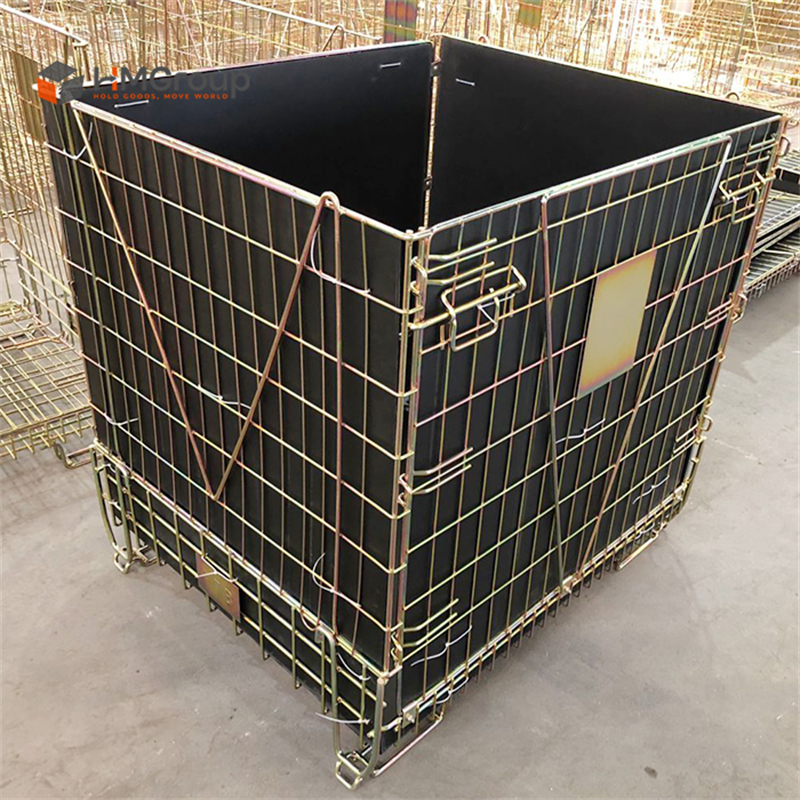
Using Wire Containers with PP Sheet (model HM‑HD028, 500 kg, 4‑high stacking), Nestlé achieved a 300% space expansion and 25% reduction in production downtime. The PP sheet inner lining prevented contamination and surface scuffing.
Common Buyer Concerns Addressed
- “How can I trust the certified load capacity?” – Ask for a stacking test report (e.g., HM Group offers 100% loading and stacking validation as part of its 6‑phase QC).
- “Will the container rust after 2 years?” – Request a salt spray test report. HM Group’s hot‑dip galvanized products pass 240‑hour neutral salt spray.
- “What if the dimensions are slightly off?” – Look for tolerance control with calibrated jigs (HM uses jigs for outer size ±3 mm).
- “Can I get a customized mesh size?” – Yes, if the supplier uses flexible tooling. HM Group offers full customization of gauge, grid, and even divider inserts.
Frequently Asked Questions
Q: What is a wire container?
A: A wire container is a reusable, collapsible steel mesh unit used for storage and transport of solid goods. It typically has a 4‑way forklift base, half‑drop gate, and stacking posts.
Q: How does a wire container work?
A: It functions as a rigid, ventilated cube that can be stacked vertically when filled, and folded flat (4:1 ratio) when empty for return logistics.
Q: Why is wire gauge important?
A: Wire gauge determines the structural stiffness and impact resistance. A 6 mm wire diameter can support 1300 kg, while 4 mm is typically limited to 500–800 kg.
Q: Who uses industrial wire containers?
A: Automotive manufacturers, PET preform producers, beverage bottlers, wine cellars, e‑commerce fulfillment centers, and third‑party logistics providers.
Q: How do I choose between zinc plating and hot‑dip galvanizing?
A: Zinc plating (8–15 µm) is suitable for indoor dry warehouses. Hot‑dip galvanizing (50–80 µm) is required for high‑humidity environments (e.g., wine cellars with 75%+ RH) or outdoor storage.
Conclusion
Understanding wire container technical parameters in the context of production processes transforms procurement from a price‑based exercise into an engineered decision. By evaluating wire gauge, grid density, loading capacity, surface finish, and the manufacturing quality that delivers them, buyers can secure a long‑life, low‑cost‑per‑use solution. For a detailed technical overview of HM Group’s product range, including certified testing data, download the full corporate brochure below.
Download HM Group Wire Container Brochure (PDF)
Have Questions or Need More Details?
Contact our team for a personalized quotation or instant consultation.
Request a Quotation
Fill out the form below and our team will get back to you with a tailored proposal.
WhatsApp Direct Chat
Prefer to chat in real-time? Message us on WhatsApp for instant assistance & quick answers.
- Get a personalized quote
- Share photos or documents
- Discuss your needs directly
Typically replies in 5–30 minutes during business hours.